


Fiber Laser Welding Machine: Modern Precision for Faster Metal Fabrication
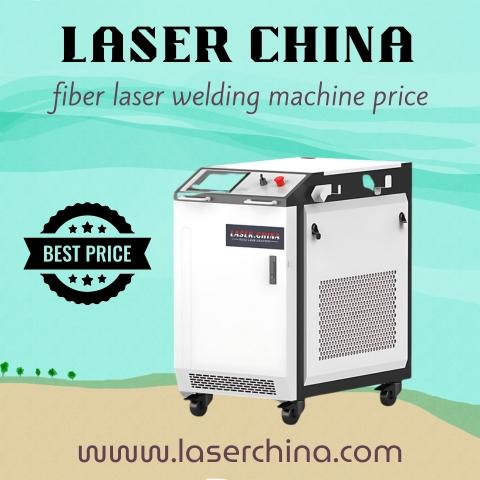
Metal fabrication continues to evolve as manufacturers look for cleaner, faster, and more precise ways to join different materials. Traditional welding processes remain widely used, but modern production environments increasingly require improved control, consistent results, and efficient operation. This is where a fiber laser welding machine has become an important solution for workshops, manufacturers, and industrial production facilities.
Fiber laser welding uses a concentrated laser beam to create a controlled heat source on the surface of a workpiece. The focused energy melts the selected area, allowing two metal components to join together as the material cools and solidifies. Because the laser beam can be precisely controlled, the process is suitable for applications where accurate and clean welding is required.
Understanding the Fiber Laser Welding Process
A fiber laser welding machine generates laser energy through a fiber-based laser source and directs that energy toward the workpiece through an optical system. The laser beam is focused into a small working area, creating sufficient heat to melt the metal.
During welding, the operator positions the laser head along the intended welding path. Depending on the material, thickness, joint design, and required result, the welding parameters can be adjusted to control penetration and heat input.
The process can be used with different welding techniques, including continuous welding and controlled pulsed applications. The correct setup depends on the production requirements and the material being processed.
Materials Suitable for Fiber Laser Welding
One of the reasons fiber laser welding has become popular is its ability to work with a broad selection of metals. Stainless steel, carbon steel, mild steel, aluminum, galvanized materials, and certain other metal alloys can be processed when the machine is correctly configured.
Stainless steel is particularly common in industries producing kitchen equipment, architectural components, medical equipment, machinery parts, and industrial enclosures. Aluminum applications can include automotive components, lightweight structures, and fabricated parts.
Material thickness is another important consideration. A machine should be selected according to the thickness range that needs to be welded regularly. Laser power, welding speed, material composition, joint configuration, and shielding gas all influence the final welding result.
Applications Across Different Industries
A fiber laser welding machine can be used in many areas of modern manufacturing. Its applications range from small workshops to larger industrial production environments.
In metal fabrication, it can be used for joining sheets, frames, panels, cabinets, brackets, and structural components. Manufacturers of stainless-steel products can use laser welding for applications where a controlled and neat weld appearance is important.
The automotive sector also uses laser-based welding processes for selected components and assemblies. Other applications can be found in machinery manufacturing, electronics, kitchen equipment, agricultural machinery, elevators, doors, windows, and custom metal products.
For businesses handling different orders, laser welding can provide a flexible approach to processing various metal components without relying on a completely different welding system for every application.
Precision in Metal Joining
Precision is an important part of modern welding production. A concentrated laser beam allows heat to be directed toward a specific area of the workpiece. This helps control the welding zone and can reduce unnecessary heating of surrounding material when compared with processes that distribute more heat across a larger area.
Controlled heat input is especially important when working with thinner metal sheets or components where excessive heat can affect the shape or appearance of the finished product.
The final result still depends heavily on proper parameter selection, material preparation, joint design, operator technique, and machine configuration. Laser welding is not simply a matter of directing a beam at two pieces of metal; achieving consistent production results requires appropriate setup and process control.
Choosing the Appropriate Laser Power
Laser power should be selected according to the materials and thicknesses a business expects to process. Common industrial systems are available in different power levels, allowing users to choose equipment according to their production requirements.
Lower-power systems may be appropriate for lighter fabrication and thinner materials, while higher-power equipment can be used for applications requiring deeper penetration or faster processing of thicker materials.
Welding Wire and Shielding Gas
Depending on the joint and material, welding wire may be introduced during the process to fill a gap or achieve the desired joint profile. Some applications can be performed without additional filler material when the joint design and material conditions allow it.
Shielding gas also plays an important role. Gases such as argon or nitrogen can help protect the molten weld area from atmospheric contamination. The appropriate gas depends on the material and welding application.
Correct gas flow and nozzle positioning are important for maintaining a stable welding environment. Operators should follow the machine manufacturer's recommendations when setting gas pressure and flow.
Preparing Materials Before Welding
Good preparation can have a significant effect on welding quality. Metal surfaces should be properly aligned and cleaned before processing. Oil, dirt, rust, oxidation, paint, and other contaminants can interfere with the welding process.
Joint alignment is equally important. Gaps between components should be considered when selecting welding parameters and filler wire. Consistent preparation can help create more repeatable results during production.
Operator Control and Production Workflow
Modern laser welding equipment can simplify many welding operations, but skilled operation remains important. Operators need to understand material behavior, laser parameters, welding speed, wire feeding, shielding gas, and safety procedures.
A practical workflow usually begins with material inspection and preparation. The operator then selects suitable welding parameters and performs a test weld when necessary. After checking penetration and appearance, settings can be adjusted before production begins.
For repeated products, maintaining standardized settings can help create greater consistency from one workpiece to another.
Maintenance of a Fiber Laser Welding Machine
Regular maintenance helps keep welding equipment operating reliably. Optical components, protective lenses, nozzles, cooling systems, cables, and other machine components should be inspected according to the manufacturer's maintenance schedule.
The protective lens deserves particular attention because contamination or damage can affect laser transmission and welding quality. Keeping the working area clean can also reduce the possibility of dust and particles entering sensitive components.
Cooling systems should be monitored as well, particularly during extended production periods. Proper maintenance can help reduce unexpected interruptions and support stable operation over the working life of the equipment.
Safety Considerations
Laser welding requires appropriate safety procedures because high-powered laser systems can present serious hazards. Operators should receive proper training and follow workplace safety requirements.
Protective equipment, controlled work areas, suitable laser safety measures, ventilation, and correct handling procedures should be incorporated into the welding environment. The exact requirements depend on the machine design, laser classification, workplace arrangement, and local regulations.
Before operating a machine, users should carefully read the manufacturer's instructions and ensure that all required safety systems are correctly installed and functioning.
Selecting a Machine for Your Workshop
When choosing a fiber laser welding machine, businesses should consider the materials they work with, typical material thickness, production volume, welding method, available workspace, cooling requirements, and operator experience.
It is also useful to examine the machine's laser source, control system, welding head, wire feeder, cooling configuration, and available service support. Reliable technical assistance and access to replacement components can be important for businesses depending on the equipment for daily production.
A machine should ultimately match the actual welding requirements of the workshop rather than being selected only according to its maximum power or advertised specifications.
The Growing Role of Laser Welding
As manufacturing becomes increasingly focused on precision and production consistency, laser welding continues to attract attention across different metalworking sectors. The technology can support applications ranging from small custom fabrication projects to demanding industrial production.
A fiber laser welding machine provides a focused approach to metal joining and can be integrated into workshops seeking controlled welding processes and modern production capabilities.
Final Thoughts
Fiber laser welding represents an important development in modern metal fabrication. By combining a concentrated laser beam with precise control, the process can be applied to a wide range of metal joining tasks across different industries.

 English
 Arabic
 French
 Spanish
 Portuguese
 Deutsch
 Dutch
Dutch
 Italiano
 Russian
 Romaian
 Portuguese (Brazil)
 Greek
Greek