


How Custom Packaging Helps Small Businesses Build a Stronger Brand
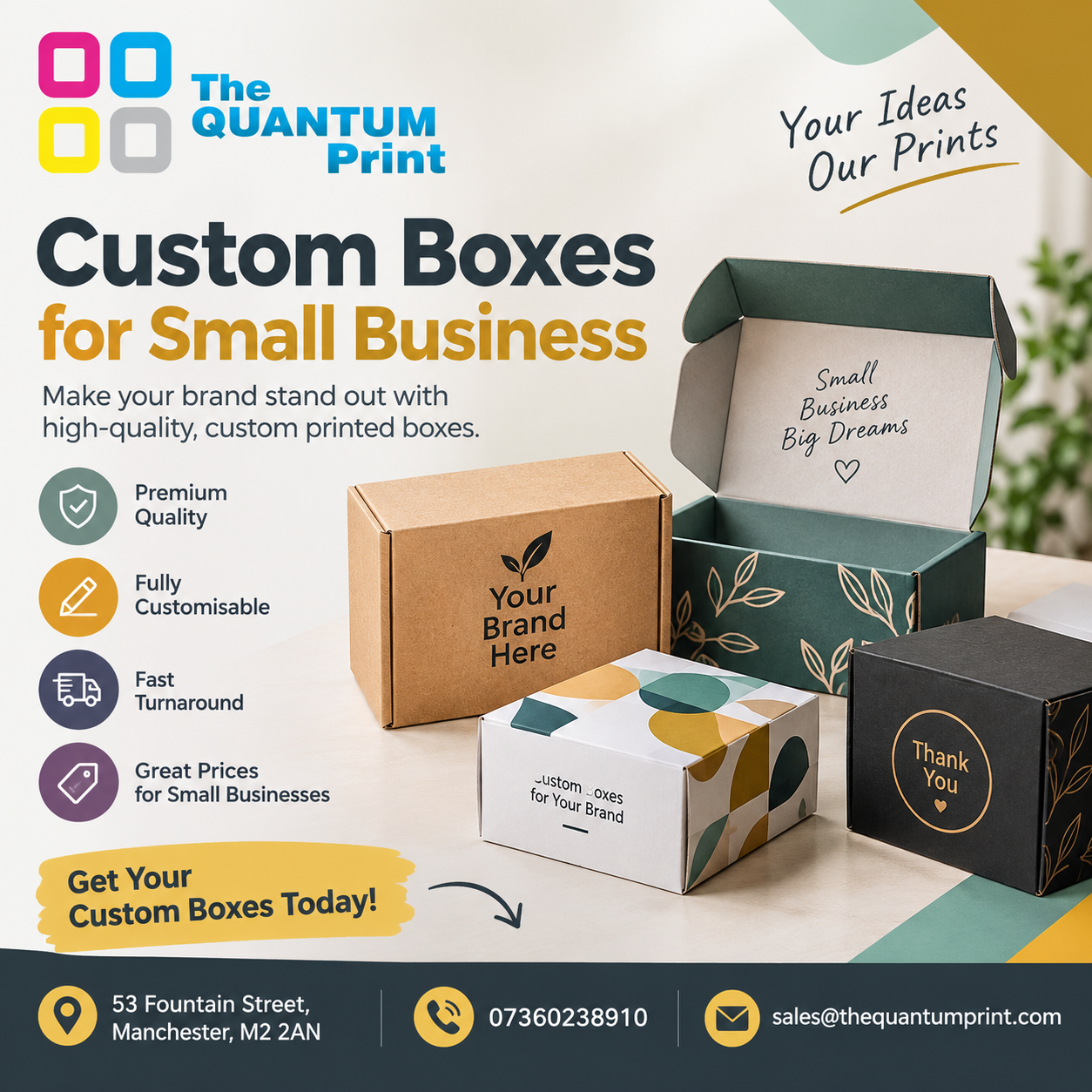
For small businesses, packaging is no longer simply a protective layer around a product. It can influence how customers perceive a brand, how products are handled during delivery, and how effectively a business communicates its identity. As e-commerce and direct-to-consumer shopping continue to grow in the UK, thoughtful packaging has become an important part of the customer experience.
Choosing custom boxes for small business needs can help companies create packaging that fits their products, reflects their brand identity, and addresses practical requirements such as storage, shipping, and presentation. The key is to approach packaging as a balance between appearance, functionality, cost, and sustainability.
Why Packaging Matters for Small Businesses
Small businesses often compete with larger brands that have greater marketing budgets and established customer recognition. Packaging provides an opportunity to create a consistent physical representation of a business without relying solely on advertising.
A well-designed box can communicate several details at a glance, including:
- Brand colours, logos, and visual identity
- Product information and instructions
- Handling or recycling guidance
- A professional presentation when the package arrives
- Relevant contact or social media information
For online retailers, packaging can be particularly important because customers may have limited interaction with the business before receiving their order. The parcel itself becomes part of the customer’s first physical experience with the brand.
However, effective packaging does not necessarily mean using elaborate designs. Clear branding, appropriate dimensions, durable materials, and sensible structural design can often make a greater difference than unnecessary decoration.

Choosing the Right Box Design
One of the most common challenges for smaller companies is selecting a box that is appropriate for both the product and the fulfilment process. A box that is too large can increase material usage, storage requirements, and shipping volume, while one that is too small may compromise product protection.
Businesses should consider the following before finalising a packaging format:
Product dimensions: Measure the product carefully, including any protective wrapping or inserts that will be used.
Weight: Heavier products may require stronger board grades and reinforced construction.
Shipping conditions: Consider whether parcels will be handled through courier networks, postal services, retail distribution, or direct collection.
Storage: Packaging should be practical to store before use, particularly where warehouse or home-based space is limited.
Opening experience: Customers should be able to open the package without damaging the product or creating unnecessary frustration.
These factors are especially relevant when developing custom packaging for small business UK operations, where packaging may need to work across different delivery methods and product categories.
Current Packaging Trends for Smaller Brands
Several packaging trends are influencing purchasing and design decisions across the UK.
One is the continued interest in recyclable and responsibly sourced materials. Many businesses are reviewing their use of plastic, excessive fillers, and mixed-material packaging. Paperboard and corrugated cardboard are commonly considered because they can provide protection while supporting straightforward recycling processes, depending on the exact material and local recycling facilities.
Another trend is right-sized packaging. Rather than placing a small product inside a much larger box, businesses are increasingly considering packaging dimensions that more closely match the contents. This can reduce wasted space and may make fulfilment more efficient.
Minimalist design is also becoming more common. Simple typography, restrained colours, and clear brand elements can create a professional appearance while avoiding unnecessary printing complexity.

For businesses selling through online marketplaces, subscription services, craft platforms, or their own websites, these trends can help packaging remain practical while still supporting brand recognition.
Common Challenges and Practical Solutions
Small businesses often have limited budgets, making packaging decisions more complicated than they initially appear. Ordering very large quantities may reduce the unit cost but can create storage problems or leave a company with outdated packaging if its branding or product range changes.
A more flexible approach can be useful during periods of growth. Businesses can assess expected order volumes, product changes, and available storage before committing to a packaging specification.
Another challenge is balancing design with product protection. Attractive printing cannot compensate for a box that becomes damaged during transportation. Structural strength, appropriate board material, closures, and internal protection should therefore be considered alongside visual branding.
Working with an experienced packaging provider can also help businesses understand available box styles, board options, printing methods, and finishing choices. For example, The Quantum Print provides packaging options that businesses can evaluate when considering custom boxes for small business uk requirements.
Making Custom Packaging More Effective
The most useful packaging strategy is one that supports several business objectives simultaneously. Before placing an order, small businesses can create a simple checklist covering:
- Product protection requirements
- Box dimensions and construction
- Expected monthly packaging volume
- Storage limitations
- Branding and printed information
- Recycling and material considerations
- Shipping and fulfilment requirements
- Opportunities for future product changes
It is also worth testing packaging before committing to a large production run. A sample can reveal whether the product fits correctly, whether the box is easy to assemble, and whether labels or printed elements are positioned appropriately.

Conclusion
Packaging plays a practical and communicative role for modern small businesses. The right solution can protect products during distribution, simplify fulfilment, reinforce brand identity, and provide customers with a more consistent experience.
Rather than focusing only on appearance, businesses should consider the complete packaging journey — from material selection and box construction to storage, shipping, opening, and disposal. For companies exploring custom packaging for small business, a balanced approach that combines functionality, clear branding, responsible material choices, and realistic production volumes can provide a more sustainable foundation for long-term growth.
The most effective packaging is ultimately not the most complicated. It is packaging designed around the product, the customer, and the practical realities of running a small business.

 English
 Arabic
 French
 Spanish
 Portuguese
 Deutsch
 Turkish
 Dutch
Dutch
 Italiano
 Russian
 Portuguese (Brazil)
 Greek
Greek