


How Proper Engineering Powers an Effective Emergency Fire Fighting System
Introduction
When we think about building safety, we usually focus on good lighting, ventilation, and solid foundations. But behind the walls and above the ceiling panels lies a silent guardian that only shines when things go wrong: a Fire Fighting System. Have you ever wondered why some buildings can handle a sudden blaze with minimal damage while others face total destruction? The secret rarely comes down to pure luck. Instead, it rests entirely on how much thought, math, and practical planning went into designing the setup before a single pipe was ever laid. A truly dependable Fire Fighting System relies on smart design principles to ensure that when an emergency strikes, every component works together without a single hitch.
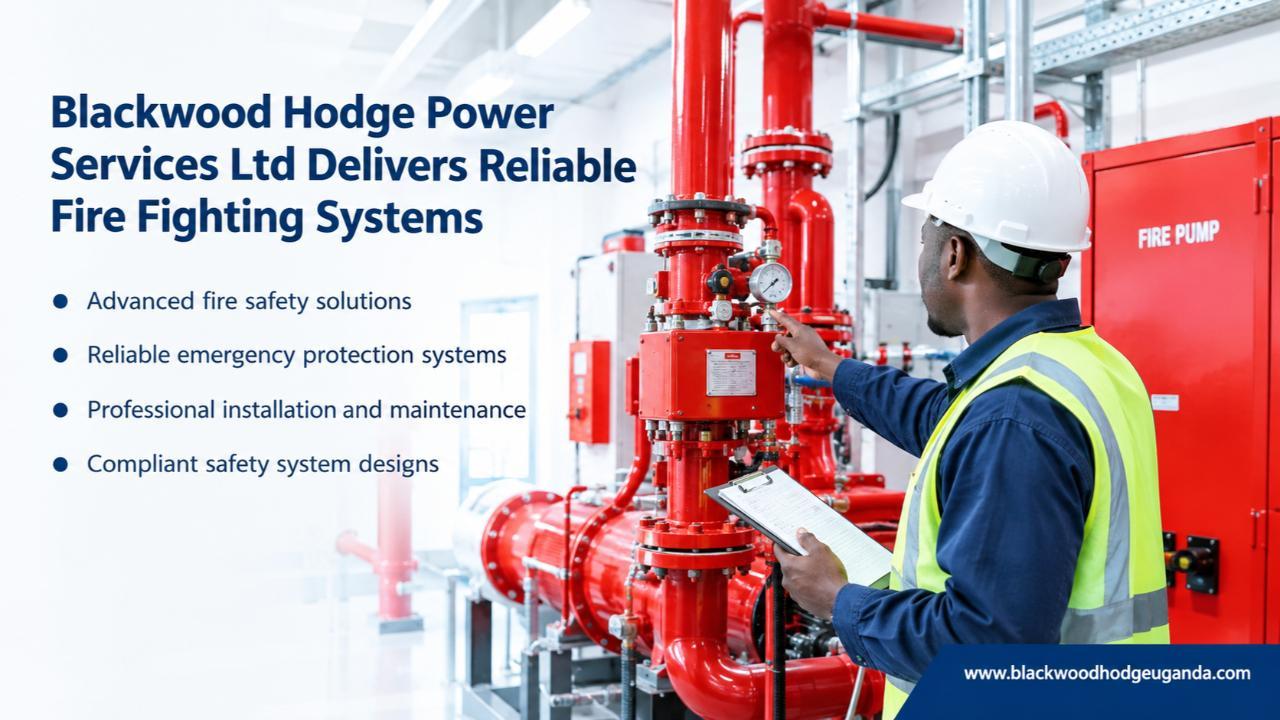
Note: When securing your infrastructure, Blackwood Hodge Power Services Ltd offers certified equipment and installation for the Fire Fighting System in Uganda. We supply reliable pumps, hydrants, and suppression equipment tailored to your structural layout to ensure immediate emergency control. Get in touch with our team today to schedule your assessment.
Key Features That Make the Setup Work
Building a reliable safety setup isn't just about sticking a few extinguishers on the wall and calling it a day. It requires a carefully planned network where every part has a specific job to do under extreme pressure. Here is a breakdown of the essential elements that need to work seamlessly together:
-
Smart Detection Networks: Modern setups rely on thermal and optical sensors that pick up heat spikes or faint smoke long before a human would ever notice.
-
Automated Pressure Controls: Water needs to move with enough force to reach the highest floors without bursting the lower pipes, which requires specialized booster pumps and valves.
-
Dedicated Power Backups: Outages almost always accompany severe accidents, so having independent generators ensures the safety machinery keeps running even when the main grid fails.
-
Targeted Suppression Outlets: Whether using sprinkler heads, high-pressure mist nozzles, or specialized gas discharge units, water or chemical retardants must hit the exact location of the flame.
The Hidden Mechanics Behind Water Movement and Pressure
Imagine trying to put out a campfire using a tiny garden hose from fifty feet away—it simply won't work because you lack both volume and pressure. The same challenge exists on a massive scale inside commercial and industrial buildings. Engineers spend countless hours calculating fluid dynamics to make sure that water flows at the precise velocity required to smother flames quickly. If the pipes are too narrow, friction slows the water down; if they are too wide, the pressure drops, leaving upper levels vulnerable.
To solve this, designers carefully map out the pipeline route to minimize sharp bends and long detours that drain energy from the stream. They also integrate specialized fire suppression equipment into the layout to handle different zones depending on what kind of materials are stored there. For instance, an office full of paper documents needs a different approach than a server room packed with delicate electronics. By balancing water delivery calculations with real-world room layouts, the setup ensures that the moment a sensor triggers, fluid reaches the flame within seconds at the exact force needed to knock it down.
Why Custom Design Trumps Off-the-Shelf Options
There is no such thing as a one-size-fits-all solution when it comes to keeping a property safe from sudden blazes. A high-rise apartment complex, a busy chemical warehouse, and a neighborhood shopping mall all face vastly different risks. Designing a protective setup means looking at the physical layout of the building, the air currents generated by ventilation systems, and the types of materials stored inside.
When planners take the time to evaluate these unique factors, they build a network that reacts intelligently to specific hazards. A warehouse storing flammable liquids, for example, might require specialized foam systems rather than standard water sprinklers, as water can actually spread chemical fires. Custom planning eliminates these deadly blind spots, making sure that the response matches the precise danger at hand.
Conclusion
At the end of the day, an emergency response network is only as strong as the thought and care put into its creation. From calculating pipe friction to selecting the right sensors and emergency power backups, solid physical planning turns a basic collection of pipes into a life-saving tool. When life and property are on the line, cutting corners simply aren't an option. Partnering with experienced professionals like Blackwood Hodge Power Services Ltd ensures that your facility stays fully protected, giving you peace of mind knowing that your safety infrastructure will perform perfectly the moment you need it most.

 English
 Arabic
 French
 Spanish
 Portuguese
 Deutsch
 Turkish
 Italiano
 Russian
 Romaian
 Portuguese (Brazil)
 Greek
Greek