


When Should You Call a Professional Gate Repair Service in Alvin?
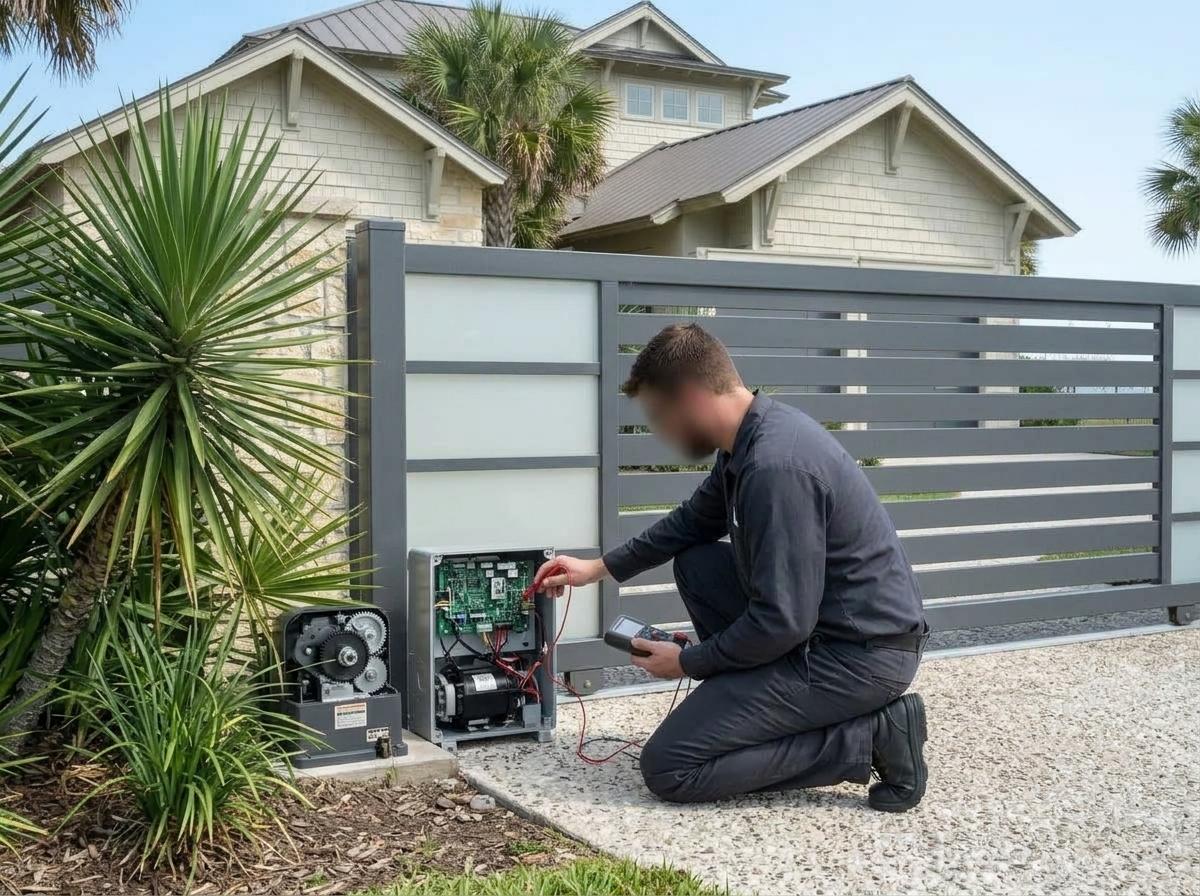
Not every gate issue requires a service call. A dead remote battery or a dirty sensor is often something homeowners can handle themselves in a few minutes. But knowing where that line sits, and recognizing when a problem genuinely calls for a gate repair service Alvin TX residents can rely on, helps avoid both unnecessary service calls and the risk of letting a small issue turn into a bigger, more expensive one.
This guide breaks down which gate problems are reasonable to troubleshoot yourself, which situations call for professional attention, and how to tell the difference before the issue gets worse.
Start With the Basics: Quick Checks Before Calling for Help
Before assuming a bigger problem — and before searching for gate repair Alvin TX options — it's worth ruling out the simplest explanations first:
-
Check remote and keypad batteries, since weak or dead batteries are one of the most common reasons a gate stops responding
-
Confirm the gate operator has power, checking for a tripped breaker or unplugged connection
-
Inspect safety sensors for dirt, debris, or misalignment, since many systems won't operate if a sensor isn't reading correctly
-
Look for visible obstructions along the gate's path, such as debris, overgrown landscaping, or shifted ground
If these basic checks resolve the issue, there's often no need for a service call at all. If they don't, it's a reasonable signal that something more involved is going on.
Situations That Call for Professional Repair
The Gate Won't Move at All, Even After Basic Checks
If you've confirmed power, checked batteries, and cleared any obstructions, but the gate still won't respond, the issue likely involves the motor, control board, or internal wiring, components that require specialized diagnostic knowledge to address safely.
Visible Structural Damage
Cracked posts, bent hinges, or a frame that's visibly warped or damaged are not something to attempt repairing on your own. Structural issues affect the gate's overall stability and, in more serious cases, its ability to function safely at all.
The Motor Runs But the Gate Doesn't Move
This often points to a mechanical disconnect, worn gears, or a chain or belt issue on automatic systems. Diagnosing the exact cause typically requires opening up the operator housing, which is best left to someone experienced with these systems.
Safety Sensors Aren't Functioning Correctly
If your gate's obstruction sensors aren't stopping or reversing the gate as they should, this is a safety issue that needs prompt attention. A malfunctioning sensor system isn't just an inconvenience, it's a genuine risk if the gate continues operating without properly detecting obstructions.
Recurring Issues Despite Previous Repairs
If you've addressed a problem once, whether through a DIY fix or a prior service call, and it keeps coming back, this often indicates the root cause wasn't fully resolved. A professional assessment can help identify whether a different component is actually responsible.
Unusual Electrical Behavior
Sparking, unusual smells near the operator, or a system that behaves erratically after a power surge or outage are signs of a potential electrical issue. These situations warrant prompt professional attention rather than continued use.
Significant Rust or Corrosion on Structural Components
While surface rust on hardware is a common, manageable issue, rust that's spread into structural elements like hinges, posts, or the gate frame itself can compromise the gate's integrity and typically requires professional evaluation.
A Quick Reference: DIY vs. Professional
|
Situation |
DIY-Appropriate? |
Notes |
|
Dead remote battery |
Yes |
Simple replacement |
|
Dirty or misaligned sensor |
Yes |
Clean and realign carefully |
|
Loose hardware |
Yes, with caution |
Tighten visible bolts and brackets |
|
Gate won't move at all |
No |
Likely motor, wiring, or control board issue |
|
Structural damage |
No |
Requires professional assessment |
|
Sensor malfunction affecting safety |
No |
Safety-critical, needs prompt professional attention |
|
Recurring issue after prior repair |
No |
Root cause likely unresolved |
|
Electrical irregularities |
No |
Potential safety hazard |
Why Prompt Attention Matters
Gate issues, particularly those involving safety sensors or structural components, tend to worsen if left unaddressed. A gate that's slightly out of alignment today can develop into a more significant structural issue over time. Similarly, a sensor that's occasionally inconsistent can become fully unreliable, creating a genuine safety concern rather than a minor inconvenience.
Addressing issues promptly, rather than waiting to see if they resolve on their own, generally leads to simpler, less costly repairs compared to letting a problem progress.
What a Professional Assessment Typically Involves
Understanding what to expect from a service call can help set realistic expectations:
-
Initial diagnosis, checking power, wiring, sensors, and mechanical components to identify the actual cause
-
Explanation of findings, with a clear description of what's causing the issue before any repair work begins
-
Repair or part replacement, addressing the specific problem identified during diagnosis
-
Safety feature testing, confirming sensors and auto-reverse functions are working correctly after the repair
-
Final walkthrough, demonstrating proper operation and answering any remaining questions
A thorough technician should be able to explain what they found and why the recommended repair addresses the actual root cause, rather than simply replacing parts without a clear diagnosis.
Choosing a Reliable Provider
When you do need professional help, not all providers offer the same level of expertise or transparency. Look for:
-
Licensing and insurance, confirmed directly
-
Experience with both automatic and manual gate systems
-
Transparent, written estimates before work begins
-
Warranty coverage on both parts and labor
-
Availability for prompt scheduling, particularly for safety-related issues
Choosing a local gate repair service Alvin residents already trust for other property needs can also mean easier follow-up support and a provider already familiar with common issues specific to the area's climate and typical gate installations.
Questions to Ask Before Scheduling Service
-
Can you diagnose the issue before recommending a specific repair?
-
What's included in your estimate, parts and labor?
-
How quickly can you typically schedule service, especially for safety-related issues?
-
Do you offer warranty coverage on the repair?
-
Do you have experience with my specific type of gate system, automatic or manual?
Clear, direct answers to these questions are a good sign you're working with a provider who takes the diagnostic process seriously rather than rushing to a repair recommendation.
Preventing the Need for Emergency Repairs
A bit of routine maintenance reduces how often you'll need to call for gate repair service in Alvin in the first place:
-
Lubricate hinges, rollers, and tracks every few months
-
Clean and test safety sensors regularly
-
Check remote and keypad batteries before they fully die
-
Inspect for early signs of rust and address it before it spreads
-
Schedule an annual professional inspection, particularly for automatic systems
For homeowners in Alvin who'd rather have peace of mind than guess at diagnosing an issue themselves, working with an experienced provider like Level Up Garage Door Pros ensures both routine maintenance and urgent repairs are handled by technicians familiar with the mechanical and electronic components common to residential gate systems.
Frequently Asked Questions
Is it ever safe to keep using a gate that's showing signs of a problem? It depends on the issue. Minor noise or slow movement is generally safe for short-term continued use, but anything involving safety sensors, structural damage, or electrical irregularities should be addressed promptly rather than ignored.
How quickly should I expect a response for an urgent gate repair issue? This varies by provider, but many local services offer prompt scheduling for safety-related or access-blocking issues, given how disruptive a non-functioning gate can be for daily use.
Can I attempt to diagnose the problem myself before calling a professional? Basic checks, batteries, power, sensor cleanliness, and visible obstructions, are reasonable to check yourself. Anything beyond that, particularly involving the motor or control board, is best left to a professional.
Why does my gate sometimes work fine and other times fail intermittently? Intermittent issues often point to a loose connection, a weakening component, or an inconsistent sensor reading. These can be harder to diagnose without professional tools, since the problem may not be present during every inspection.
Should I get multiple estimates before choosing a gate repair provider? It's a reasonable approach, particularly for more involved repairs, since it gives you a clearer sense of fair pricing and helps you compare how thoroughly each provider explains the diagnosis.
Final Thoughts
Knowing when to handle a gate issue yourself and when to call in a professional comes down to recognizing the difference between simple, low-risk fixes and problems involving safety systems, structural components, or electrical wiring. Addressing issues promptly, rather than waiting for them to worsen, tends to lead to simpler and less costly repairs overall. For homeowners in Alvin, having a reliable provider in mind before an issue arises makes the process considerably less stressful when a gate problem does come up.

 English
 Arabic
 French
 Spanish
 Portuguese
 Deutsch
 Turkish
 Italiano
 Russian
 Romaian
 Portuguese (Brazil)
 Greek
Greek