


How CNC Machinery Display Booths Help Manufacturers Stand Out at Trade Shows
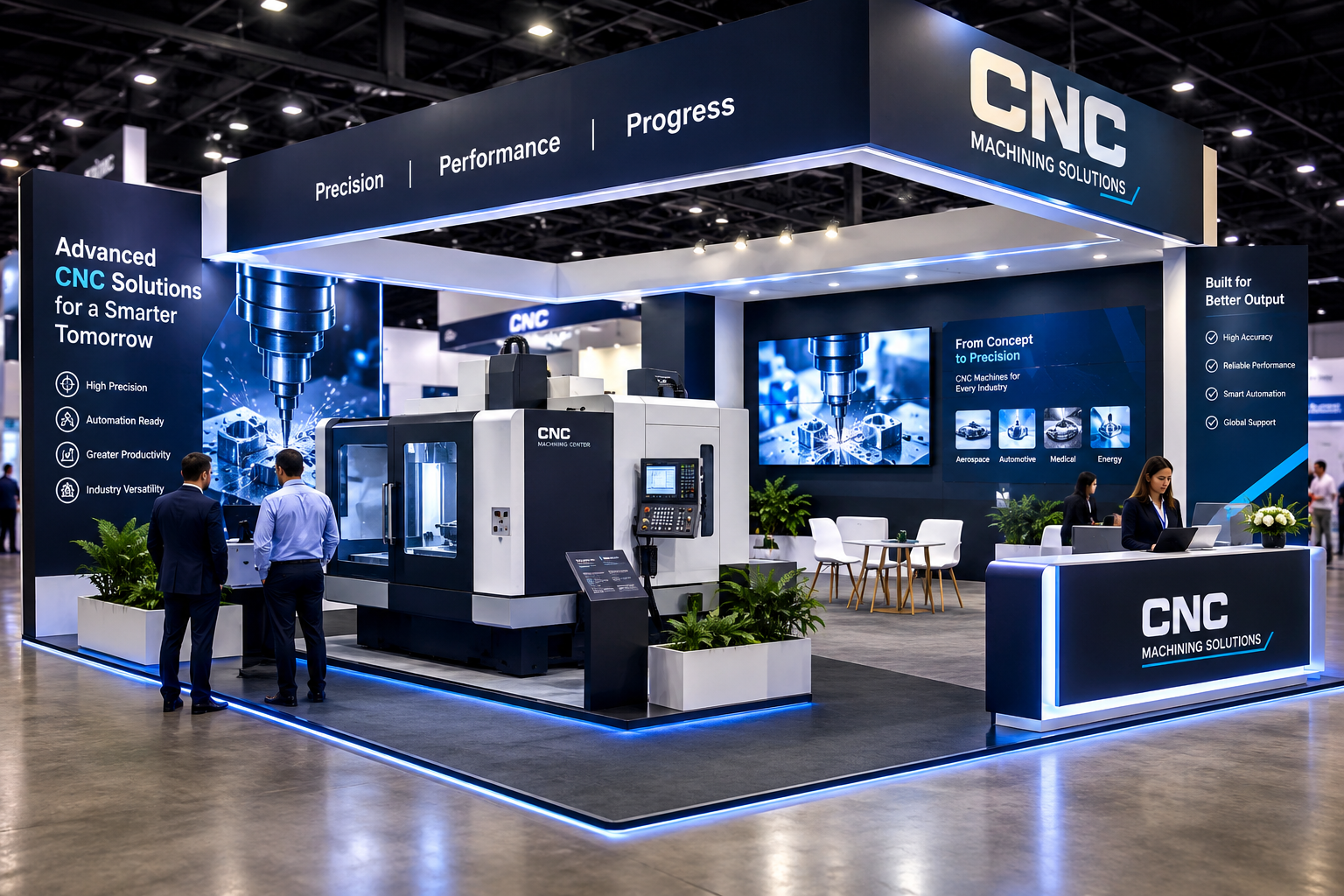
Manufacturing trade shows bring together machine manufacturers, engineers, technology providers, distributors, and industrial buyers looking for practical solutions and new production technologies. With so many companies competing for attention, a basic exhibition setup may not be enough to communicate the capabilities of advanced equipment. Well-planned CNC machinery display booths can help manufacturers present complex machines in a structured, professional, and engaging environment. A thoughtfully designed booth can make large CNC equipment easier to understand while creating opportunities for demonstrations, technical discussions, lead generation, and brand visibility.
Why Trade Show Presentation Matters for CNC Machinery Manufacturers
CNC machinery is highly technical. Buyers may need to understand machine capabilities, automation features, accuracy, speed, software compatibility, tooling options, and potential applications before considering a purchase.
At a trade show, exhibitors have limited time to communicate these details. Visitors may walk through dozens or hundreds of booths during a single event. If a machine display does not immediately communicate its purpose or value, potential customers may continue to another exhibitor.
A well-designed booth helps organize the visitor experience. Instead of simply placing a machine inside an exhibition space, manufacturers can create designated areas for demonstrations, product information, meetings, digital presentations, and technical conversations.
This approach allows visitors to understand the equipment while also experiencing the company's overall brand.
Creating a Strong First Impression
The first few seconds can influence whether a visitor stops at a booth. For CNC machinery manufacturers, the challenge is to create a strong visual presence without making the display confusing or overcrowded.
A successful booth can use several elements to establish a professional first impression:
-
Large and clearly visible company branding
-
High-quality product graphics
-
Strategic machine placement
-
Well-organized product information
-
Appropriate exhibition lighting
-
Digital screens and product demonstrations
-
Clearly defined visitor pathways
-
Comfortable meeting areas
The goal is not simply to make the booth look attractive. The design should help visitors quickly identify what the company manufactures and why the displayed equipment is relevant to them.
Displaying Large CNC Equipment Effectively
CNC machines can be large, heavy, and difficult to position within a limited exhibition footprint. Their size can become either an advantage or a challenge.
A large machine can naturally become the centerpiece of an exhibition booth. However, exhibitors need to ensure that the machine does not block important branding or make the booth difficult to navigate.
The layout should provide sufficient space around the equipment so visitors can view it from different angles. If demonstrations are planned, the booth should also accommodate safe visitor movement and presenter access.
For machines that cannot be transported to the venue, manufacturers can use high-resolution visuals, videos, 3D renderings, digital simulations, or scaled models to communicate the product.
Using Live Demonstrations to Increase Engagement
One of the most effective ways to explain CNC technology is through demonstration.
Rather than relying entirely on printed brochures, manufacturers can demonstrate how a machine performs specific manufacturing processes. A live demonstration can show machining speed, precision, automation, tooling changes, software integration, or other relevant capabilities.
Demonstrations also create natural opportunities for conversation.
For example, a visitor may watch a machine operating and then ask questions about:
-
Production capacity
-
Material compatibility
-
Machine accuracy
-
Cycle times
-
Automation
-
Maintenance requirements
-
Software integration
-
Tooling
-
Energy consumption
-
Customization options
These conversations can help sales teams identify qualified prospects and understand their specific manufacturing requirements.
Designing the Booth Around the Visitor Journey
An effective booth should be designed from the visitor's perspective.
Visitors should be able to enter the space easily, understand the company's offering, view the equipment, and find someone available to answer questions.
A logical visitor journey could include:
1. Attraction
Large branding, product visuals, or a prominent machine attracts attention from the exhibition aisle.
2. Introduction
Simple graphics communicate what the company specializes in.
3. Demonstration
The visitor sees the machine, digital simulation, or product demonstration.
4. Technical Discussion
A knowledgeable representative explains specifications and applications.
5. Meeting
A dedicated area allows the visitor to discuss requirements in greater detail.
6. Lead Capture
Contact information and project requirements are collected for post-show follow-up.
This structure transforms the booth from a static display into an organized sales and communication environment.
Using Graphics to Explain Complex Technology
CNC machinery can involve complicated technical concepts that are difficult to communicate through a short conversation.
Graphics can simplify these concepts.
For example, an exhibition wall could explain a machine's workflow using a simple visual sequence:
Design → Programming → Setup → Machining → Inspection → Finished Component
Manufacturers can also use graphics to highlight key features, applications, industries served, and technical advantages.
Instead of filling the walls with paragraphs of text, exhibitors can combine concise messaging with diagrams, product photographs, technical illustrations, and infographics.
The objective should be quick comprehension.
Incorporating Digital Displays
Digital technology can add another layer of information to a CNC machinery exhibition booth.
Large screens can display machine operation videos, factory footage, product animations, customer applications, or 3D demonstrations.
Interactive touchscreens can allow visitors to explore:
-
Machine specifications
-
Product configurations
-
Available options
-
Applications
-
Technical drawings
-
Production processes
-
Case studies
-
Service information
Digital content is especially useful when a machine is too large to bring to the exhibition or when certain operations cannot be demonstrated safely on the show floor.
Making Technical Information Easy to Understand
Manufacturing professionals often want detailed technical information, but too much information displayed at once can overwhelm visitors.
A better approach is to divide information into levels.
Level One: Quick Overview
Use short statements to communicate the machine's primary purpose.
Level Two: Key Specifications
Present important technical information such as dimensions, capacity, speed, accuracy, or automation features.
Level Three: Detailed Information
Provide brochures, QR codes, technical documents, or digital resources for visitors who want deeper information.
This layered approach lets visitors choose how much information they want without making the booth visually crowded.
Creating Dedicated Demonstration Zones
If a booth includes multiple machines or product categories, dedicated demonstration zones can make the space easier to navigate.
For example, an exhibitor could create separate areas for:
-
CNC milling
-
CNC turning
-
Automation
-
Robotics
-
Inspection
-
Software
-
Tooling
Clear visual separation allows visitors to find the technology relevant to their needs.
It also helps sales representatives conduct multiple conversations without disrupting other demonstrations.
The Importance of Lighting
Lighting is often overlooked when designing industrial exhibition booths.
However, strategic lighting can improve visibility and emphasize important products.
Manufacturers can use focused lighting to highlight machines, product components, graphics, or demonstration areas. Ambient lighting can make meeting spaces more comfortable, while illuminated branding can improve visibility from the exhibition aisle.
The lighting design should complement the machinery rather than distract from it.
Building a Professional Brand Environment
A CNC machine is often the primary attraction, but visitors are also evaluating the company behind the equipment.
The booth should communicate professionalism through consistent branding.
Brand colors, typography, graphics, signage, staff apparel, presentation materials, and digital content should work together to create a recognizable visual identity.
A consistent environment can help visitors remember the company after the trade show.
Designing Comfortable Meeting Areas
Trade shows are not only about product demonstrations. They are also valuable opportunities for business discussions.
Manufacturers may need to speak with:
-
Procurement managers
-
Plant managers
-
Engineers
-
Production managers
-
Distributors
-
System integrators
-
Business owners
-
Manufacturing consultants
A dedicated meeting area gives these conversations a more private and professional setting.
Depending on the booth size, exhibitors can use small tables for informal discussions or enclosed meeting rooms for detailed negotiations.
Supporting Lead Generation
A booth should have a clear method for capturing visitor information.
Traditional paper forms can work, but digital lead collection can make the process more efficient.
Sales teams can collect information such as:
-
Name
-
Company
-
Job role
-
Industry
-
Manufacturing requirements
-
Equipment interests
-
Purchase timeline
-
Preferred follow-up method
The most useful lead-capture process goes beyond collecting contact details. It records enough information to help the sales team understand why the visitor was interested.
Making the Booth Accessible
Accessibility should also be considered during booth planning.
Visitors should have enough space to move around equipment and access demonstration areas. Important information should be presented clearly and at appropriate viewing heights.
An accessible booth can create a more comfortable environment for a broader range of visitors and make the exhibition experience easier to navigate.
Planning for Safety Around Machinery
Safety is particularly important when displaying industrial machinery.
Before the event, exhibitors should consider the machine's operating requirements, electrical connections, moving components, demonstration procedures, and visitor access.
If equipment will operate during the show, appropriate safety measures should be established.
The exhibition team should also understand how demonstrations will be conducted and what areas visitors should avoid.
Choosing the Right Booth Layout
The ideal layout depends on the machine type, available floor space, event requirements, and exhibition objectives.
Common layouts include:
Open Layout
An open design creates easy access from multiple sides and can encourage more visitors to enter.
Demonstration-Focused Layout
This layout places the machine and demonstration area at the center of the visitor experience.
Meeting-Focused Layout
This approach provides more dedicated space for sales conversations and technical discussions.
Product-Zone Layout
Multiple product categories are arranged into clearly defined areas.
Manufacturers should select a layout based on how visitors are expected to interact with the equipment.
Using QR Codes for Additional Information
QR codes can help manufacturers provide extensive technical information without filling the booth with printed material.
A visitor can scan a code to access:
-
Product catalogs
-
Machine specifications
-
Demonstration videos
-
Technical drawings
-
Application guides
-
Product comparison information
-
Contact forms
-
Company websites
QR codes can also help exhibitors measure interest in specific products when integrated with appropriate digital tracking systems.
Preparing Staff for the Exhibition
Even an impressive booth can underperform if the staff is not prepared.
Booth personnel should understand the displayed equipment and be able to answer common technical questions.
Staff should also know how to identify visitor needs without overwhelming them with unnecessary information.
A useful approach is to begin with simple questions such as:
-
What type of manufacturing do you specialize in?
-
What equipment are you currently using?
-
What production challenge are you trying to solve?
-
Are you evaluating new machinery?
-
What type of automation are you considering?
These questions can turn a casual booth visit into a meaningful business conversation.
Common CNC Booth Design Mistakes
Several mistakes can reduce the effectiveness of a CNC machinery exhibition display.
Overcrowding the Booth
Trying to display too many machines can restrict movement and reduce visibility.
Using Too Much Text
Large blocks of technical information may discourage visitors from reading the display.
Poor Machine Placement
Machines should be positioned so visitors can view them easily without blocking major branding elements.
Weak Lighting
Poor lighting can make machines, graphics, and demonstrations less visible.
Lack of Meeting Space
Without a suitable conversation area, qualified prospects may have difficulty discussing their requirements privately.
No Clear Call to Action
Visitors should know what to do next, whether that means scheduling a demonstration, requesting technical information, or speaking with a representative.
Measuring Trade Show Booth Performance
Manufacturers can evaluate their booth after the event using measurable indicators.
Useful metrics may include:
-
Total booth visitors
-
Qualified leads
-
Product demonstrations completed
-
Meeting requests
-
Brochure or digital content interactions
-
QR code scans
-
Follow-up appointments
-
Sales opportunities generated
These metrics can help exhibitors understand which elements of the booth attracted attention and which activities generated meaningful business conversations.
Preparing CNC Machinery Display Booths for Future Trade Shows
Exhibition design continues to evolve as manufacturing technology becomes more digital, automated, and connected.
Future booth environments may increasingly combine physical machinery with augmented demonstrations, interactive software, virtual simulations, digital twins, robotics, and real-time data visualization.
However, technology should serve a clear purpose. Adding digital elements simply because they look impressive may not improve the visitor experience.
The most effective approach is to use technology to explain the equipment, demonstrate applications, simplify technical information, and encourage meaningful conversations.
Conclusion
CNC machinery manufacturers have an opportunity to turn trade show floors into interactive environments where visitors can see equipment, understand applications, ask technical questions, and discuss their production requirements. From strategic machine placement and live demonstrations to digital displays, clear graphics, meeting areas, and effective lead capture, every element can contribute to a more organized exhibition experience. Well-planned CNC machinery display booths can help manufacturers communicate complex technology clearly while creating a professional environment for product demonstrations and business conversations.

 English
 Arabic
 French
 Spanish
 Portuguese
 Deutsch
 Dutch
Dutch
 Italiano
 Russian
 Romaian
 Portuguese (Brazil)
 Greek
Greek