


Trade Show Booth Rentals vs. Custom Booths: Which Option Fits Your Goals?
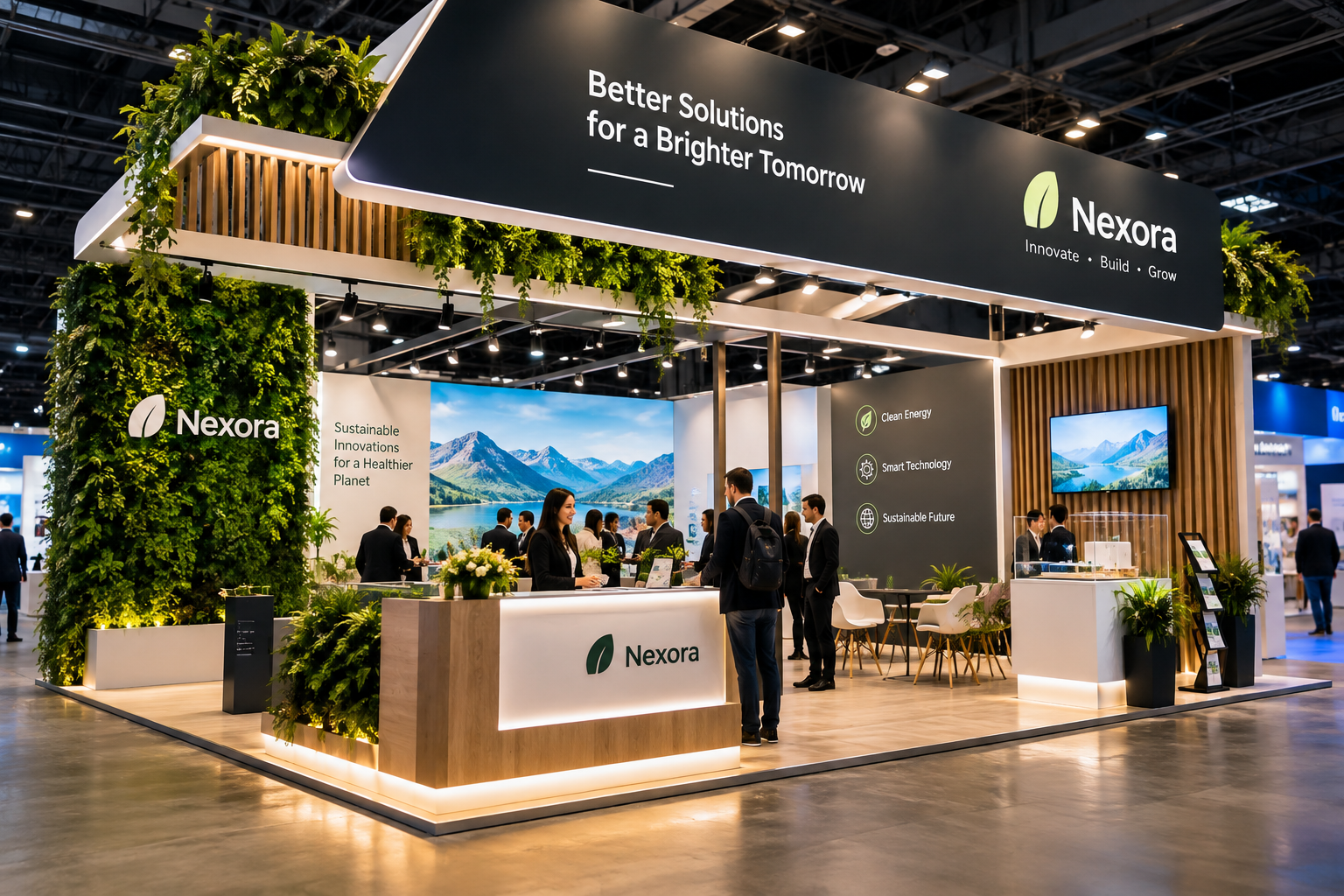
Choosing an exhibition booth is an important decision for any company preparing for a trade show. Businesses need to consider their budget, event schedule, brand requirements, booth size, logistics, and long-term exhibition plans before selecting an exhibit solution. Two common approaches are renting an exhibit or purchasing a custom booth. Trade Show Booth Rentals can provide flexibility for businesses that want an event-specific display, while custom booths can offer a permanent exhibit solution designed around a company's long-term requirements. Understanding the differences between these options can help exhibitors plan their trade show strategy more effectively.
Understanding the Two Options
Before comparing rental and custom exhibits, it is useful to understand what each approach involves.
What Are Trade Show Booth Rentals?
A rental booth is a temporary exhibition structure provided for a specific event or exhibition program.
Depending on the provider and package, it may include:
-
Exhibit structure
-
Custom graphics
-
Lighting
-
Flooring
-
Furniture
-
Storage
-
Counters
-
Product displays
-
Installation
-
Dismantling
The booth is used during the agreed rental period and managed according to the terms of the rental agreement.
What Is a Custom Booth?
A custom booth is an exhibit designed and built specifically for a company.
The business generally owns the structure and associated components after production.
A custom booth can be designed around:
-
Brand identity
-
Products
-
Marketing campaigns
-
Meeting requirements
-
Demonstration areas
-
Technology
-
Storage
-
Specific booth dimensions
Ownership can provide more control over the physical exhibit, but it also creates responsibilities for storage, transportation, maintenance, and future modifications.
Initial Investment
One of the first factors businesses consider is cost.
A custom booth generally requires a larger initial investment because the company is purchasing the exhibit.
The total cost may include:
-
Design
-
Fabrication
-
Materials
-
Graphics
-
Furniture
-
Lighting
-
Technology
-
Installation
-
Transportation
A rental booth typically uses an event-based cost structure.
Instead of purchasing the complete exhibit, the business pays for its use and related services for a particular event.
This can make rentals appealing to businesses that want to manage upfront expenditure.
However, the total cost depends on the booth design, event requirements, services, and rental agreement.
Long-Term Ownership
Custom booths provide ownership.
Once the booth is built, the company can potentially use it repeatedly.
This can be useful for businesses that participate in many events with similar booth sizes and requirements.
Rental booths, by comparison, provide temporary use.
This means businesses do not have to maintain permanent ownership of the exhibit.
The appropriate model depends heavily on the company's annual exhibition schedule.
Event Frequency
How often your company attends trade shows is an important consideration.
A company attending one or two exhibitions each year may not need a permanent booth.
Renting can allow the company to create an event-specific exhibit without maintaining a large physical asset throughout the year.
A business attending numerous exhibitions may evaluate ownership differently.
If the same booth can be used repeatedly with only minor modifications, purchasing could be considered as part of a broader long-term strategy.
Design Flexibility
Both rental and custom booths can provide professional design options.
However, the way flexibility is achieved can differ.
Rental booths can be adapted to individual events.
A business might choose a different configuration for:
-
A regional conference
-
A national trade show
-
A product launch
-
An international exhibition
Custom booths can also be modular or reconfigurable, but their structure is still an owned asset.
Businesses should consider whether their exhibition requirements remain consistent from event to event.
Branding Opportunities
Branding is important regardless of the exhibit model.
Both rental and custom booths can incorporate:
-
Logos
-
Brand colors
-
Typography
-
Product imagery
-
Marketing messages
-
Digital displays
-
Custom graphics
The key difference is not necessarily whether branding is possible, but how frequently and easily the physical presentation can be changed.
Rental graphics can be produced specifically for a particular campaign or event.
An owned booth may require new graphics or modifications when the company's branding changes.
Storage Requirements
Storage is a major consideration for owned exhibits.
A large booth may require:
-
Warehouse space
-
Proper packaging
-
Inventory management
-
Handling
-
Security
-
Maintenance
These costs continue even when the company is not exhibiting.
Rental solutions can reduce the need for businesses to maintain their own booth inventory.
For companies with limited storage capacity, this can be an important practical factor.
Transportation
Transportation requirements differ between rental and owned exhibits.
A custom booth may need to be shipped between events and returned to storage after each show.
This creates a recurring logistics process.
Rental providers may coordinate transportation as part of their services, depending on the agreement.
When comparing options, ask who is responsible for:
-
Freight
-
Shipping
-
Material handling
-
Return transportation
-
Packaging
-
Delivery schedules
Transportation costs should be included in the total exhibition budget.
Maintenance and Repairs
Ownership comes with maintenance responsibilities.
An owned booth can experience:
-
Graphic damage
-
Scratches
-
Broken components
-
Lighting problems
-
Furniture wear
-
Structural issues
The company may need to repair or replace damaged elements.
Rental arrangements can shift some maintenance responsibilities to the provider, although exhibitors may still be responsible for damage caused during use.
Always review the contract before assuming who covers repairs.
Customization
Custom booths can be designed specifically around a company's requirements from the beginning.
This can include unique:
-
Structures
-
Shapes
-
Architectural elements
-
Meeting rooms
-
Product displays
-
Technology integrations
Rental booths can also be highly customized, particularly through graphics, furniture, lighting, and modular components.
The level of customization available depends on the provider and budget.
Companies with highly specialized architectural requirements may need to evaluate both options carefully.
Speed and Convenience
Businesses often have limited time to prepare for trade shows.
A rental program can simplify some parts of the process because the provider may manage design, production, installation, and dismantling.
A custom booth requires more extensive planning because the exhibit must be designed and fabricated as a permanent asset.
This does not mean custom booths are necessarily difficult to manage, but the project may involve more long-term planning.
Installation and Dismantling
Trade show installation involves precise schedules and venue requirements.
Both rental and custom exhibits need to be installed correctly.
With rental programs, installation and dismantling may be available as part of the service package.
With owned booths, the company may work with an exhibit partner or contractor for installation.
Before selecting either option, determine who will manage:
-
Installation labor
-
Venue coordination
-
Electrical services
-
Booth inspection
-
Dismantling
-
Freight
Flexibility Across Booth Sizes
A company may participate in events with different booth footprints.
For example, one event may offer a 10-by-10 space, while another provides a larger island area.
Rental booths can be selected according to the event.
This can help businesses avoid forcing one permanent configuration into every exhibition.
Custom modular systems can also be designed for flexibility, but businesses should evaluate whether the system can realistically adapt to their most common booth sizes.
Product Demonstrations
Product demonstrations can influence booth design.
Companies demonstrating physical products may require:
-
Counter space
-
Shelving
-
Electrical connections
-
Screens
-
Open floor areas
-
Seating
A rental booth can be designed around the demonstration requirements of a particular event.
A custom booth can be built specifically around a company's product demonstration strategy.
The better approach depends on how frequently those requirements change.
Meeting Space
Some companies need private or semi-private meeting areas.
For example, businesses with complex B2B sales cycles may schedule multiple customer meetings during a trade show.
A booth may therefore need:
-
Meeting tables
-
Chairs
-
Lounge areas
-
Private rooms
-
Storage
Rental designs can incorporate these features depending on booth size.
Custom booths can also be built around a company's preferred meeting format.
Technology Integration
Technology can be included in both rental and custom exhibits.
Possible options include:
-
LED displays
-
Touchscreens
-
Product configurators
-
Digital catalogs
-
Interactive presentations
-
QR codes
-
Lead capture systems
A custom booth can be designed with permanent technology infrastructure.
A rental booth may use event-specific technology that can be changed as marketing needs evolve.
Technology should always serve a specific purpose rather than simply occupying space.
Rebranding and Marketing Changes
Businesses evolve.
Companies may introduce new products, change logos, update colors, or modify their messaging.
A permanent booth may require graphic updates when these changes occur.
Rental exhibits can make it easier to create a new visual presentation for each event.
This can be especially useful for companies that regularly run different marketing campaigns.
Geographic Expansion
Companies entering new markets may participate in exhibitions across different cities or regions.
Rental exhibits can provide location-specific flexibility.
For example, a company could select:
-
A compact booth for a regional event
-
A larger exhibit for a major industry show
-
A meeting-focused design for a B2B conference
This flexibility can help businesses adapt their physical presence to different markets.
Comparing Total Cost
It is important to compare more than the purchase price or rental fee.
For a custom booth, consider:
Purchase + Storage + Maintenance + Transportation + Repairs + Modifications + Installation + Dismantling
For a rental booth, consider:
Rental + Design + Graphics + Shipping + Installation + Dismantling + Additional Services
The actual calculation will vary by event and provider.
A complete cost comparison provides a more accurate picture than comparing two headline prices.
Sustainability Considerations
Exhibitors are increasingly interested in reducing waste and using resources efficiently.
Rental systems can allow components to be reused across different exhibitors and events, depending on the system and provider.
Custom booths can also incorporate reusable and modular components.
Businesses interested in sustainability should ask providers about:
-
Reusable structures
-
Recyclable graphics
-
Modular components
-
Material selection
-
Shipping efficiency
-
Waste management
Sustainability should be considered alongside practical and financial requirements.
When a Rental Booth May Be Appropriate
A rental approach may be relevant for businesses that:
-
Exhibit occasionally
-
Test new markets
-
Attend events in different cities
-
Need different booth sizes
-
Want to avoid permanent storage
-
Prefer event-specific branding
-
Are exhibiting for the first time
-
Want flexibility in booth design
These factors do not automatically make renting the right choice, but they can make it worth considering.
When a Custom Booth May Be Appropriate
Ownership may be considered by companies that:
-
Exhibit frequently
-
Have consistent booth dimensions
-
Want long-term control
-
Need highly specialized construction
-
Have storage capabilities
-
Want to reuse the same structure
-
Require permanent technology integration
Again, the appropriate approach depends on the company's individual exhibition strategy.
Questions to Ask Before Deciding
Before selecting an exhibit model, ask:
How Many Events Do We Attend?
Review your annual event calendar.
Do Our Booth Sizes Change?
Frequent changes can influence the value of flexibility.
Do We Have Storage?
Owned exhibits require appropriate storage between events.
How Important Is Customization?
Highly specialized designs may require additional planning.
What Is Our Long-Term Budget?
Consider both initial and recurring costs.
How Quickly Do We Need the Booth?
Project timelines can influence the practical choice.
Who Will Handle Logistics?
Clarify transportation, installation, and dismantling responsibilities.
Create a Decision Framework
Rather than choosing based on appearance alone, evaluate the two options across several categories.
| Consideration | Rental Booth | Custom Booth |
|---|---|---|
| Initial investment | Event-based | Higher upfront investment |
| Ownership | Temporary use | Company-owned |
| Storage | Generally less responsibility | Required |
| Design flexibility | High for event-specific needs | High within owned system |
| Event frequency | Useful for occasional events | Can suit frequent events |
| Rebranding | Easier to refresh | May require updates |
| Maintenance | Depends on agreement | Owner responsibility |
| Logistics | May be managed by provider | Requires ongoing planning |
| Long-term reuse | Limited to rental terms | Designed for reuse |
| Booth customization | Depends on provider | Can be highly specialized |
This comparison is not a universal rule. Businesses should evaluate their own requirements before deciding.
Think About Your Long-Term Exhibition Strategy
The best exhibit solution should support your broader marketing plan.
Review:
-
Annual events
-
Expected booth sizes
-
Target audiences
-
Geographic markets
-
Product launches
-
Marketing campaigns
-
Budget
-
Storage capabilities
-
Staffing
-
Lead-generation objectives
A company that understands its exhibition strategy can make more informed decisions about whether to rent, purchase, or use a combination of approaches.
Final Checklist
Before making your decision, consider:
-
Event frequency
-
Booth size
-
Budget
-
Brand requirements
-
Customization
-
Storage
-
Transportation
-
Installation
-
Dismantling
-
Maintenance
-
Technology
-
Product displays
-
Meeting requirements
-
Marketing changes
-
Geographic expansion
-
Long-term exhibition goals
Reviewing these factors can help you select an exhibit model that fits your operational needs.
Conclusion
Trade show booth rentals and custom booths can both provide professional exhibition environments, but they support different business circumstances. Rental exhibits can offer flexibility, event-specific configurations, reduced storage responsibilities, and opportunities to refresh booth presentations. Custom booths provide ownership and can be designed around long-term exhibition requirements. Trade Show Booth Rentals can be worth considering when a company wants a flexible exhibit solution without maintaining a permanent booth inventory. By comparing complete costs, event frequency, booth requirements, branding needs, logistics, and long-term goals, businesses can select an exhibition approach that aligns with their specific trade show strategy.

 English
 Arabic
 French
 Spanish
 Portuguese
 Deutsch
 Turkish
 Dutch
Dutch
 Italiano
 Russian
 Portuguese (Brazil)
 Greek
Greek