


What Happens When a Desert Storm Exposes Hidden Roof Leaks?
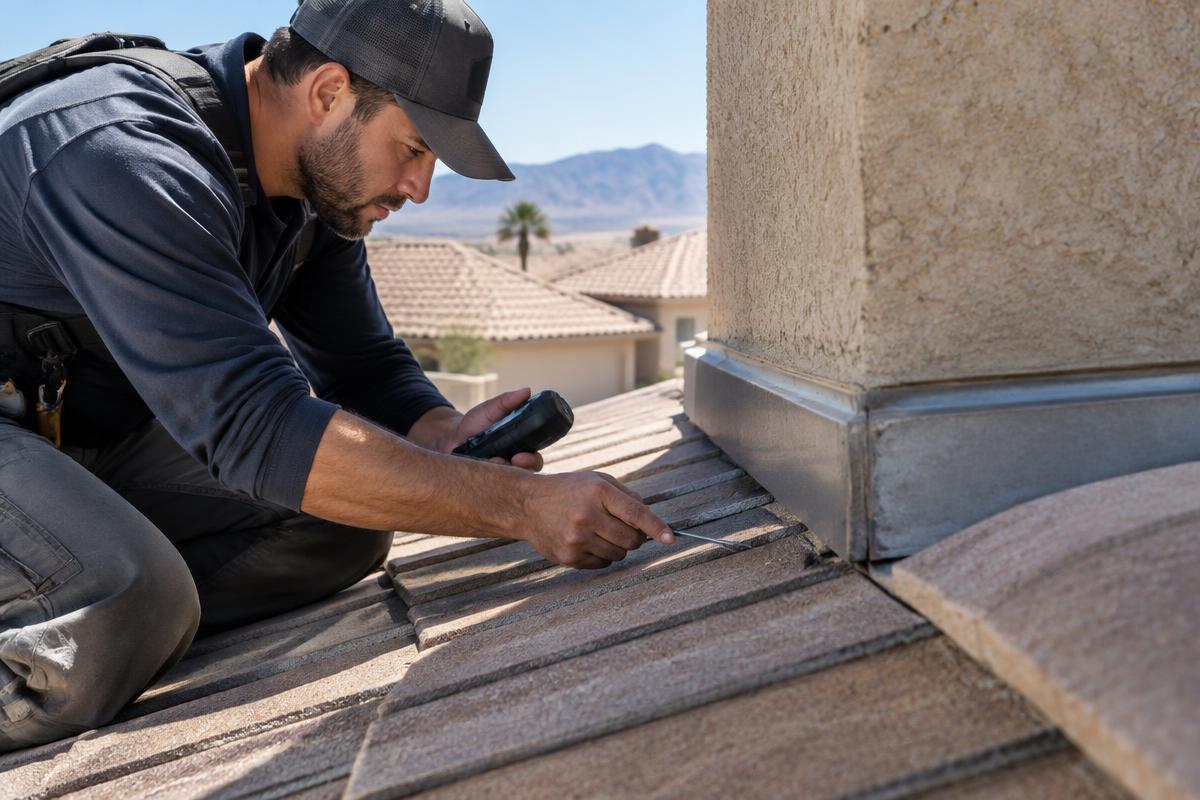
Desert weather presents a unique contradiction for residential and commercial roofing. Prolonged stretches of extreme heat, intense ultraviolet radiation, and dry air bake roofing materials for months on end. Asphalt shingles lose their flexibility, underlayment turns brittle, and expansion joints stretch under relentless thermal pressure. When high-velocity monsoon downpours or winter rainstorms strike, water instantly seeks out every microscopic fracture or compromised flashing seam. Because precipitation occurs infrequently, a small flaw can silently worsen undetected for seasons until sudden torrential water intrusion causes severe interior damage. Understanding how water migrates through arid-climate roofing assemblies helps property owners take timely action before minor drips escalate into costly structural repairs.
Why Are Arid Roof Leaks So Difficult to Track?
pinpointing the source of water ingress in a dry environment is rarely as simple as looking directly above a ceiling stain. Arid climates accelerate specific mechanical wear patterns that alter how moisture travels through structural layers before it ever becomes visible inside a living space or office.
Thermal Stress and Thermal Shock Fractures
Daytime temperatures regularly exceed triple digits, causing roofing materials to expand significantly. As the sun sets or a sudden rainstorm drops surface temperatures rapidly, the roof structure contracts. This continuous cycle of rapid expansion and contraction—known as thermal shock—weakens adhesive bonds, cracks sealant joints, and snaps delicate underlayment membranes. Water enters at these stress fractures on the upper slope, but gravity often carries it along rafter lines or decking seams several feet away before it drips onto interior drywall.
Deterioration of Underlayment Under Clay and Concrete Tiles
Tile roofs are exceptionally popular across desert neighborhoods due to their durability and heat resistance. However, the tiles themselves act primarily as a shedding mechanism rather than a waterproof barrier. The primary defense against rain is the felt or synthetic underlayment installed beneath the tile matrix. Years of trapped attic heat degrade organic underlayment layers, making them dry, crumbly, and prone to tearing. When driven rain penetrates beneath loose tiles, compromised underlayment allows water to pool on plywood decking without immediate visual indicators on the roof surface.
How Do Technicians Identify Infiltration Points Quickly?
Locating moisture intrusion early requires a structured diagnostic approach rather than guesswork. Professional evaluation combines physical inspection protocols with non-destructive diagnostic tools to track moisture pathways back to their origin.
Moisture Meters and Thermal Imaging Assessments
Modern diagnostic procedures rely on infrared thermal imaging cameras to identify surface temperature variations caused by trapped moisture. Damp insulation and wet wood decking retain heat differently than surrounding dry building materials. By scanning the ceiling matrix and roof deck, specialists pinpoint precise moisture reservoirs. Complementary probe and pinless moisture meters confirm elevated saturation levels without causing unnecessary physical damage to building materials.
Physical Inspections of Critical Vulnerability Zones
While technology provides clear diagnostic mapping, physical evaluation remains vital. Technicians systematically examine high-vulnerability areas where different building materials intersect. These primary inspection targets include:
-
Pipe Boots and Vent Stacks: Neoprene boots split and dry-rot quickly under severe sun exposure, allowing water to trickle down vent pipes.
-
Valley Metal and Flashing: Valleys handle the highest volume of runoff during heavy downpours. Debris build-up or rust along valley metal forces water sideways underneath shingles or tiles.
-
Parapet Wall Connections and Reglets: On flat roof sections, the seams connecting flat membrane material to parapet walls frequently suffer bond failure due to movement in the wall structure.
-
Skylight Curbs and Step Flashing: Failed perimeter caulking around skylights creates immediate pathways for wind-driven moisture.
What Steps Resolve Emergency Leak Points Effectively?
When water actively penetrates a roof structure, halting interior damage takes precedence. A durable resolution involves a calculated two-step strategy: immediate containment followed by complete structural restoration.
Immediate Containment Protocols
During active weather events, initial efforts focus on temporary stabilization to safeguard building contents and structural framing. This phase includes installing heavy-duty, UV-resistant tarps secured with wooden batten strips over damaged roof zones. Emergency crew members may also apply temporary wet-surface sealants around cracked penetrations or clear blocked scuppers and drain basins to release standing water from low-slope surfaces.
Comprehensive Structural Restoration
Temporary containment only buys time. Long-term durability requires permanent structural restoration. Damaged roofing units—whether shingles, tiles, or membrane sheets—must be carefully removed to expose the underlying roof deck. Technicians cut away saturated underlayment, replace rotted or swollen plywood decking, install high-performance ice-and-water shield barriers along critical seams, and integrate new flashing. Partnering with reliable, fast roof leak detection & repair in North Las Vegas, NV ensures that both the surface materials and underlying structural layers meet local building codes and withstand regional weather conditions.
What Are the Consequences of Delaying Moisture Repairs?
Ignoring minor water stains or assuming a small leak has self-resolved after rain stops can lead to extensive structural and environmental issues within the property.
Hidden Wood Rot and Decking Failure
Continuous moisture exposure softens structural roof sheathing, trusses, and ceiling joists. Over time, wood-decay fungi compromise the load-bearing capacity of these components, causing rooflines to sag and creating hazardous conditions during subsequent high-wind events. Replacing entire structural trusses costs exponentially more than replacing localized decking during early leak detection.
Mold Spore Proliferation in Attic Spaces
Attic spaces provide ideal environments for mold growth when moisture mixes with elevated temperatures and poor ventilation. Mold spores can colonize insulation, drywall, and timber framing within 24 to 48 hours of water exposure. Once established, mold degrades indoor air quality and circulates throughout living spaces via central heating and cooling ductwork.
How Can Property Owners Prevent Rain-Induced Water Damage?
Proactive maintenance programs significantly reduce the likelihood of sudden water intrusion during unexpected storms.
Scheduled Bi-Annual Roof Evaluations
Scheduling comprehensive inspections twice a year—ideally in late spring before summer heat reaches its peak and in early autumn prior to seasonal rain patterns—helps catch deteriorating sealants, cracked tiles, or displaced shingles before wet weather arrives.
Clearing Drainage Systems and Debris Accumulation
Monsoon winds deposit sand, gravel, palm fronds, and tree leaves across roof surfaces. On flat or low-slope structures, debris accumulates in scuppers, interior drains, and downspouts. When drains clog, standing water builds up along roof edges, adding thousands of pounds of static weight and forcing water over parapet flashing seams. Keeping roof valleys and drainage paths clear guarantees that heavy rainwater drains off the building as designed.
Taking a proactive approach to roof care protects property value, preserves indoor air quality, and ensures that building enclosures remain completely resilient against unpredictable desert weather patterns.
For additional information, visit: Rank Business Listings

 English
 Arabic
 French
 Spanish
 Portuguese
 Deutsch
 Turkish
 Dutch
Dutch
 Italiano
 Russian
 Portuguese (Brazil)
 Greek
Greek