


Best Solar Batteries Australia: How to Match Battery Capacity to Your Daily Energy Consumption
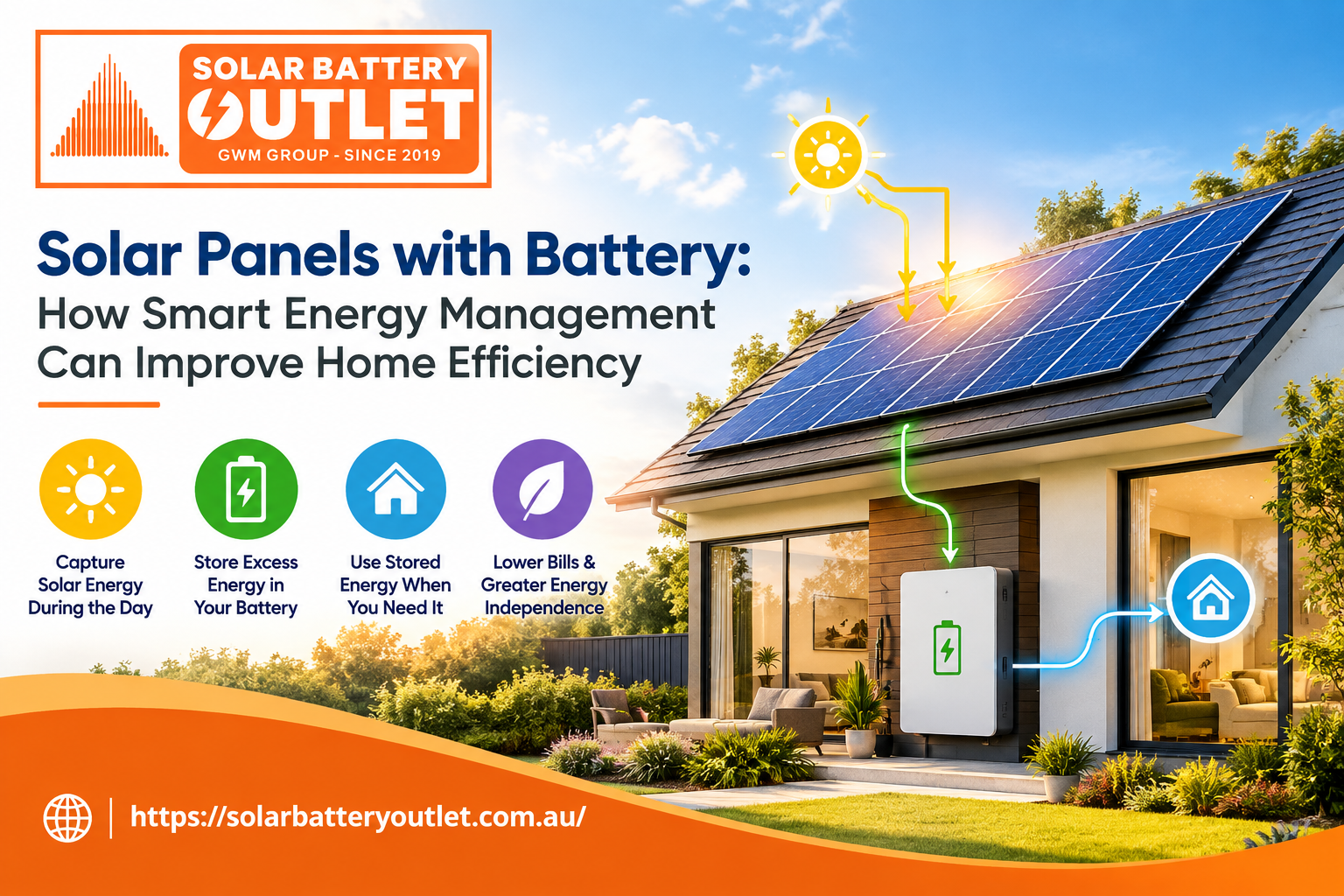
Choosing a home battery is not simply about buying the largest storage system you can afford. The right choice depends on how much electricity your household uses, when that electricity is needed, and how much surplus solar energy is available to charge the battery. For homeowners researching the Best Solar Batteries Australia, understanding these factors can make it easier to choose a system that suits their everyday needs without paying for unnecessary storage.
Every household has a different energy profile. A family that uses most of its electricity in the evening may benefit from a different battery capacity than a household where someone works from home during the day. Similarly, homes with air conditioning, electric vehicles or electric hot water systems may have more complex energy requirements.
Matching battery capacity to daily consumption helps homeowners make practical decisions based on actual electricity use rather than assumptions. It also provides a clearer starting point for comparing battery systems, estimating potential savings and planning for future changes in household energy demand.
Why Does Battery Capacity Matter for Your Home?
Battery capacity determines how much energy a battery can store, usually measured in kilowatt-hours (kWh). This stored electricity can then be used when solar panels are not generating enough power to meet household demand.
For example, a battery with 10 kWh of usable capacity can theoretically supply 10 kWh of electricity before accounting for factors such as conversion losses, operating conditions and any energy reserved by the system. The actual amount of electricity available to household appliances may therefore be lower.
Choosing the correct capacity matters for two main reasons. A battery that is too small may run out of stored energy before the household finishes using electricity for the day. A battery that is larger than necessary may regularly remain partly charged because there is not enough surplus solar energy or household demand to make full use of it.
Neither situation is ideal for a homeowner trying to make an informed investment.
Understand the Difference Between Nominal and Usable Capacity
Battery specifications often include nominal capacity and usable capacity. Although these figures are related, they do not always mean the same thing.
Nominal capacity refers to the battery's stated total energy storage capacity. Usable capacity describes how much of that stored energy the system allows the homeowner to access during normal operation.
For instance, two batteries might advertise similar nominal capacities but provide different amounts of usable energy. Comparing their usable capacities gives a more meaningful indication of how much electricity each system can supply.
It is also worth checking whether the quoted figures account for any energy that the battery management system reserves to protect the battery. Manufacturer specifications and warranty conditions can help clarify these differences.
When comparing systems, look beyond the headline capacity figure and consider the energy you can realistically use.
Start by Understanding Your Household's Daily Electricity Consumption
Before deciding how much battery storage you need, establish how much electricity your home consumes during a typical day. Your electricity bill is a useful starting point, but it may not provide enough detail on its own.
Bills generally show electricity consumption over a billing period. Dividing the total by the number of days gives an average daily figure.
For example, if a household uses 900 kWh over a 90-day billing period, its average daily consumption is:
900 kWh ÷ 90 days = 10 kWh per day.
This calculation is useful, but it does not automatically mean that a 10 kWh battery is the right choice. Some of the household's electricity may already be used directly from the solar panels during daylight hours. A battery is primarily intended to store surplus generation for use at another time.
The more important question is how much electricity your household needs when solar generation is low or unavailable.
Review Your Electricity Usage Patterns
If your electricity retailer provides half-hourly or interval consumption data, use it to understand when your household uses the most energy.
Look for patterns such as:
-
High electricity consumption between 5 pm and 10 pm.
-
Regular daytime electricity use from working at home.
-
Heavy air conditioning demand during hot weather.
-
Electric vehicle charging after returning home.
-
Electric hot water systems operating during the evening.
-
Weekend usage that differs significantly from weekday consumption.
These patterns help distinguish total daily consumption from the portion that a battery could realistically supply.
A household using 15 kWh each day might need only a relatively modest battery if much of its electricity is consumed directly while the sun is shining. Another household using the same amount could need more storage if most of its demand occurs after sunset.
Practical tip: Review electricity usage across several weeks or months rather than relying on one unusually hot, cold or quiet day. A broader view provides a more reliable picture of your normal energy requirements.
Calculate How Much Electricity You Need After Sunset
One of the most useful ways to estimate battery capacity is to focus on evening and overnight consumption.
Solar panels generally generate electricity during daylight hours, although output varies with weather, roof orientation, shading and the season. A battery allows some of that daytime energy to be stored for later use.
Start by identifying the appliances your household typically uses after sunset. These may include lighting, refrigeration, televisions, computers, cooking equipment, heating or cooling systems, and other household devices.
Consider a household with the following estimated evening and overnight consumption:
|
Household activity |
Estimated electricity use |
|
Lighting and electronics |
1.5 kWh |
|
Refrigerator and other essential appliances |
1.5 kWh |
|
Cooking and kitchen equipment |
2 kWh |
|
Air conditioning |
3 kWh |
|
Other overnight consumption |
2 kWh |
|
Total |
10 kWh |
These figures are illustrative rather than typical consumption benchmarks. Actual usage will depend on appliance efficiency, operating hours, household size and weather conditions.
In this example, the household uses approximately 10 kWh between sunset and the following morning. A battery with 10 kWh of usable capacity might appear suitable, but the calculation still needs to account for conversion losses, the battery's discharge limits and whether sufficient solar energy is available to recharge it.
If the homeowner wants to power additional appliances during the evening or maintain a reserve for unexpected needs, a different capacity may be appropriate.
The objective is not necessarily to cover every unit of electricity consumed. It is to identify which portion of demand the battery should serve and choose a system that can meet that goal under realistic conditions.
Match Battery Capacity to Available Solar Generation
Household consumption is only one part of the equation. A battery also needs enough surplus electricity to charge.
If your solar panels produce enough electricity to run your appliances during the day, any additional generation may be available for battery charging or export to the electricity grid. However, if daytime consumption is high, there may be less surplus energy left to fill a large battery.
This is particularly important for households with electric vehicles, swimming pool pumps, electric hot water systems or people working from home.
Understand Your Solar Energy Surplus
Imagine a home that generates 25 kWh of solar electricity on a sunny day. During daylight hours, the household uses 12 kWh directly, leaving approximately 13 kWh before considering system losses and other constraints.
That surplus may be enough to charge a suitably sized battery, provided the timing of generation, battery charging limits and other system conditions allow it.
Now consider a cloudy day when the solar system generates only 12 kWh. If the household uses 9 kWh during daylight hours, only about 3 kWh remains available for charging.
A large battery cannot compensate for electricity that the solar panels do not generate. It may remain partly charged unless it can also charge from the grid under the system's operating settings and applicable electricity arrangements.
This is why battery sizing should account for both sunny and less favourable days.
Consider Seasonal Differences
Solar generation changes throughout the year. Daylight hours, cloud cover, shading and the sun's position can all influence the amount of electricity your panels produce.
At the same time, household consumption may change with the seasons. Air conditioning can increase electricity demand during hot Australian summers, while heating and longer periods indoors can affect winter consumption.
A battery that charges fully on most summer days may not reach the same charge level during winter.
Reviewing seasonal solar production and electricity usage can help you decide whether to prioritise typical daily performance, summer demand, winter needs or backup capacity for specific situations.
Consider Battery Power as Well as Capacity
Battery capacity is important, but it does not tell you how many appliances the battery can run simultaneously.
Capacity measures stored energy in kWh, while power output is measured in kilowatts (kW). Power determines how much electricity the battery can supply at a particular moment.
For example, a battery may contain enough stored energy to supply a household for several hours but have a power output limit that prevents it from running several high-demand appliances simultaneously.
This distinction matters for homes that operate air conditioning, kettles, ovens, pumps and other high-power equipment.
Check Continuous and Peak Power Ratings
Continuous power indicates the output the battery can sustain under specified conditions. Peak power refers to a higher output that may be available for a limited period, such as when certain appliances start up.
When comparing systems, check both ratings and understand the conditions attached to them.
You should also consider the inverter's capabilities. The inverter converts electricity between the forms used by the battery, solar panels and household electrical system. Its rating can influence how much power is available to your appliances.
If backup power is important, ask the installer which circuits can operate during an outage and whether the system can support the appliances you want to keep running.
A battery with ample capacity is not automatically capable of supplying every appliance in the home at once.
Choose Capacity Around Your Household's Energy Priorities
There is no single battery size that suits every Australian household. The appropriate capacity depends on what you want the system to achieve.
Some homeowners want to reduce their reliance on grid electricity in the evening. Others want to maximise the use of their own solar generation, manage time-of-use electricity rates or maintain power for selected appliances during outages.
Clarifying these priorities makes it easier to assess different battery options.
For Households With Moderate Evening Consumption
Homes with relatively low evening electricity use may not need a large battery. A smaller system could cover lighting, refrigeration, electronics and other regular overnight needs.
However, homeowners should check whether the battery can be expanded later if their energy requirements change. Expansion is not supported by every product, and adding storage later may require compatible batteries, inverter capacity and additional installation work.
For Families With High Evening Demand
Larger households may use substantial electricity after sunset, particularly when several people cook, watch television, use computers or operate cooling systems at the same time.
These homes may benefit from more usable storage, provided their solar generation can charge it sufficiently.
Rather than sizing a battery using household size alone, estimate actual evening consumption. Two families with the same number of people can have very different energy needs because of their appliances, routines and building characteristics.
For Homes With Electric Vehicles
Electric vehicles can substantially change a household's electricity profile. The key consideration is when the vehicle is charged and whether the home has enough surplus solar generation to support that charging.
If a vehicle is usually parked at home during the day, it may be possible to direct some solar generation to charging it directly. This can reduce the amount of energy that needs to pass through a home battery.
If the vehicle is usually charged at night, household battery storage may play a different role. However, powering an electric vehicle can require a considerable amount of energy, so it is important to calculate the expected demand rather than assume a standard home battery will cover it.
In many cases, scheduling vehicle charging during solar production hours may be worth considering alongside battery sizing.
Understand Battery Efficiency and Energy Losses
Not all the electricity used to charge a battery is returned as usable energy. Some energy is lost during charging, storage and discharging.
Round-trip efficiency describes the proportion of energy put into a battery that can be recovered for use, measured under specified testing conditions.
For example, if a system has a hypothetical round-trip efficiency of 90%, supplying 9 kWh of usable energy would require approximately 10 kWh of charging energy under the same measurement assumptions. Real-world results can differ according to operating conditions and system design.
Efficiency matters because a battery's advertised capacity alone does not reveal how much electricity it can deliver after being charged.
When comparing products, check the manufacturer's efficiency specifications and understand whether they refer to the battery itself or the complete system. The latter may include inverter-related losses and provide a more useful basis for comparison.
Also consider standby consumption, temperature limits and operating requirements. These details can affect how effectively stored energy is used over time.
Evaluate the Financial Side Before Choosing a Larger Battery
A larger battery usually costs more than a smaller system, although the final price depends on the product, inverter requirements, installation complexity and other system components.
The important question is whether the additional capacity is likely to provide enough practical value to justify the extra expense.
For example, suppose a household considers adding several extra kilowatt-hours of storage. If the existing battery is regularly depleted early in the evening and sufficient surplus solar electricity is available to charge the additional capacity, the upgrade may help meet more of the household's demand.
However, if the existing battery frequently remains partly charged overnight, extra capacity may provide little additional benefit under the household's current usage pattern.
Compare the Value of Stored Electricity
A battery's financial value depends partly on the difference between the cost of electricity purchased from the grid and the value of electricity that would otherwise be exported.
For instance, using stored solar electricity may avoid purchasing electricity at a higher retail rate. However, storing that energy also means giving up the opportunity to export it and receive any applicable feed-in credit.
The calculation should account for charging and discharging losses, battery degradation, installation costs, financing costs where relevant, and any changes in electricity tariffs.
Time-of-use tariffs can further complicate the calculation because electricity prices vary by time of day. A battery may provide more value when it displaces expensive grid electricity, but the outcome depends on the household's actual tariff and operating pattern.
Avoid relying on a single advertised payback period without checking the assumptions behind it. Estimates based on unusually high electricity prices, perfect charging conditions or constant battery use may not reflect your circumstances.
Plan for Future Changes in Household Electricity Use
A battery should meet your current needs while allowing for realistic changes in the years ahead.
You might be planning to buy an electric vehicle, replace a gas appliance with an electric alternative, install a swimming pool or add more air conditioning. These changes can increase electricity consumption and alter when energy is needed.
Before choosing a battery, consider which changes are likely and when they might happen.
If you expect your electricity use to increase significantly, a system that supports future expansion may be worth investigating. On the other hand, purchasing a much larger battery now for a possibility that may never happen could add unnecessary upfront expense.
Ask the installer whether the proposed battery can be expanded, what components would need upgrading and whether future additions would affect the existing warranty.
A flexible system can be useful, but compatibility and expansion costs should be verified rather than assumed.
What Should You Ask an Installer Before Finalising Battery Capacity?
A professional assessment can help turn your consumption figures into a practical system design. Before accepting a quote, ask questions that connect the proposed battery size with your actual electricity use.
Useful questions include:
-
How much electricity does my household typically consume after sunset?
-
How much surplus solar energy is available for charging on ordinary days?
-
What usable capacity will the proposed battery provide?
-
What are the continuous and peak power output ratings?
-
How will seasonal changes affect charging and household demand?
-
Can the system supply my selected appliances during a power outage?
-
Is backup functionality included, or does it require additional equipment?
-
What are the battery's round-trip efficiency and warranty conditions?
-
Can the system be expanded if my energy needs increase?
-
What assumptions have been used to estimate savings and payback?
The answers should relate to your consumption data, solar generation and household priorities. If a proposal recommends significantly more storage than you expected, ask the installer to explain why that additional capacity is necessary.
For homeowners comparing a Solar battery with solar panels, it is also important to confirm whether the existing inverter can support the proposed battery or whether additional equipment is required. Compatibility can influence both the total cost and the practical operation of the system.
A Simple Checklist for Matching Battery Capacity to Daily Consumption
Before making a final decision, work through the following steps:
-
Review your electricity bills. Calculate average daily consumption and identify seasonal differences.
-
Check interval data. Determine how much electricity you use after sunset and overnight.
-
Review solar production. Estimate how much surplus energy is available to charge the battery.
-
Identify essential appliances. Decide which appliances you want to support during normal operation and, if needed, during an outage.
-
Compare usable capacity. Do not rely solely on nominal capacity figures.
-
Check power ratings. Make sure the battery and inverter can support your expected simultaneous loads.
-
Consider efficiency and warranties. Review usable energy, round-trip efficiency, operating limits and warranty terms.
-
Compare total costs. Assess whether additional storage is likely to provide meaningful value.
-
Allow for future changes. Consider planned appliances, vehicle charging and possible system expansion.
-
Request a tailored assessment. Ask a qualified installer to explain how the proposed capacity relates to your actual energy profile.
Making a More Informed Battery Choice
Choosing suitable home energy storage begins with understanding how your household consumes electricity, not with selecting a capacity from a product list. Daily consumption, evening demand, surplus solar generation, battery power output and system efficiency all influence how well a battery will perform in everyday use.
For anyone researching the Best Solar Batteries Australia, comparing these factors provides a more reliable basis for evaluating different products than focusing on capacity or price alone. A smaller battery that is regularly charged and used effectively may suit one household better than a larger system that rarely reaches its full potential.
The most useful starting point is your own energy data. Review when electricity is consumed, estimate how much solar energy is available for storage, and identify the appliances you want the battery to support. Then compare systems using their usable capacity, power ratings, efficiency, warranty conditions and compatibility with your existing equipment.
By approaching battery selection this way, homeowners can make a more informed decision that reflects their present needs while leaving room for sensible changes in the future.

 English
 Arabic
 French
 Spanish
 Portuguese
 Deutsch
 Dutch
Dutch
 Italiano
 Russian
 Romaian
 Portuguese (Brazil)
 Greek
Greek