


Glass Spherical Lens: Understanding Its Role in Precision Optical Systems
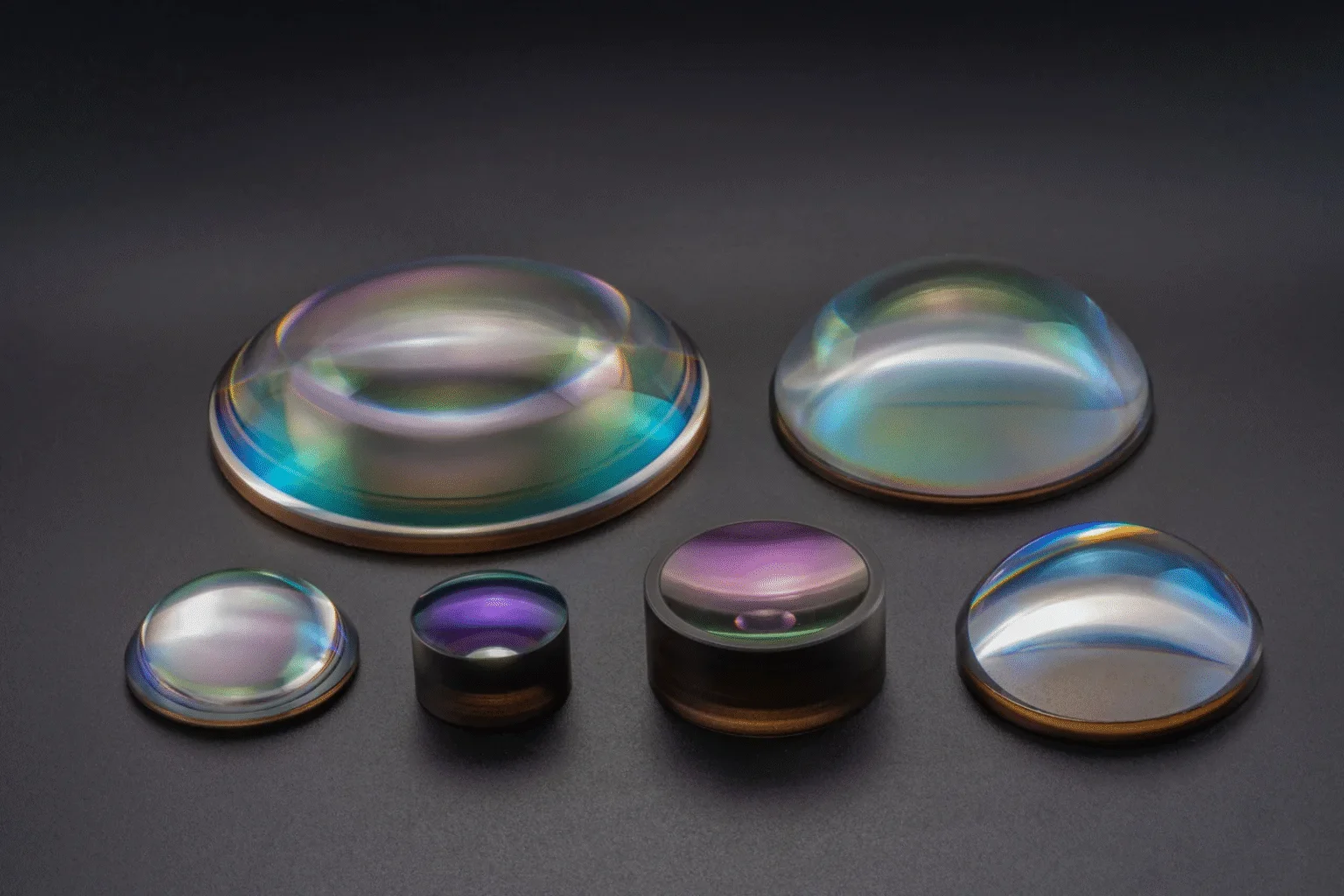
Controlling light accurately is essential in optical engineering, imaging equipment, scientific instruments, and many advanced visual technologies. One of the fundamental components used for this purpose is the glass spherical lens, an optical element with one or more spherical surfaces designed to refract light. By directing incoming rays toward or away from a focal region, spherical lenses help optical systems form images, collect light, and manage beam paths according to their intended functions.
Although lenses may appear simple, their performance depends on several factors, including surface curvature, glass composition, thickness, refractive index, and the wavelength of the light passing through them. Understanding these characteristics helps engineers and buyers select optical components that suit their application rather than relying on appearance or size alone.
How a Spherical Lens Controls Light
A spherical lens works through refraction, which occurs when light passes between materials with different refractive indices. As light enters and exits the glass, its direction changes according to the geometry of the surfaces and the optical properties of the material. This change can make rays converge toward a focal point or diverge as they leave the lens.
Convex lenses are generally thicker near the centre than at the edges and can converge parallel incoming rays under suitable conditions. Concave lenses are generally thinner at the centre and tend to spread incoming parallel rays apart. The exact behaviour depends on the lens design and the surrounding medium.
These optical properties make spherical lenses useful in many systems. They may be incorporated into cameras, projection assemblies, inspection equipment, microscopes, and other instruments where light needs to be focused or redirected. In a multi-element optical assembly, individual lenses work together to achieve the required image quality, field of view, magnification, or beam characteristics.
Key Factors That Influence Lens Performance
Selecting an optical lens requires more than identifying whether it is convex or concave. The radius of curvature affects how strongly the lens bends light, while the refractive index influences its focusing behaviour. Lens diameter and thickness also matter because they affect the usable aperture, mechanical integration, and overall optical design.
Material selection is another important consideration. Different optical glasses offer different transmission characteristics, refractive indices, and dispersion properties. Dispersion describes how a material's refractive index varies with wavelength. In applications using multiple colours of light, this variation can contribute to chromatic aberration, in which different wavelengths focus at different positions.
Surface quality and manufacturing tolerances are equally relevant. Scratches, surface irregularities, or dimensional deviations can affect light transmission and image performance. Depending on the application, designers may also consider coatings that reduce reflection or improve performance over a specified wavelength range.
For precision applications, these requirements should be evaluated together. A lens with a suitable focal length may still be inappropriate if its diameter, material, surface quality, or mounting dimensions do not match the optical system.
Applications Across Modern Optical Technology
Spherical lenses are widely used because they provide a practical way to focus and collect light. In imaging systems, they help direct light onto a sensor or image plane. In laboratory instruments, they can assist with magnification, illumination, and optical measurement. Industrial inspection systems may use lenses to capture details of components, surfaces, or manufactured products.
They also play a role in projection and illumination assemblies, where light distribution and focusing influence the resulting output. Engineers often combine spherical lenses with other optical components, such as mirrors, prisms, filters, or aspherical lenses, to achieve more specialised performance.
However, spherical designs have limitations. Depending on the curvature and aperture, they can introduce spherical aberration, where rays passing through different parts of the lens do not converge at precisely the same point. Optical designers may address this issue by adjusting the lens shape, using multiple elements, limiting the aperture, or choosing an alternative optical design.
Choosing the Right Lens for a Project
Before purchasing a lens, buyers should establish the system's optical requirements. Useful specifications may include focal length, clear aperture, diameter, centre thickness, refractive index, wavelength range, surface quality, and dimensional tolerances. The mounting method and available installation space should also be checked to ensure that the component can be integrated correctly.
It is helpful to provide suppliers with details about the intended application, operating environment, and expected optical performance. This information can make it easier to identify suitable materials and manufacturing specifications. Prototype testing may also be necessary when the lens will be used in a demanding or highly specialised system.
ARV Optical provides information about optical components and their applications, helping engineers and businesses explore solutions for different optical requirements. Reviewing its technical explanation of the glass spherical lens can provide a useful starting point for understanding the component's working principles and selection considerations.
A well-chosen lens supports the performance of the complete optical assembly. By evaluating its material, geometry, manufacturing quality, and compatibility with other components, buyers can make more informed decisions and develop optical systems suited to their technical objectives.

 English
 Arabic
 French
 Spanish
 Portuguese
 Deutsch
 Turkish
 Dutch
Dutch
 Italiano
 Romaian
 Portuguese (Brazil)
 Greek
Greek