


Why Ecommerce Stores Get Visitors but Struggle to Make Sales
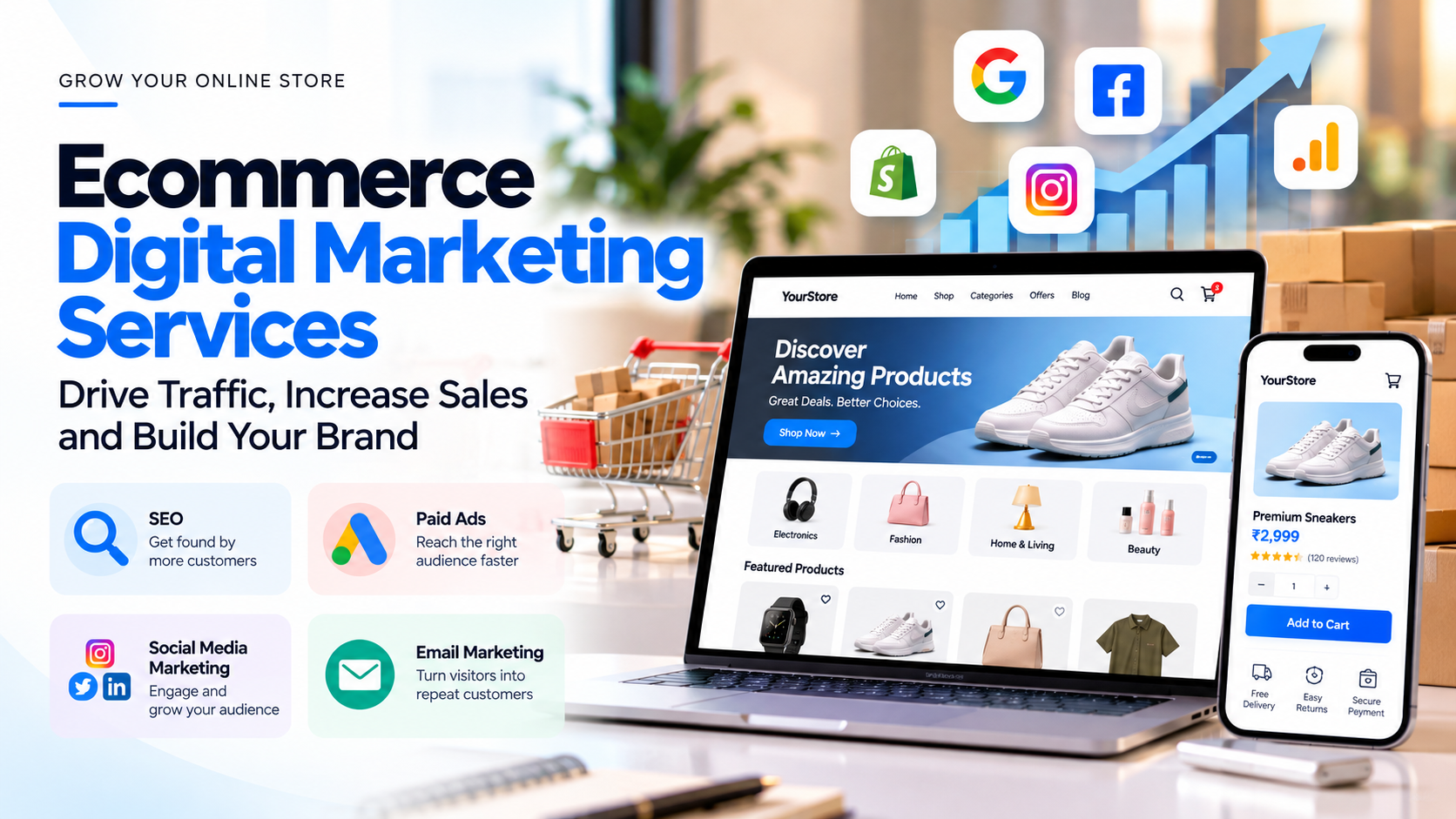
Imagine launching an online store with attractive products, competitive prices, and a professional website. Visitors begin arriving, but orders remain low. Some people browse products, others add items to their carts, and many leave without completing a purchase.
This is a common challenge in ecommerce. Getting website traffic is important, but traffic alone does not guarantee revenue. Online stores also need to reach the right audience, build trust, create a smooth shopping experience, and encourage customers to complete their purchases.
This is where ecommerce digital marketing services can help businesses develop a more effective strategy for attracting potential buyers and turning interest into sales.
Why More Website Traffic Does Not Always Mean More Sales
An online store may receive visitors who are not ready to buy, cannot find the right product, or do not trust the website enough to make a payment.
For example, someone searching for affordable running shoes may leave if the store displays expensive premium products without suitable alternatives. Another customer may abandon a purchase because shipping costs appear only at checkout.
Businesses need to understand what happens after visitors arrive. Reviewing product-page engagement, cart abandonment, checkout completion, and traffic sources can reveal where potential customers lose interest.
Instead of focusing only on increasing visits, ecommerce brands should work towards attracting relevant shoppers and making their buying journey easier.
How Digital Marketing and Ecommerce Work Together
Digital marketing and ecommerce are closely connected because online stores depend on visibility, customer engagement, and a convenient purchasing process.
Digital marketing helps potential customers discover products through search engines, paid advertisements, social media, email, and other channels. Ecommerce provides the platform where customers explore products, compare options, place orders, and interact with the brand.
When these activities work together, businesses can create a more consistent customer experience. Marketing campaigns bring relevant visitors, product pages answer their questions, and clear checkout processes help them complete purchases.
The goal is not simply to attract more people. It is to connect the right products with the right customers at the right stage of their buying journey.
SEO: Help Customers Discover Your Products
Search engine optimization can help ecommerce websites appear when people search for relevant products or solutions.
A strong ecommerce SEO strategy includes useful product descriptions, descriptive page titles, logical category structures, internal links, optimized images, and technically accessible pages. Product information should explain genuine benefits rather than repeat the same generic descriptions used across competing stores.
For example, a store selling office furniture can create informative category pages and helpful buying guides for customers comparing desk sizes, materials, and features.
SEO usually takes time, but it can support sustainable product discovery without requiring businesses to pay for every individual click.
Paid Advertising: Reach Potential Buyers Faster
Paid advertising can help online stores promote products to audiences based on relevant search queries, interests, or other campaign targeting options.
Search ads can reach people actively looking for specific products, while social media advertising can introduce products to potential customers who may not yet know the brand.
However, campaign performance depends on more than the advertising platform. Product pricing, landing-page quality, audience selection, creative content, and checkout usability all influence results.
Businesses should monitor conversion rate, customer acquisition cost, average order value, and return on advertising spend. These metrics help determine whether campaigns are contributing to profitable growth rather than merely generating clicks.
Social Media Marketing That Supports Product Discovery
Social media allows ecommerce brands to demonstrate products, answer questions, share customer experiences, and communicate their brand personality.
A clothing store might publish styling videos, while a home decor business could share room transformations or practical design ideas. Such content helps potential buyers understand how products fit into their everyday lives.
Social media activity should be connected to clear business objectives. Brands can use product demonstrations, useful educational content, customer feedback, and relevant offers to guide interested users towards product pages.
Consistent communication and honest product presentation are more valuable than publishing promotional posts without a clear purpose.
Email Marketing: Encourage Repeat Purchases
Not every customer purchases on their first visit. Email marketing can help businesses reconnect with people who have subscribed to receive updates or agreed to relevant communications.
Online stores can send order updates, product recommendations, restock notifications, useful buying advice, and special offers. Abandoned-cart reminders may also help customers return to an unfinished purchase, provided the messaging respects applicable consent and privacy requirements.
Personalization should be relevant and based on appropriate customer information. Sending excessive or unrelated messages can reduce engagement and damage trust.
A well-planned email strategy helps brands maintain customer relationships beyond the first transaction.
Improve Product Pages Before Increasing Your Marketing Budget
Marketing campaigns may struggle when product pages fail to answer basic customer questions.
Every important product page should present clear images, accurate descriptions, transparent pricing, delivery information, return policies, and an easy-to-find purchase option. Reviews and other genuine trust signals can help customers make informed decisions.
Mobile usability is especially important. If shoppers need to zoom repeatedly, struggle to select product variations, or complete lengthy forms, they may abandon the process.
Before increasing advertising expenditure, review the shopping experience. Fixing a confusing product page or checkout issue may be more valuable than paying to attract additional visitors to the same problematic journey.
How to Measure Ecommerce Marketing Performance
Successful ecommerce marketing requires regular measurement and informed adjustments.
Businesses should track the metrics that connect marketing activity with actual commercial outcomes.
|
Metric |
What it helps you understand |
|---|---|
|
Conversion rate |
The percentage of visitors who complete a desired action |
|
Customer acquisition cost |
How much it costs to acquire a customer |
|
Average order value |
The average revenue generated per order |
|
Cart abandonment rate |
How frequently shoppers leave without completing checkout |
|
Repeat purchase rate |
How often customers return to buy again |
|
Return on ad spend |
Revenue attributed to advertising relative to ad expenditure |
These metrics should be interpreted together. For example, a campaign may generate many sales but still be unprofitable if advertising costs and product-related expenses are too high.
Analytics tools, ecommerce reporting, and reliable conversion tracking help businesses identify what is working and where improvements are needed.
Choosing the Right Ecommerce Marketing Partner
Selecting a marketing partner involves more than comparing service packages. Businesses should look for a team that understands ecommerce platforms, product discovery, conversion optimization, analytics, and customer retention.
Ask how the agency measures results, reports performance, handles campaign testing, and identifies opportunities for improvement. Be cautious of guaranteed sales or ranking promises because outcomes depend on several factors, including competition, pricing, demand, and website quality.
Digiworld Solution provides digital marketing and web development services designed to help businesses strengthen their online presence. Explore its SEO services in Noida and evaluate which solutions align with your store's goals.
Frequently Asked Questions
1. What are ecommerce digital marketing services?
These services help online stores attract relevant visitors and improve customer engagement through SEO, paid advertising, social media marketing, email marketing, content, and conversion optimization.
2. How does digital marketing help ecommerce businesses?
It helps potential customers discover products, compare options, understand a brand's value, and return for future purchases. Results depend on strategy, execution, and the shopping experience.
3. Which marketing channel is best for an online store?
There is no single best channel for every store. SEO may support long-term product discovery, paid advertising can capture immediate demand, and email marketing can encourage repeat purchases.
4. Why do customers abandon ecommerce carts?
Common reasons include unexpected costs, complicated checkout forms, limited payment options, delivery concerns, and uncertainty about returns or product quality.
5. How can an ecommerce business increase repeat purchases?
Reliable service, relevant product recommendations, useful email communication, transparent policies, and a convenient buying experience can encourage customers to return.
Conclusion
Growing an online store requires more than generating website traffic. Businesses need a connected strategy that combines product discovery, relevant marketing campaigns, trustworthy product pages, smooth checkout experiences, and customer retention.
By using ecommerce digital marketing services strategically and connecting digital marketing and ecommerce activities with measurable business goals, online retailers can identify obstacles, improve the customer journey, and make more informed growth decisions.
The strongest approach is to understand what customers need, measure how they behave, and continuously improve the experience from their first visit to their next purchase.

 English
 Arabic
 Spanish
 Portuguese
 Deutsch
 Turkish
 Dutch
Dutch
 Italiano
 Russian
 Romaian
 Portuguese (Brazil)
 Greek
Greek