


Top Benefits of Using Cotton Bar Cloths in Commercial Kitchens
Running a commercial kitchen means handling constant spills, greasy surfaces, busy preparation stations, and demanding cleaning schedules. During peak service hours, even a small cleaning delay can interrupt the workflow. Restaurant owners and kitchen managers need practical supplies that help their teams maintain cleanliness without adding unnecessary costs or complications.
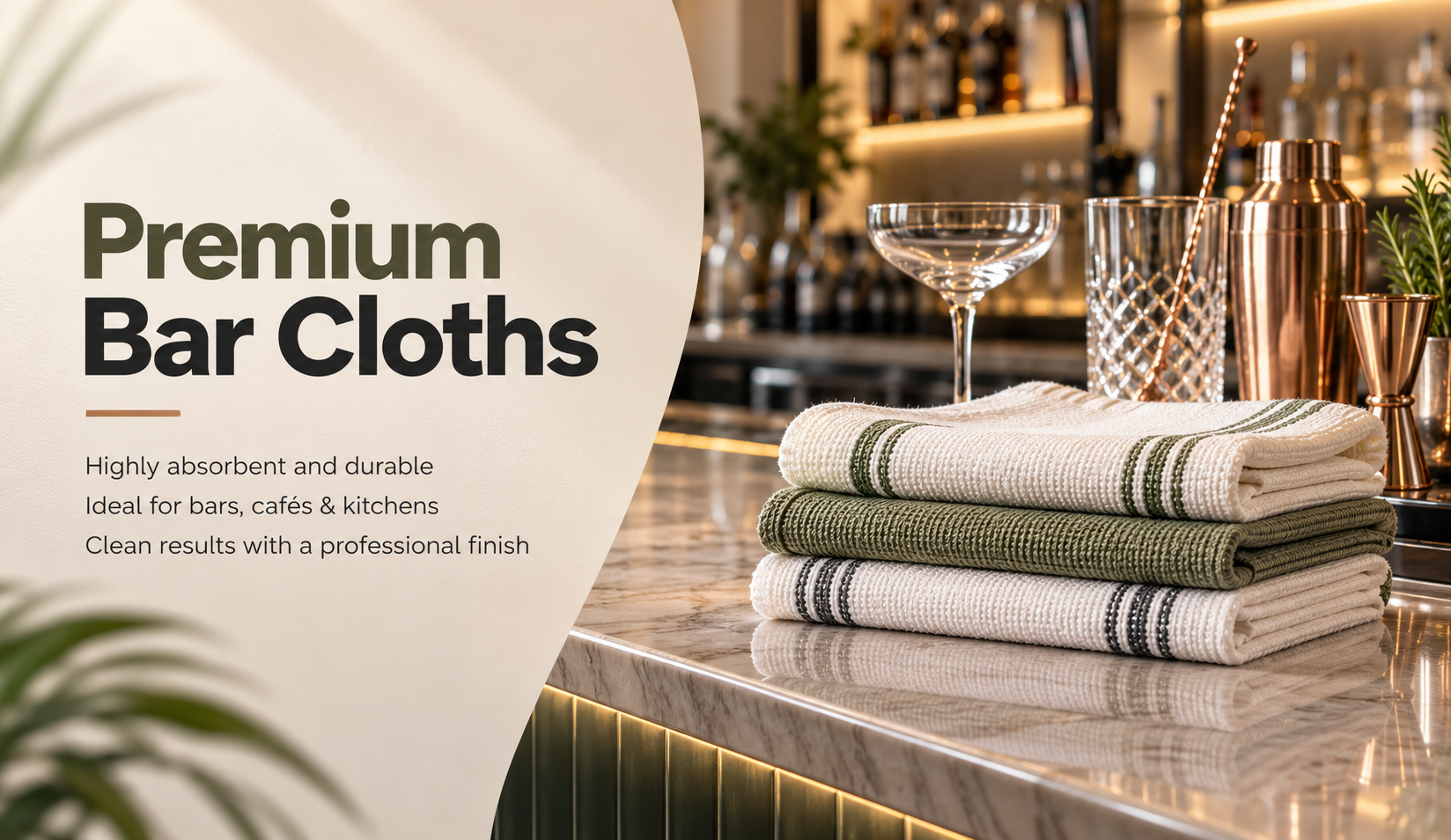
We understand that choosing cleaning materials involves more than finding the lowest price. Kitchen staff need cloths that absorb moisture, withstand repeated washing, and remain convenient throughout long shifts. Choosing suitable Bar Cloths can help restaurants manage everyday cleaning tasks while keeping their operations organized.
Cotton bar cloths offer several practical advantages for commercial kitchens, from absorbency and durability to everyday versatility. However, their performance also depends on fabric quality, cleaning procedures, and how staff use them. Understanding these details helps businesses make informed purchasing decisions.
Why Cotton Bar Cloths Matter in Commercial Kitchens
Commercial kitchens operate differently from residential kitchens. Employees handle food preparation, washing, cooking, plating, and cleaning at the same time. These activities create a steady demand for dependable cleaning materials.
A restaurant might need several cloths at one workstation during a busy lunch service. Staff may use one for minor water spills, another for cleaning designated equipment surfaces, and a separate cloth for approved sanitizing procedures.
When a kitchen lacks enough suitable cloths, workers may start reusing the same towel for unrelated tasks. This creates unnecessary hygiene risks and slows down daily operations.
What Makes Cotton Suitable for Restaurant Cleaning?
Cotton fibers naturally attract and hold moisture. When manufacturers use these fibers in a well-constructed terry fabric, the resulting cloth provides a useful combination of absorbency, softness, and flexibility.
Cotton also offers practical laundering options, although washing temperatures and chemical compatibility depend on the product's construction and care instructions.
For restaurant managers, these characteristics make cotton an appealing material for routine cleaning. The important consideration involves selecting the right cloth for each task rather than expecting one towel to handle everything.
1. Excellent Absorbency for Everyday Kitchen Spills
Commercial kitchens deal with water, beverages, sauces, and other liquids throughout the day. Employees need cleaning cloths that can absorb small spills quickly without spreading moisture across surrounding surfaces.
Cotton bar cloths help manage these routine situations because their fibers absorb water effectively. Terry-woven options offer additional surface area through their loops, which can improve their ability to hold liquid.
How Absorbency Improves Kitchen Efficiency
Imagine a busy preparation counter where an employee accidentally spills water during service. A suitable cotton towel can absorb much of that moisture in a few passes, allowing the worker to restore the area and continue working.
Poorly absorbent cloths often push water around instead of collecting it. This creates extra wiping and may leave unwanted moisture on the work surface.
We recommend comparing absorbency between towel samples before purchasing large quantities. A simple side-by-side test can reveal meaningful differences between fabric qualities.
2. Strong Durability for Repeated Commercial Use
Restaurants wash cleaning cloths frequently. Depending on the work area, a kitchen may collect several loads of used towels during a single day.
Low-quality cloths may develop loose threads, weak edges, or thinning fabric after repeated laundering. These problems create replacement expenses and can leave staff without dependable supplies.
Well-constructed cotton bar towels can tolerate regular commercial use when employees follow suitable washing and handling procedures.
Why Fabric Construction Matters
Cotton content alone does not determine a towel's durability. Buyers should also examine fabric density, stitching quality, and overall construction.
Double-stitched hems, secure edges, and consistent weaving can help towels maintain their structure through repeated use.
Before committing to a large order, we suggest washing a few samples several times and inspecting their edges, dimensions, and absorbency. This offers a more realistic picture of long-term performance than product photographs alone.
3. Better Support for Kitchen Hygiene Practices
Maintaining proper hygiene requires consistent cleaning routines, organized equipment, and clear staff responsibilities.
Cotton bar cloths can support these practices when kitchens use separate cloths for appropriate tasks and follow established food safety procedures.
However, a cleaning cloth does not sanitize a surface simply because it looks clean. Restaurants must follow their applicable food safety requirements and use approved sanitizers where necessary.
Preventing Cross-Contamination Between Workstations
One common kitchen mistake involves using the same cloth across different cleaning areas.
For example, an employee might wipe a preparation surface and then use that towel around a sink or waste-handling station. This practice can transfer contamination between areas.
A practical approach includes:
-
Assigning different cloths to clearly defined cleaning tasks.
-
Using color coding to help staff distinguish work areas.
-
Replacing cloths when they become visibly dirty or contaminated.
-
Following local food safety rules for storing wiping cloths and sanitizing solutions.
-
Keeping fresh cloths separate from used laundry.
These practices help establish a more organized cleaning system, especially in kitchens where several employees share workstations.
4. Gentle Cleaning for Suitable Kitchen Surfaces
Commercial kitchens contain stainless steel counters, preparation tables, service equipment, and other surfaces that require regular attention.
Cotton cloths offer a relatively soft texture, which makes them useful for wiping many compatible surfaces without relying on abrasive materials.
This matters when staff clean surfaces repeatedly throughout the day.
Reducing Unnecessary Surface Wear
Rough cleaning materials can create scratches on certain finishes, particularly when dirt or hard particles become trapped between the material and the surface.
A clean, soft cotton cloth generally offers a gentler alternative for routine wiping.
Nevertheless, employees should check equipment manufacturers' cleaning recommendations before working with delicate or specialized finishes.
We also encourage teams to rinse or replace cloths that collect grit or hardened residue. Even soft cotton can scratch a surface when abrasive particles remain inside the fabric.
5. Cost-Effective Cleaning Through Repeated Use
Cleaning supplies affect a restaurant's operating budget, even when individual items appear inexpensive.
Disposable materials can generate recurring purchasing expenses, while reusable cloths spread their initial cost across multiple cleaning and laundering cycles.
Cotton bar cloths may offer favorable long-term value when their durability and cleaning performance justify their purchase and laundry costs.
Understanding the True Cost per Use
The cheapest towel does not always provide the lowest operating cost.
Consider two hypothetical options:
| Purchasing Factor | Budget Cotton Cloth | Higher-Quality Cotton Cloth |
|---|---|---|
| Initial purchase price | Lower | Higher |
| Fabric construction | May vary | Often more substantial |
| Repeated washing | Requires testing | Requires testing |
| Replacement frequency | Depends on durability | Depends on durability |
| Long-term value | Depends on total usage cost | Depends on total usage cost |
Rather than comparing purchase prices alone, we recommend calculating the approximate cost per use.
Divide the purchase price by the number of useful cleaning and laundering cycles, then account for washing costs. This comparison helps businesses evaluate whether a higher initial investment makes financial sense.
6. Versatility Across Different Kitchen Cleaning Tasks
Restaurant employees rarely perform one cleaning task throughout an entire shift. Their responsibilities change depending on service demand, preparation schedules, and workstation requirements.
Cotton bar towels can handle many routine wiping tasks when staff assign and maintain them correctly.
Their flexibility makes them useful in restaurants, cafés, bakeries, catering facilities, and other hospitality environments.
Common Uses for Cotton Bar Towels
Kitchen teams may use dedicated cotton cloths for:
-
Wiping minor spills from compatible countertops.
-
Drying designated kitchen equipment after washing.
-
Cleaning exterior surfaces of appliances.
-
Managing moisture around suitable preparation areas.
-
Wiping service counters between approved cleaning procedures.
-
Handling general-purpose cleaning tasks outside direct food-contact areas.
Employees should not use ordinary damp cleaning cloths as oven mitts or heat protection. Moisture can transfer heat rapidly and cause burns.
Restaurants should also keep cleaning cloths separate from towels intended for drying hands or handling ready-to-eat food.
7. Easier Laundry Management and Inventory Control
A commercial kitchen needs a reliable supply of clean towels throughout the working day.
Without an organized system, staff may struggle to locate fresh cloths during busy periods. Managers may also find it difficult to determine when they need additional stock.
Cotton bar cloths come in practical sizes and bulk quantities, which can simplify inventory planning.
Creating a Simple Towel Rotation System
We suggest dividing a restaurant's towel inventory into three categories: clean towels ready for use, towels currently in service, and used towels awaiting laundering.
This approach helps managers identify shortages before they affect kitchen operations.
A simple inventory calculation can also improve purchasing decisions:
Daily towel requirement = Average towels used per shift × Number of shifts
For example, a kitchen that uses 30 towels per shift across two shifts needs approximately 60 towels for daily operations.
Managers should then add enough inventory to cover laundry turnaround, unexpected demand, and damaged cloths.
The correct quantity depends on kitchen size, cleaning frequency, staffing, and operating hours.
8. Lower Waste Potential Through Reusable Cleaning Materials
Restaurants increasingly consider waste management when choosing everyday supplies.
Reusable cotton towels provide an alternative to some disposable wiping products. With suitable care, kitchens can use each towel repeatedly before replacing it.
This approach may reduce the volume of disposable cleaning materials entering the waste stream.
Making Reusable Towels Part of Responsible Operations
Reusable products still require water, energy, detergent, and occasional replacement. Their overall environmental impact depends on how businesses manufacture, wash, transport, and dispose of them.
For that reason, we recommend focusing on practical improvements rather than assuming every reusable option automatically offers environmental benefits.
Businesses can improve their towel management by maintaining suitable laundry loads, following care instructions, and replacing cloths only when their condition no longer meets operational requirements.
9. Consistent Cleaning Performance During Busy Service Hours
Kitchen efficiency depends on small operational decisions that employees repeat throughout the day.
A worker who constantly searches for cleaning supplies loses valuable time. Another employee who uses an ineffective towel may need several attempts to remove a simple spill.
Although each interruption seems minor, repeated delays can affect service preparation and workstation organization.
Helping Staff Maintain a Smooth Workflow
Keeping suitable cotton bar cloths available at designated stations makes routine cleaning more convenient.
Staff members can quickly access the correct supplies without leaving their assigned work areas unnecessarily.
We recommend placing clean towels in clearly identified storage areas and ensuring that employees understand when to replace or return them.
Good placement, consistent training, and clear usage rules often matter just as much as the quality of the cloth itself.
10. Practical Purchasing Options for Restaurants of Different Sizes
A small independent café and a large commercial catering operation have different cleaning requirements.
Smaller businesses may prioritize flexible purchasing quantities, while larger facilities often need consistent product specifications across multiple departments.
Cotton bar cloths come in different sizes, weights, colors, and fabric constructions, giving restaurant managers several options to consider.
Choosing Between Standard and Heavy-Duty Towels
Lightweight cloths can suit routine wiping tasks that require frequent changes. Heavier terry towels may work better when employees need greater absorbency or more fabric coverage.
Neither option automatically suits every kitchen.
We suggest considering daily usage patterns, laundering capacity, workstation requirements, and employee preferences before placing an order.
For additional product-specific guidance, our article on bar mop towel benefits explores why these cleaning towels remain useful in restaurant environments.
How to Choose the Best Cotton Bar Cloths for a Commercial Kitchen
The benefits of cotton bar cloths depend heavily on choosing products that suit the kitchen's actual cleaning requirements.
Restaurant buyers should evaluate practical performance rather than focusing exclusively on appearance or initial price.
Check Cotton Quality and Absorbency
Look for towels with consistent fabric construction and suitable absorbency.
Terry cotton commonly works well for general moisture absorption because its looped structure creates additional surface area.
Ask suppliers about cotton content, fabric weight, and available quality grades. When possible, request samples to compare performance before purchasing in bulk.
Consider Size and Handling Convenience
Large towels may provide more cleaning coverage, but smaller cloths often fit more comfortably into compact workstations.
Staff should be able to fold, grip, and change towels without difficulty.
A practical kitchen may benefit from keeping different towel sizes for different responsibilities rather than relying on one standard size throughout the facility.
Examine Stitching and Washing Requirements
Check the quality of the hems and look for loose threads or inconsistent stitching.
Review the manufacturer's laundry instructions, including suitable washing temperatures, detergent recommendations, and restrictions on bleaching.
Cotton tolerates many routine washing processes, but dyes, finishes, and blended components may require additional care.
Review Wholesale Buying Options
Bulk purchasing can simplify restocking and help businesses maintain consistent cleaning supplies.
However, ordering excessive quantities before testing a product can lead to unnecessary inventory costs.
Start with a manageable sample order, evaluate real kitchen performance, and expand purchasing quantities when the towels meet your operational requirements.
Common Mistakes Restaurants Make When Using Bar Cloths
Even good-quality cotton towels cannot compensate for poor cleaning habits.
The most common problems usually involve incorrect usage, inconsistent laundering, and inadequate stock management.
Using One Cloth for Multiple Cleaning Areas
A towel that moves between unrelated workstations may transfer contaminants.
Establish clear cleaning assignments and train employees to follow them consistently.
Keeping Dirty or Damp Towels in Service Too Long
Soiled towels can collect food residue and support microbial growth when staff handle or store them incorrectly.
Replace contaminated cloths promptly and follow applicable food safety rules for in-use wiping cloths.
Using Excessive Detergent or Fabric Softener
Excess detergent can leave residues, while some fabric softeners can reduce a towel's ability to absorb moisture.
Follow the detergent manufacturer's dosing instructions and the towel supplier's care guidance.
Buying Without Testing Fabric Quality
A low purchase price may look attractive until towels begin fraying, shrinking, or losing effectiveness after laundering.
A short product trial helps buyers identify these problems before committing to a larger order.
Best Practices for Washing and Maintaining Cotton Bar Cloths
Regular laundering helps preserve cleaning performance and supports workplace hygiene.
A consistent process also makes towel replacement and stock management more predictable.
Separate Towels According to Their Cleaning Use
Keep heavily soiled kitchen cloths separate from hand towels and other textiles where appropriate.
Follow your laundry provider's requirements and applicable food safety guidance to prevent contamination during collection, transport, and washing.
Use Appropriate Washing Conditions
Choose washing temperatures, detergents, and laundry procedures that match the towels' care instructions and the kitchen's hygiene requirements.
Do not assume that hot water alone provides adequate sanitization. Use an appropriate validated process when sanitizing textiles forms part of the operation's requirements.
Dry and Store Towels Properly
Dry towels thoroughly before placing them in clean storage areas.
Avoid storing damp cloths in enclosed containers where moisture can remain trapped.
Keep clean inventory away from waste areas, chemicals, and other contamination sources.
Inspect Towels Before Returning Them to Service
Check for fraying edges, persistent odors, heavy staining, and fabric deterioration.
Remove cloths that no longer meet the kitchen's cleaning requirements.
A regular inspection process helps teams maintain consistent supplies and prevents unsuitable towels from returning to service.
FAQs
1. Are cotton bar cloths suitable for commercial kitchen cleaning?
Yes. Cotton bar cloths work well for many routine cleaning tasks because they absorb moisture and offer a soft, flexible wiping surface. Restaurants should assign cloths to specific purposes and follow proper cleaning and sanitizing procedures. The cloth itself does not replace approved food safety practices.
2. How often should restaurants wash cotton bar cloths?
Restaurants should launder used cloths according to their soil level, cleaning purpose, and applicable food safety requirements. Staff should replace heavily soiled or contaminated towels promptly. Kitchens must also follow local rules for storing and using reusable wiping cloths during service.
3. Are cotton bar towels better than microfiber towels?
The better choice depends on the task. Cotton towels offer useful absorbency and familiar laundering characteristics, making them practical for everyday spills. Microfiber cloths can perform well for certain surface-cleaning tasks. Restaurants may benefit from using both materials for different purposes rather than expecting one to handle every requirement.
4. Is buying cotton bar cloths in bulk cost-effective?
Bulk buying can offer value when a restaurant uses towels regularly and has sufficient storage and laundering capacity. However, buyers should consider product quality, replacement rates, and laundry expenses alongside the initial price. Testing samples before a large purchase helps reduce the risk of choosing unsuitable towels.
Conclusion: Small Cleaning Choices Make a Meaningful Difference
Cotton bar cloths may seem like a minor kitchen supply, but they play a practical role in everyday restaurant operations. Their absorbency, reusable construction, versatility, and manageable maintenance requirements make them worth considering for commercial cleaning tasks.
The greatest benefits come from combining suitable towel quality with consistent hygiene practices, thoughtful inventory planning, and proper laundering. A reliable cleaning routine helps staff maintain organized workstations without creating unnecessary complications.
At Towel Hub, we recognize the importance of selecting cleaning textiles that match the practical demands of hospitality businesses. Restaurant owners and purchasing managers can benefit from reviewing fabric specifications, comparing towel options, and testing products before making larger commitments.

 English
 Arabic
 Spanish
 Portuguese
 Deutsch
 Turkish
 Dutch
Dutch
 Italiano
 Russian
 Romaian
 Portuguese (Brazil)
 Greek
Greek