


Why Community Energy Resilience Depends on Integrated Infrastructure and Future-Ready Talent
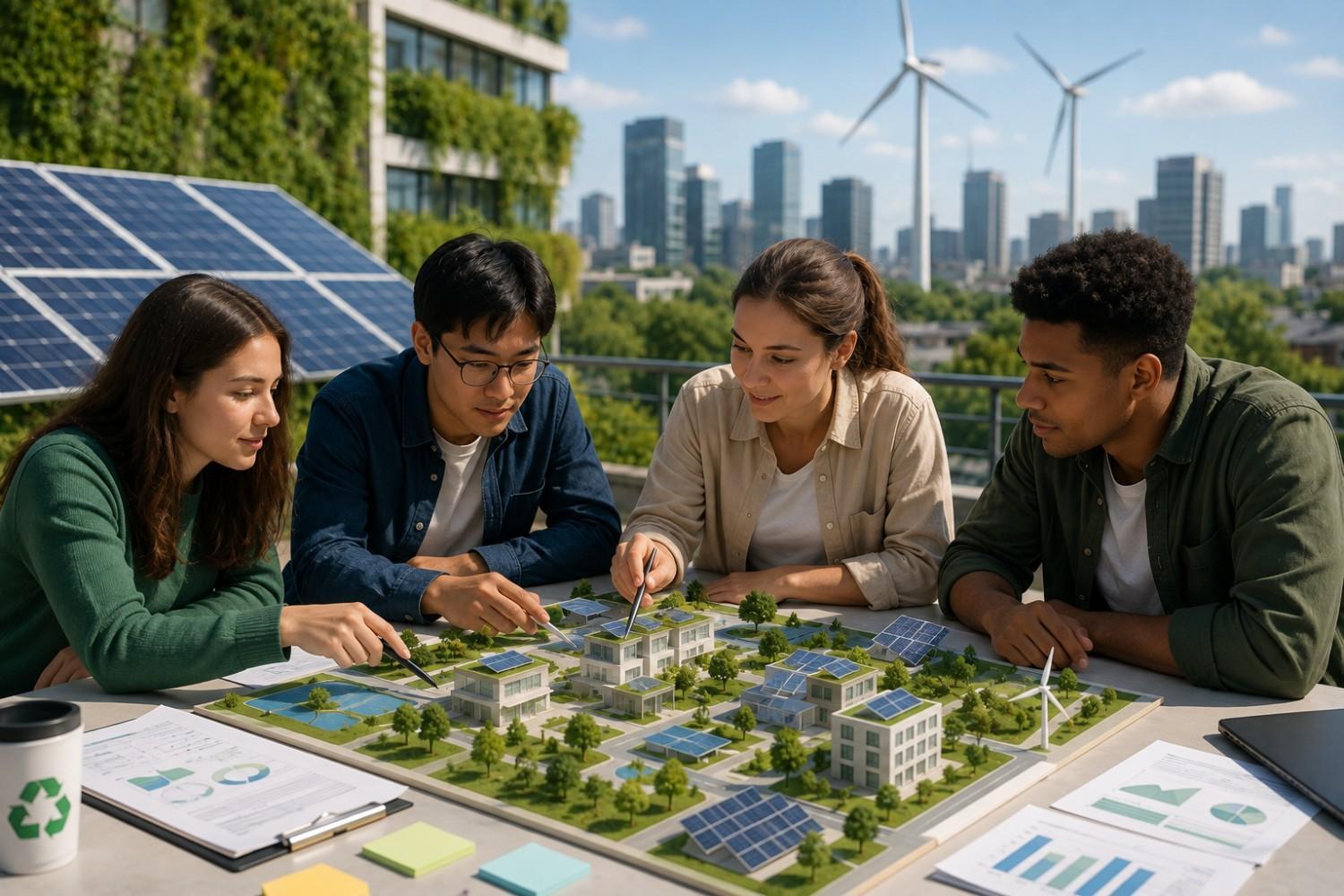
Communities today face a growing number of energy-related challenges. Extreme weather events, increasing electricity demand, aging infrastructure, and the rapid adoption of renewable technologies are changing how communities plan for the future. Reliable energy is no longer simply about generating enough electricity—it is about creating resilient systems that can adapt, recover, and continue operating under changing conditions.
Community energy resilience has therefore become a critical objective for governments, utilities, businesses, and educational institutions. Building resilient energy infrastructure requires more than investing in advanced technologies. It demands careful planning, cross-sector collaboration, and professionals capable of designing integrated solutions that balance reliability, sustainability, affordability, and long-term community needs.
Understanding Community Energy Resilience
Energy resilience refers to the ability of an energy system to prepare for, respond to, and recover from disruptions while maintaining essential services. These disruptions may result from severe storms, bushfires, floods, cyber threats, equipment failures, or rapidly changing electricity demand.
Traditional centralized electricity systems often struggle to respond quickly when major failures occur. Modern communities are increasingly adopting distributed energy resources such as rooftop solar, battery storage, microgrids, and intelligent energy management systems that improve flexibility and reduce dependence on a single source of electricity.
Resilient communities are not defined by one technology alone. Instead, they rely on well-planned infrastructure that combines multiple solutions to improve reliability while supporting long-term sustainability.
Why Integrated Infrastructure Matters
Energy infrastructure is closely connected with transportation, water systems, telecommunications, healthcare facilities, schools, and emergency services. A disruption in one area can quickly affect many others.
Integrated planning encourages decision-makers to consider these interdependencies before projects begin. Rather than designing individual systems separately, engineers evaluate how different infrastructure components can work together to improve efficiency and reduce operational risks.
For example, battery storage can support renewable energy generation during peak demand, while smart monitoring systems help utilities identify faults before they become widespread outages. Electric vehicle charging infrastructure, energy-efficient buildings, and demand-response technologies also contribute to more resilient communities when incorporated into a coordinated energy strategy.
This holistic approach enables communities to adapt more effectively as technology and energy demands continue evolving.
Preparing Professionals for Complex Energy Challenges
As energy systems become more sophisticated, employers increasingly seek graduates who can think beyond traditional engineering disciplines. Technical knowledge remains essential, but professionals must also understand project management, sustainability, economics, stakeholder engagement, and risk assessment.
Experiential learning provides valuable opportunities for students to develop these capabilities by working on authentic engineering challenges.
Programs such as the international student energy design challenge, contducted by Energy Mentors, encourage participants to design innovative community energy solutions while collaborating with experienced mentors and industry professionals. By evaluating technical, environmental, and social considerations simultaneously, students gain practical experience that prepares them to solve complex infrastructure challenges throughout their careers.
These real-world learning experiences also help participants strengthen communication, teamwork, and decision-making skills that are essential in multidisciplinary engineering environments.
Collaboration Strengthens Community Resilience
No single organization can build resilient communities independently.
Governments establish policy frameworks, universities contribute research, industry develops innovative technologies, nonprofit organizations connect stakeholders, and local communities provide valuable insight into regional priorities.
When these groups collaborate, they create stronger solutions that are technically sound, economically feasible, and socially beneficial. Students who participate in collaborative projects gain a deeper understanding of how successful infrastructure planning depends on communication, adaptability, and evidence-based decision-making—not simply technical calculations.
Developing these collaborative capabilities today will help future professionals lead resilient energy projects that benefit communities for decades to come.
Digital Technologies Are Improving Energy Resilience
Digital transformation is reshaping how communities monitor, manage, and optimize their energy systems. Technologies such as smart meters, artificial intelligence, predictive analytics, and Internet of Things (IoT) sensors provide real-time insights that help operators detect faults, forecast demand, and improve system efficiency.
Instead of responding only after an outage occurs, utilities can identify potential problems early and take preventive action. This proactive approach reduces downtime, improves service reliability, and helps communities recover more quickly from disruptions.
As distributed energy resources continue to expand, digital technologies will play an increasingly important role in coordinating electricity generation, storage, and consumption across connected energy networks.
Why Mentorship and Practical Learning Matter
Developing resilient energy systems requires professionals who can apply technical knowledge in practical situations. While classroom learning provides a strong academic foundation, real-world experience helps students understand the complexity of infrastructure planning and implementation.
Mentorship connects students with experienced engineers and energy professionals who share practical insights gained through years of industry experience. These relationships help participants improve technical designs, evaluate project feasibility, and understand how engineering decisions influence safety, sustainability, affordability, and long-term performance.
Hands-on learning also encourages creativity, adaptability, and confidence—qualities that are increasingly important as the global energy sector continues to evolve.
Community Engagement Creates Better Outcomes
Successful energy infrastructure projects are built with communities, not simply for communities.
Residents, businesses, educational institutions, and local governments all have valuable perspectives that influence project success. Community engagement helps identify local priorities, improve public understanding, and build support for new energy initiatives.
When stakeholders are involved throughout the planning process, projects are more likely to reflect local needs while balancing environmental, social, and economic considerations. This collaborative approach also encourages transparency and strengthens trust between project teams and the communities they serve.
For students participating in community-focused design projects, engaging with stakeholders provides valuable experience that extends beyond technical engineering. It develops communication skills, empathy, and the ability to evaluate solutions from multiple perspectives.
Building a Workforce Ready for the Future
The transition to cleaner, more resilient energy systems will require a highly skilled workforce capable of adapting to new technologies and evolving industry standards.
Future professionals must understand renewable energy integration, energy storage, digital infrastructure, climate resilience, and sustainable community planning. Equally important are leadership, teamwork, critical thinking, and continuous learning.
International organizations such as the International Energy Agency (IEA) emphasize that strengthening energy security depends on resilient infrastructure, innovation, and a workforce prepared to manage increasingly complex energy systems. Investing in practical education and collaborative learning today helps ensure communities have the expertise needed to support tomorrow's energy transition.
Conclusion
Community energy resilience is no longer an optional goal—it is an essential foundation for sustainable development. As energy systems become more interconnected, communities need infrastructure that is flexible, reliable, and capable of adapting to changing environmental and technological conditions.
Achieving this vision requires more than advanced technologies. It depends on collaboration between universities, industry, governments, nonprofit organizations, and local communities, alongside educational programs that prepare future professionals through practical experience and mentorship.
By combining integrated infrastructure planning with experiential learning, communities can develop energy systems that are not only efficient and sustainable but also resilient enough to meet future challenges. Investing in people, partnerships, and innovation today will help create stronger communities and a more secure energy future for generations to come.

 English
 Arabic
 French
 Spanish
 Portuguese
 Deutsch
 Turkish
 Dutch
Dutch
 Italiano
 Russian
 Portuguese (Brazil)
 Greek
Greek