


Taj mahal tours
Taj Mahal Tours: A Complete Guide to Visiting the Taj Mahal in Agra
The Taj Mahal tours experience is one of those journeys that can stay with you long after you have returned home. Rising beside the Yamuna River in Agra, Uttar Pradesh, the Taj Mahal is far more than a famous photograph or a landmark on an India itinerary. It is an extraordinary Mughal monument built in memory of Mumtaz Mahal by Emperor Shah Jahan, and UNESCO describes it as one of the universally admired masterpieces of world heritage. Construction of the principal mausoleum began in 1632, while the main tomb was completed in 1648 and elements of the larger complex followed afterward. UNESCO World Heritage Centre
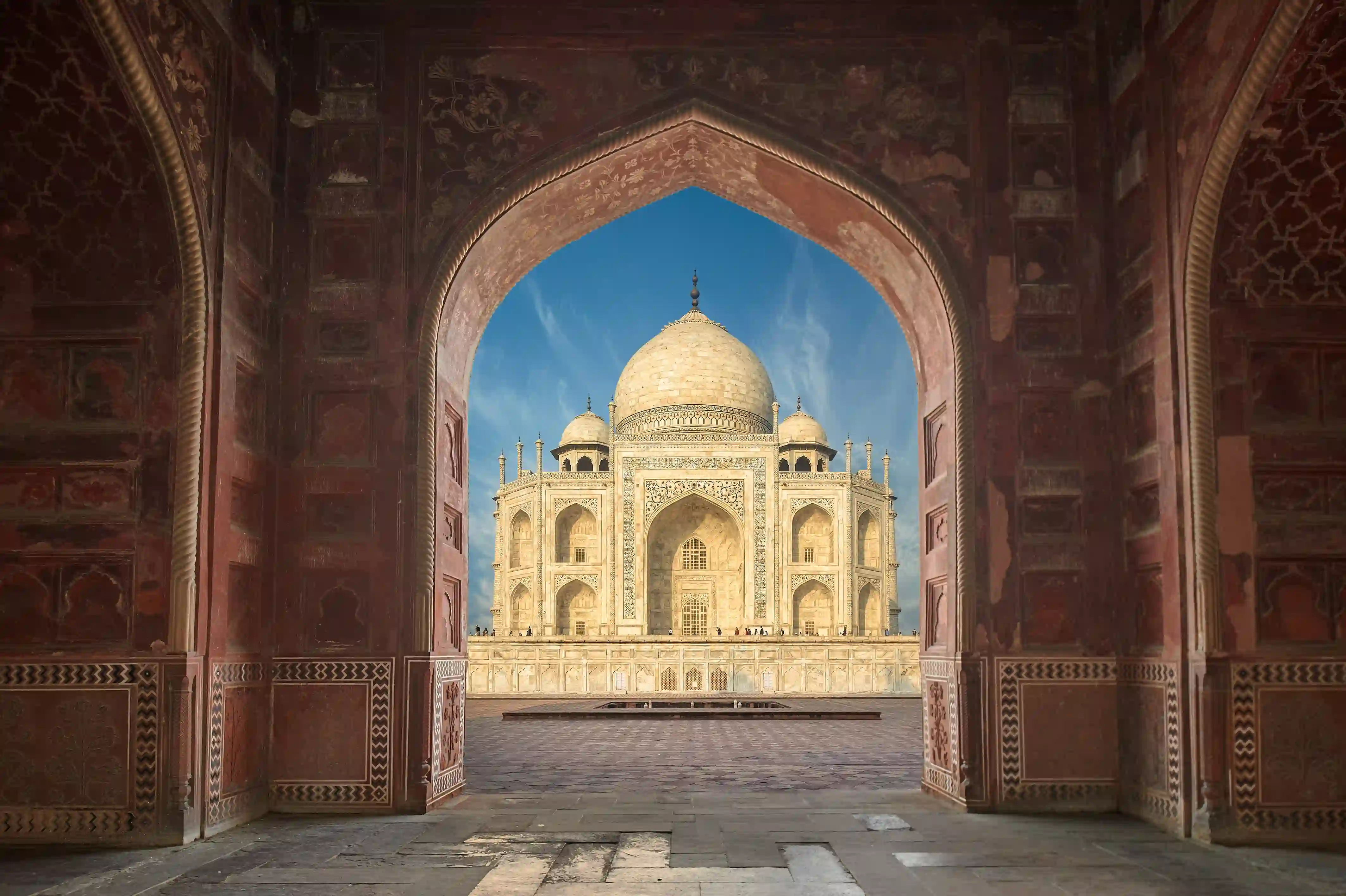
For travelers, the magic begins before entering the monument. You might see the Taj Mahal gradually appear through the morning mist, walk through the monumental gateway, and then catch your first uninterrupted view of the white-marble mausoleum reflected in the long water channel. Suddenly, the pictures you have seen for years become something real. A well-planned Taj Mahal tour from Delhi, a private Agra sightseeing tour, or a longer Agra heritage trip can turn that first glimpse into a much richer experience by combining the Taj Mahal with Agra Fort, Mehtab Bagh, Itimad-ud-Daulah, local markets, and traditional Mughal cuisine.
The Taj Mahal is also an extremely popular attraction. According to the Government of India's India Tourism Data Compendium 2025, it remained the leading centrally protected ticketed monument in FY 2024–25, attracting about 6.26 million domestic visitors and 645,000 foreign visitors. Tourism India That popularity is exactly why planning your visit matters. The right timing can mean cooler temperatures, better photography, shorter waits, and a much calmer introduction to the monument.
Why Take a Taj Mahal Tour?
You can certainly visit the Taj Mahal independently, but a thoughtfully organized tour offers something that a simple ticket cannot provide: context. Imagine walking into an enormous historical library and looking only at the cover of one book. You would still see something beautiful, but you would miss the story inside. The same principle applies to the Taj Mahal. Understanding why Shah Jahan commissioned the monument, how Mughal architects organized its geometry, why the marble appears to change color, and how the surrounding buildings relate to the main tomb makes the visit considerably more meaningful.
The monument was created as a mausoleum for Mumtaz Mahal, Shah Jahan's wife, and its design combines elements associated with Mughal, Persian, Islamic, and Indian architectural traditions. UNESCO highlights the complex's extraordinary symmetry, marble inlay, calligraphy, gardens, domes, minarets, and carefully balanced relationship between solid forms and open spaces. The monument's four minarets, central dome, raised platform, mosque, guest house, gateway, and formal garden were not placed randomly. They form an architectural composition in which perspective and symmetry play major roles. UNESCO World Heritage Centre
A knowledgeable guide can point out details that are easy to miss when you are exploring alone. The flowers in the marble are not simply painted decorations; much of the decoration uses stone inlay, with carefully cut pieces fitted into the marble. The calligraphy surrounding the great arches is another feature worth examining closely. From a distance, it looks like a decorative border. As you approach, the craftsmanship becomes much more apparent. These details transform the Taj Mahal from a beautiful building into an extraordinary demonstration of craftsmanship.
The History Behind the Taj Mahal
The story of the Taj Mahal begins in the Mughal period, when Agra was one of the most important political and cultural centers of the empire. Shah Jahan commissioned the monument following the death of Mumtaz Mahal in 1631. Construction began soon afterward, and artisans, stonecutters, carvers, inlayers, calligraphers, and other specialists were brought together from across the Mughal world and from regions including Central Asia and Iran. UNESCO identifies Ustad-Ahmad Lahori as the principal architect associated with the Taj Mahal. UNESCO World Heritage Centre
The result was not simply a tomb placed inside a garden. The entire complex was conceived as a carefully ordered landscape. The formal garden, gateways, mosque, guest house, pathways, reflecting pools, and central mausoleum work together to create a powerful sense of balance. One particularly interesting feature is that the main tomb is positioned at the northern end of the garden rather than directly in its center. According to UNESCO, this arrangement creates greater depth and perspective when the monument is viewed from the main gateway. UNESCO World Heritage Centre
That perspective explains one reason the first view of the Taj Mahal can feel surprisingly dramatic. The monument seems to grow as you approach it. The gateway initially frames the building at a distance, making the white marble appear almost like a painting. Then, as you move forward, the mausoleum gradually dominates the scene. The long central pathway acts almost like a visual runway, directing your attention toward the dome.
Inside the mausoleum, the cenotaphs of Mumtaz Mahal and Shah Jahan occupy the central chamber, while their actual graves are located in the lower chamber. UNESCO notes that Shah Jahan's cenotaph was added later and sits beside that of Mumtaz Mahal, slightly disrupting the otherwise strict symmetry of the central arrangement. UNESCO World Heritage Centre
Best Time for Taj Mahal Tours
Choosing the right time is one of the easiest ways to improve your Taj Mahal experience. The official Taj Mahal website states that the monument normally opens 30 minutes before sunrise and closes 30 minutes before sunset, with Friday being the regular weekly closing day for general viewing. Taj Mahal The official site also identifies October through March as the best season to visit Agra, although the Taj Mahal can be visited throughout the year. Taj Mahal
For many travelers, a sunrise Taj Mahal tour is the best option. The early morning light can give the marble a soft pink or warm appearance, while temperatures are generally more comfortable than later in the day. The official Taj Mahal website itself recommends sunrise for visitors who want to avoid some of the heat and crowds and notes that the monument takes on different visual qualities as sunlight changes throughout the day. Taj Mahal
Winter mornings can be misty, particularly around the Yamuna River, but that is not necessarily a disadvantage. A light layer of fog can create a dreamlike atmosphere around the monument. On a clear morning, the soft sunlight gradually illuminates the dome and marble surfaces. Photography enthusiasts often prefer these early conditions because the light can be less harsh than the strong midday sun.
A sunset visit has its own character. As the day cools, the marble takes on softer tones, and the atmosphere around the complex changes. The official tourism site notes that sunset can also be a rewarding time, although it generally attracts more visitors than sunrise. Taj Mahal If your schedule allows, consider seeing the Taj Mahal at different times during a longer Agra trip rather than trying to choose a single "perfect" moment.
Taj Mahal Opening Hours and Ticket Information
Before booking a Taj Mahal tour, check the current official ticket information because prices and procedures can change. At present, the official Taj Mahal website lists the standard daytime entry fee at ₹50 for Indian/domestic/OCI visitors and ₹1,100 for foreign visitors, with an additional ₹200 charge for access to the main mausoleum. SAARC and BIMSTEC visitors are listed at ₹540, with the same additional ₹200 mausoleum charge. Children under 15 are exempt from the daytime entry fee according to the official site. Taj Mahal
The official website says tickets can be purchased online and that online purchases receive a discount of ₹5 per Indian ticket and ₹50 per foreign ticket. Ticket counters at the Western and Eastern Gates operate from one hour before sunrise until 45 minutes before sunset. The Southern Gate is currently listed as an exit-only gate. Taj Mahal
| Visitor category | Regular Taj Mahal entry | Main mausoleum |
|---|---|---|
| Indian / Domestic / OCI | ₹50 | Additional ₹200 |
| SAARC / BIMSTEC | ₹540 | Additional ₹200 |
| Foreign visitor | ₹1,100 | Additional ₹200 |
| Children under 15 | No entry fee | Subject to current rules |
Because official ticket policies can be updated, travelers should verify the price immediately before their visit rather than relying on an old blog post or social media recommendation. The official ticketing information also states that visitors should carry government-issued identification. Taj Mahal
One particularly important detail is the Friday closure. The Taj Mahal is closed for general viewing every Friday, so avoid building your itinerary around a Friday Taj Mahal visit. Other major Agra attractions have different schedules, which means Friday can still be useful for visiting Agra Fort or other monuments while leaving the Taj Mahal for another day. Taj Mahal
What to Expect During Your Taj Mahal Visit
Your experience begins at the entrance rather than at the mausoleum itself. Security procedures apply, and certain objects are restricted. The official Taj Mahal website states that drone cameras are strictly prohibited inside the monument. Water bottles are allowed, and facilities such as shoe racks and cloakrooms are available at the complex. Taj Mahal
Once inside, resist the temptation to rush directly toward the main photograph. Take a few minutes to appreciate the gateway. Its massive scale creates a dramatic transition between the outside world and the garden beyond. Then look through the central arch. The Taj Mahal appears framed almost like a carefully composed photograph.
The famous central pool provides one of the classic viewpoints, but it is only one of many. Walk slowly through the gardens and observe how the monument changes as your position changes. The four minarets create vertical balance around the central dome, while the red sandstone mosque and guest house provide a strong visual contrast against the white marble. UNESCO emphasizes the complex's bilateral symmetry and the way its architectural forms interact with light, shadow, gardens, and sky. UNESCO World Heritage Centre
If you have purchased access to the main mausoleum, allow enough time to appreciate the interior. The central chamber can be busy, so patience helps. Look at the marble screen surrounding the cenotaphs and examine the delicate decorative work rather than simply taking a quick photograph and leaving.
Taj Mahal Sunrise Tour from Delhi
A Taj Mahal tour from Delhi is one of the most popular ways to see the monument, particularly for travelers with limited time in India. Agra is connected to Delhi by road and rail, making it possible to leave Delhi early, visit the Taj Mahal in the morning, explore additional attractions, and return later the same day. The exact journey time depends on the route, traffic, train service, and starting point, so travelers should build some flexibility into their schedule.
The main advantage of a same-day tour is efficiency. Instead of changing hotels, you can treat Agra as a day trip and focus on its major landmarks. A well-designed itinerary generally starts early, reaches Agra around the morning visiting period, explores the Taj Mahal, continues to Agra Fort, takes a break for lunch, and then visits another attraction before returning to Delhi.
The downside is that a one-day schedule can feel rushed. Agra has more history than the Taj Mahal alone, and travelers who want to explore the city at a relaxed pace may benefit from spending a night there. This is particularly true for photographers, history enthusiasts, families with children, and visitors who want to experience sunrise and sunset without constantly watching the clock.
One-Day Taj Mahal and Agra Tour
For a first-time visitor, a one-day Agra tour can cover the essential highlights without becoming excessively complicated. Start with the Taj Mahal because it is the city's defining attraction and because morning conditions are often more comfortable. After spending roughly two to three hours exploring the complex, continue to Agra Fort, where you can see the enormous red sandstone complex associated with the Mughal emperors.
Agra Fort offers a different perspective on the Mughal world. While the Taj Mahal is associated primarily with Shah Jahan's memorial architecture, Agra Fort reveals the imperial side of Mughal life, including palaces, courtyards, audience halls, defensive structures, and views toward the Taj Mahal. The official Taj Mahal tourism site lists Agra Fort as one of Agra's major heritage attractions and currently lists its entry fee at ₹50 for domestic visitors and ₹650 for foreign visitors, subject to its current ticket rules. Taj Mahal
After Agra Fort, consider visiting Itimad-ud-Daulah, often included in heritage-focused itineraries because of its intricate decorative work and relationship to the development of Mughal architecture. Mehtab Bagh is another worthwhile stop, especially for travelers interested in viewing the Taj Mahal from across the Yamuna River.
Two-Day Agra and Taj Mahal Tour
If you have two days, the experience becomes considerably more relaxed. You can devote the first morning to the Taj Mahal without immediately worrying about the next train or long drive. The afternoon can be used for Agra Fort, while sunset can be spent at another viewpoint.
The second day can explore Agra's wider heritage. Depending on your interests, this might include Itimad-ud-Daulah, Akbar's Tomb at Sikandra, Mehtab Bagh, local handicraft workshops, and the historic areas around the city. You could also extend the itinerary toward Fatehpur Sikri, the historic Mughal city located outside Agra.
This slower approach is especially useful if photography is important to you. Instead of taking hundreds of hurried photographs, you can return to a viewpoint when the light changes. You can also spend more time noticing architectural details, talking with a guide, sampling local food, and exploring Agra beyond the most famous monument.
Agra Fort: The Perfect Addition to a Taj Mahal Tour
A Taj Mahal tour feels incomplete if you have no opportunity to understand Agra's wider Mughal heritage. Agra Fort is perhaps the most natural companion attraction. Located within the historic city, the fort provides a completely different architectural experience from the Taj Mahal.
The official Agra tourism information lists the fort as open from sunrise to sunset. It also advises visitors to carry identification and recommends using approved guides and photographers who display their identity cards. Taj Mahal
One of the most memorable elements of an Agra Fort visit is the relationship between the fort and the Taj Mahal. From selected areas of the complex, you can see the white marble monument in the distance. That visual connection adds historical depth to the trip because the two sites are not isolated attractions; they belong to the same Mughal landscape.
Mehtab Bagh and Taj Mahal Views
For travelers who want a different perspective, Mehtab Bagh is worth considering. Located across the Yamuna River, the garden provides a view toward the Taj Mahal from the opposite side. The perspective is different from the conventional front-facing photograph, which can make it particularly appealing to photographers.
The official Taj Mahal ticketing information currently lists Mehtab Bagh at ₹25 for Indian visitors and ₹300 for foreign visitors, although travelers should verify the current price before visiting. Taj Mahal
The appeal of Mehtab Bagh is not only the photograph. It encourages you to step away from the crowds and see how the Taj Mahal fits into its riverfront environment. Instead of viewing the building as an isolated object, you begin to understand it as part of a larger landscape.
How to Reach Agra for a Taj Mahal Tour
Agra is well connected to major northern Indian cities, particularly Delhi. Travelers commonly arrive by train, private car, taxi, or organized tour. For visitors arriving from Delhi, rail travel can be convenient, while private cars provide greater flexibility for combining the Taj Mahal with other Agra attractions.
If you are arriving by car, remember that restrictions apply to vehicles close to the Taj Mahal. The official Agra Fort information states that polluting vehicles are not allowed within 500 meters of the Taj Mahal, with parking facilities available at Shilpgram. Taj Mahal
Once in Agra, local transportation options include taxis, auto-rickshaws, e-rickshaws, and organized tour vehicles. If you are unfamiliar with the city, a private vehicle and guide can simplify the logistics considerably, particularly if your itinerary includes several monuments.
Choosing a Taj Mahal Tour Guide
A guide can make the difference between simply seeing the Taj Mahal and actually understanding it. The best guides do not overwhelm visitors with dates and names. Instead, they explain why the building looks the way it does, point out hidden details, connect the architecture with Mughal history, and answer questions.
When hiring a guide, use an approved or properly identified guide and agree on the itinerary and price beforehand. Official Agra tourism information specifically advises visitors to hire approved guides and photographers who display their identity cards. Taj Mahal
Be cautious of anyone who promises unusual access, shortcuts through security, or special privileges that sound too good to be true. A reputable tour should make the experience easier, not create uncertainty. If you are booking online, check what the package actually includes: transportation, monument tickets, guide services, meals, hotel pickup, and additional attractions may be handled separately.
What to Carry on Your Taj Mahal Tour
A little preparation goes a long way. Carry your government-issued identification, ticket confirmation if you booked online, comfortable walking shoes, water, sun protection, and a phone or camera. The official ticketing information confirms that water bottles are allowed inside the monument and that shoe racks are available near the main mausoleum. Taj Mahal
Dress comfortably and remember that you may spend several hours walking outdoors. During summer, temperatures can become extremely uncomfortable in the middle of the day, making early morning visits particularly attractive. During winter, mornings can be cool and sometimes foggy, so carrying an extra layer can be useful.
Keep your belongings manageable. Large bags and unnecessary items can slow down security checks and make walking through a crowded complex less enjoyable. Most visitors will have a better experience carrying only the essentials.
Photography Tips for the Taj Mahal
The Taj Mahal almost seems designed for photography, but getting a memorable image requires more than standing at the famous pool. Arrive early if you want softer light and fewer people in the foreground. Try different angles rather than taking every photograph from the same central viewpoint.
Pay attention to symmetry. The central axis of the complex is one of its defining visual characteristics, so carefully centered compositions can emphasize the monument's architectural balance. At other times, intentionally moving to one side can create a more dynamic photograph.
The marble also reacts beautifully to changing light. Morning, midday, afternoon, and evening can make the same building appear dramatically different. This is one reason an extended Agra tour can be rewarding: you are not simply visiting a static monument but watching a building interact with its environment.
Remember that drones are prohibited inside the Taj Mahal complex. Taj Mahal
Why Taj Mahal Tours Remain So Popular
The Taj Mahal continues to attract millions of visitors because it combines several experiences in one place. It is a historical monument, architectural masterpiece, romantic symbol, UNESCO World Heritage Site, photography destination, and gateway into the history of Mughal India. Government tourism data confirms its extraordinary popularity, with more than 6.26 million domestic visits and approximately 645,000 foreign visits recorded in FY 2024–25. Tourism India
Yet statistics cannot really explain the emotional impact of standing before it. Numbers tell us how many people visit; they do not tell us what those people feel when the white marble emerges through the gateway. Some visitors are fascinated by the architecture. Others are drawn to the love story. Some come for photography, while others simply want to experience one of the world's most recognizable monuments.
That variety is part of the Taj Mahal's enduring appeal. You can approach it as a history enthusiast, photographer, architecture lover, family traveler, honeymooner, or curious first-time visitor and still find something that speaks to you.
Conclusion
A Taj Mahal tour is best experienced as more than a quick stop for a photograph. Give yourself enough time to appreciate the story of Shah Jahan and Mumtaz Mahal, examine the marble inlay and calligraphy, walk through the formal Mughal garden, and observe how sunlight transforms the monument throughout the day. If your schedule permits, combine the Taj Mahal with Agra Fort, Mehtab Bagh, Itimad-ud-Daulah, and other heritage attractions so that you experience Agra as a historic city rather than simply the location of one famous building.
For the most comfortable experience, consider visiting between October and March and arriving around sunrise. Always check the official website for current ticket prices, visiting hours, and entry requirements before your trip, especially because the Taj Mahal is closed to general visitors on Fridays. Taj Mahal
Most importantly, slow down when you arrive. Put the camera away for a moment and look carefully. The Taj Mahal has been photographed millions of times, but your first real view of it is yours alone.
Frequently Asked Questions About Taj Mahal Tours
1. What is the best time for a Taj Mahal tour?
Sunrise is generally one of the best times to visit because the weather is often more comfortable and the early light can create beautiful conditions for photography. The official Taj Mahal website specifically recommends sunrise for avoiding some heat and crowds. October through March is identified as the best season on the official tourism site. Taj Mahal
2. Is the Taj Mahal open every day?
No. The Taj Mahal is closed every Friday for general viewing. On other regular visiting days, the monument opens 30 minutes before sunrise and closes 30 minutes before sunset. Always verify the schedule before traveling because special circumstances can affect access. Taj Mahal
3. How much does it cost to visit the Taj Mahal?
The current official website lists the standard daytime entry at ₹50 for Indian/domestic/OCI visitors and ₹1,100 for foreign visitors, with an additional ₹200 charge for those who want access to the main mausoleum. Children under 15 currently have no daytime entry fee. Taj Mahal
4. Can I take photographs inside the Taj Mahal?
Photography is an important part of the Taj Mahal experience, particularly in the gardens and exterior areas. However, visitors must follow the monument's current security and photography regulations. Drone cameras are strictly prohibited inside the complex. Taj Mahal
5. Is one day enough for a Taj Mahal tour?
Yes, one day can be enough for the main Agra highlights, particularly if you are traveling from Delhi and have limited time. However, spending two days allows a more relaxed experience and gives you more opportunities to visit Agra Fort, Mehtab Bagh, Itimad-ud-Daulah, local markets, and other heritage attractions without rushing.

 English
 Arabic
 French
 Spanish
 Portuguese
 Deutsch
 Turkish
 Dutch
Dutch
 Italiano
 Russian
 Romaian
 Portuguese (Brazil)