


Durable Solutions for Tank Level Management
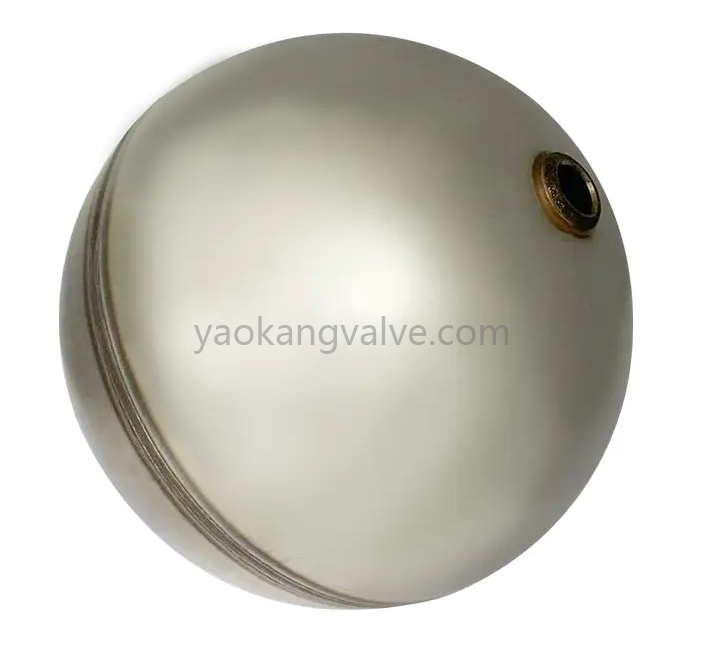
Automatic liquid level control is important in water storage, industrial processing, plumbing equipment, and many other fluid management applications. A Float Ball provides a mechanical way to respond to changing liquid levels by moving with the surrounding fluid and activating a connected valve mechanism. Although the operating principle is straightforward, material selection, structural design, dimensional accuracy, and compatibility with the complete assembly all influence its practical performance.
The basic working principle relies on buoyancy. When the liquid level rises, the float moves upward and transfers movement through a lever, stem, or other mechanical connection. Depending on the valve design, this movement can restrict or stop incoming liquid. When the level falls, the float moves downward, allowing the mechanism to reopen or adjust the flow. This process provides automatic level regulation without requiring continuous electronic control.
Material selection should reflect the intended application. Components used in clean water systems may have different requirements from those installed in industrial environments involving temperature changes, chemical exposure, or frequent mechanical movement. Stainless steel, engineering plastics, and other suitable materials may be considered according to strength, corrosion resistance, density, and manufacturing requirements. Evaluating the actual operating environment helps buyers avoid choosing a material based only on appearance or general product descriptions.
Structural design is closely related to buoyancy. The component must displace enough liquid to generate the force required to operate the connected mechanism. Its external dimensions, internal volume, wall thickness, and overall weight can affect how it responds to changes in liquid level. Hollow construction is often useful for achieving the required buoyancy while maintaining a practical shape. These design factors should be considered together to ensure that the component suits the intended system.
Manufacturing quality also affects consistency. Depending on the material and product structure, production may involve stamping, forming, machining, welding, polishing, or other processes. Each stage can influence the final dimensions and surface condition. For example, deformation during forming may change the intended geometry, while inconsistent joining can affect structural integrity. Controlled manufacturing procedures help maintain repeatability across production batches.
Dimensional compatibility is especially important when the component is designed for a specific valve assembly. Connection points must match the associated lever, stem, bracket, or other mechanical parts. The available movement range must also correspond with the valve's intended opening and closing action. For replacement applications, checking the existing component's dimensions and connection structure can reduce installation problems and improve compatibility.
Surface quality is another consideration for both assembly and maintenance. Depending on the material, finishing processes may include deburring, cleaning, or polishing. These operations can help remove unwanted edges and residues while improving surface consistency. The required finish should be determined by the product's material and operating conditions rather than treated solely as a cosmetic feature.
Different applications may also require different levels of inspection. Manufacturers can check dimensions, appearance, connection areas, material condition, and structural consistency throughout production. Where relevant, functional testing can help evaluate buoyancy or movement within the intended operating range. Consistent inspection is particularly useful for equipment manufacturers that require repeat orders and predictable assembly performance.
For industrial buyers, supplier communication is an important part of product selection. Information about the working liquid, installation environment, valve structure, connection dimensions, and expected operating conditions can help a manufacturer identify a suitable design. Providing these details early can also support customized production and reduce misunderstandings during procurement.
Maintenance requirements should be considered alongside initial selection. Depending on the application, periodic checks may be needed to identify deposits, wear, deformation, or interference with connected mechanical parts. A suitable design and compatible material can help support routine operation, while regular inspection allows potential issues to be identified before they affect the wider system.
A properly selected Float Ball works as part of a complete fluid control mechanism, with buoyancy, material, dimensions, and connection design contributing to its function. Buyers should evaluate these factors according to their actual equipment requirements rather than considering the component in isolation. To explore related valve products and fluid control solutions, visit https://www.yaokangvalve.com/product/ for additional product information.

 English
 Arabic
 French
 Spanish
 Portuguese
 Deutsch
 Turkish
 Dutch
Dutch
 Italiano
 Romaian
 Portuguese (Brazil)
 Greek
Greek