


Role of Besan in Namkeen Manufacturing | Health Mark
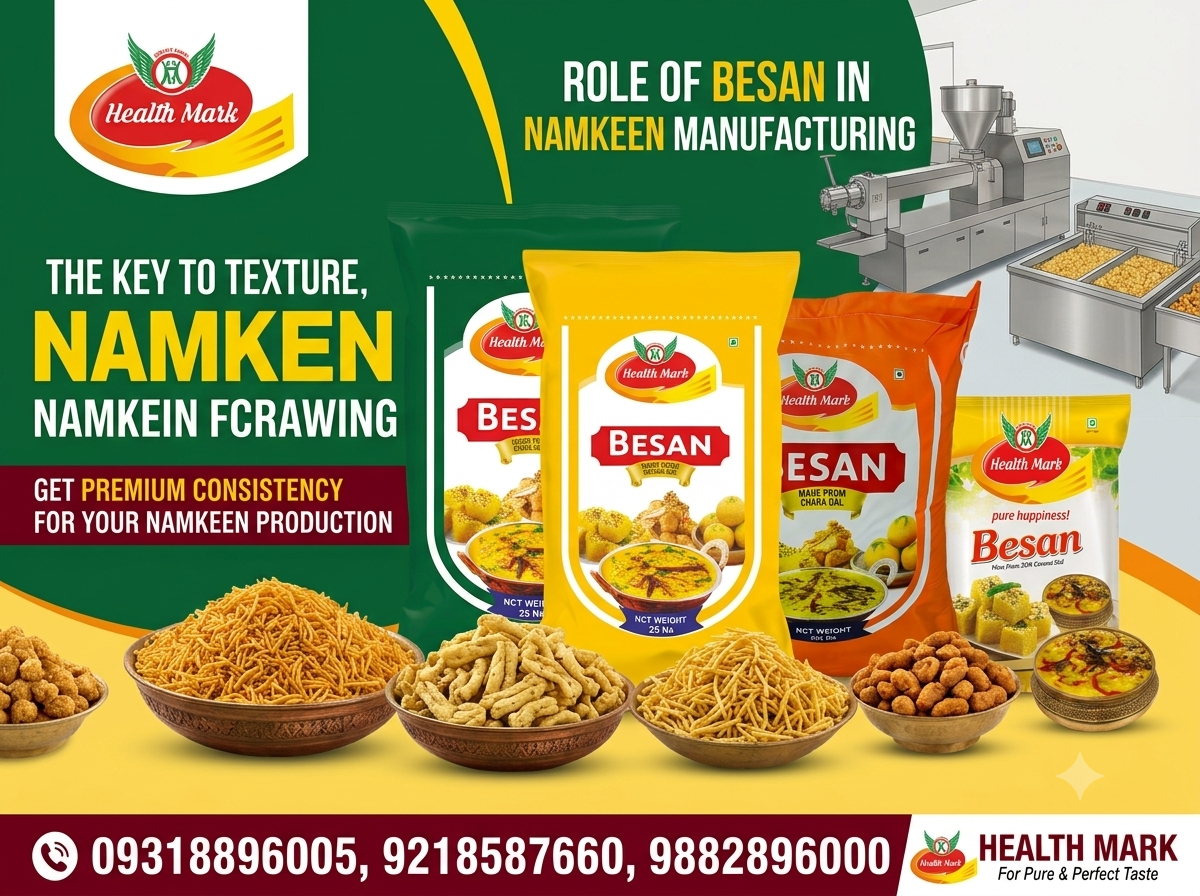
Namkeen is one of the most popular snack categories in India, and besan plays a major role in many traditional and commercial namkeen products. From sev and bhujia to pakora-style mixtures and coated snacks, gram flour helps create the texture, flavour, binding, and crispness that consumers expect.
Understanding the Role of Besan in Namkeen Manufacturing is especially important for food manufacturers, wholesalers, snack producers, and distributors that want consistent product quality across every production batch.
At Health Mark, we understand that selecting the right raw material can directly affect the final product. Good-quality besan can support better texture, uniformity, frying performance, and overall customer satisfaction.
Why Besan Is Important in Namkeen Production
Besan is made by grinding chickpeas into a fine flour. It is widely used in Indian snacks because it blends well with spices, water, oil, and other ingredients.
In commercial namkeen manufacturing, besan is not just an ingredient. It influences several important production factors, including:
-
Dough consistency
-
Binding strength
-
Crispness
-
Colour
-
Flavour
-
Oil absorption
-
Product shape
-
Batch uniformity
For manufacturers producing namkeen at scale, these factors can affect both product quality and production efficiency.
Besan Helps Create the Right Texture
Texture is one of the most important qualities in namkeen.
Products such as sev and bhujia need the right balance between crispness and bite. If the besan is too coarse, inconsistent, or poor in quality, the final snack may not have the desired texture.
Using premium quality Besan can help manufacturers achieve smoother dough and more consistent frying results.
This is one reason many snack businesses carefully evaluate flour texture before selecting a regular supplier.
Besan Supports Proper Binding
Besan works as a natural binding ingredient in many namkeen preparations.
When mixed with water, spices, and other ingredients, it forms a workable dough or batter. The correct binding helps products maintain their shape during extrusion, frying, and handling.
If the besan behaves differently from one batch to another, manufacturers may face issues such as:
-
Dough breaking
-
Uneven shapes
-
Poor extrusion
-
Excess oil absorption
-
Inconsistent frying
This is why working with a reliable Best Besan Seller can be valuable for businesses requiring regular production.
Besan Influences Crispness
Crispness is one of the biggest reasons consumers enjoy namkeen.
The quality, fineness, and moisture level of besan can influence how the product fries and how crisp it becomes.
A consistent flour helps manufacturers maintain a more predictable frying process. It can also support better texture retention after packaging.
Businesses searching for the best Besan should therefore look beyond appearance and consider actual production performance.
Besan Affects Colour and Appearance
The visual appearance of namkeen matters a lot in retail markets.
Consumers often associate an even golden colour with freshness and quality. Besan quality can affect the final colour after frying.
An uneven raw material may lead to inconsistent colour across batches.
Manufacturers comparing top Besan options should check colour consistency before placing large orders.
Besan Contributes to Taste
Besan has a distinct nutty flavour that forms the base taste of many Indian snacks.
In products like sev, bhujia, ganthiya, and pakora mixes, the natural flavour of besan works with spices to create the final taste profile.
For manufacturers, maintaining the same taste in every batch is essential.
This is why consistent raw material sourcing is just as important as the recipe itself.
Oil Absorption and Frying Performance
Oil usage is an important cost factor in namkeen manufacturing.
The behaviour of besan during frying can influence oil absorption, texture, and final product weight.
Manufacturers should test different lots of besan to see how they perform under actual production conditions.
Instead of focusing only on the best Besan price, businesses should consider total processing performance and yield.
A slightly cheaper raw material may not always be economical if it leads to higher oil usage or inconsistent production.
Consistency Matters in Large-Scale Manufacturing
One of the biggest challenges in food manufacturing is keeping product quality consistent.
When a namkeen manufacturer produces hundreds or thousands of kilograms every month, even small differences in raw material can create noticeable changes in the final product.
This is why many businesses prefer suppliers that can offer dependable quality across repeated orders.
Companies comparing the best besan manufacturers in India should ideally evaluate:
-
Flour fineness
-
Moisture consistency
-
Colour
-
Aroma
-
Packaging
-
Batch repeatability
-
Delivery reliability
Packaging and Storage of Besan
Besan can absorb moisture if not stored properly.
Moisture may affect texture, shelf stability, and processing performance.
Manufacturers should store besan in a cool and dry place, away from direct sunlight and humidity.
Packaging should remain properly sealed until the product is required for production.
For bulk buyers, suitable packaging is especially important because large quantities may be stored for longer periods.
Choosing a Reliable Supplier
Namkeen manufacturers should evaluate suppliers carefully before entering into a long-term purchasing arrangement.
A dependable supplier should offer:
-
Consistent quality
-
Suitable packaging
-
Timely delivery
-
Clear communication
-
Stable availability
-
Competitive pricing
-
Support for repeat orders
Businesses looking for FMCG products in Himachal Pradesh may also prefer suppliers that can serve regional markets efficiently.
Location and delivery capability can make a major difference when production schedules depend on timely raw material supply.
Why Price Should Not Be the Only Factor
Cost is naturally important in manufacturing, but quality issues can create bigger losses.
The lowest best Besan price may not always result in the lowest production cost.
Manufacturers should consider:
-
Frying yield
-
Oil consumption
-
Rejection rate
-
Product consistency
-
Labour efficiency
-
Customer feedback
A reliable supplier may provide better overall value even if the purchase rate is not the absolute lowest in the market.
Health Mark for Besan and FMCG Supply
Health Mark supplies food products for households, retailers, wholesalers, distributors, and commercial buyers.
Businesses searching for the best besan India market options can connect with Health Mark for product and supply enquiries.
For buyers looking for a Best food manufacturer in Baddi or dependable FMCG sourcing support, Health Mark can assist with food product requirements for retail and commercial use.
The focus remains on quality, reliable supply, and practical support for business customers.
Conclusion
The Role of Besan in Namkeen Manufacturing goes far beyond simply adding bulk to a recipe.
Besan affects texture, binding, crispness, flavour, colour, frying performance, and overall production consistency. For namkeen manufacturers, choosing the right besan supplier can help maintain product standards and support smoother production.
Businesses should evaluate quality, consistency, packaging, supplier reliability, and production performance rather than making decisions only on price.
For premium quality Besan, FMCG products, bulk enquiries, or commercial supply requirements, connect with Health Mark.
Contact Numbers:
09318896005
9218587660
9882896000

 English
 Arabic
 French
 Spanish
 Portuguese
 Deutsch
 Dutch
Dutch
 Italiano
 Russian
 Romaian
 Portuguese (Brazil)
 Greek
Greek