


TMS Treatment for Depression: How Magnetic Therapy Works, Benefits, and What to Expect
Depression can affect a person's mood, energy, concentration, relationships, and everyday activities. While antidepressant medication and psychotherapy help many people, some continue to experience symptoms despite trying conventional treatments. For these individuals, TMS treatment may be an option worth discussing with a qualified psychiatrist.
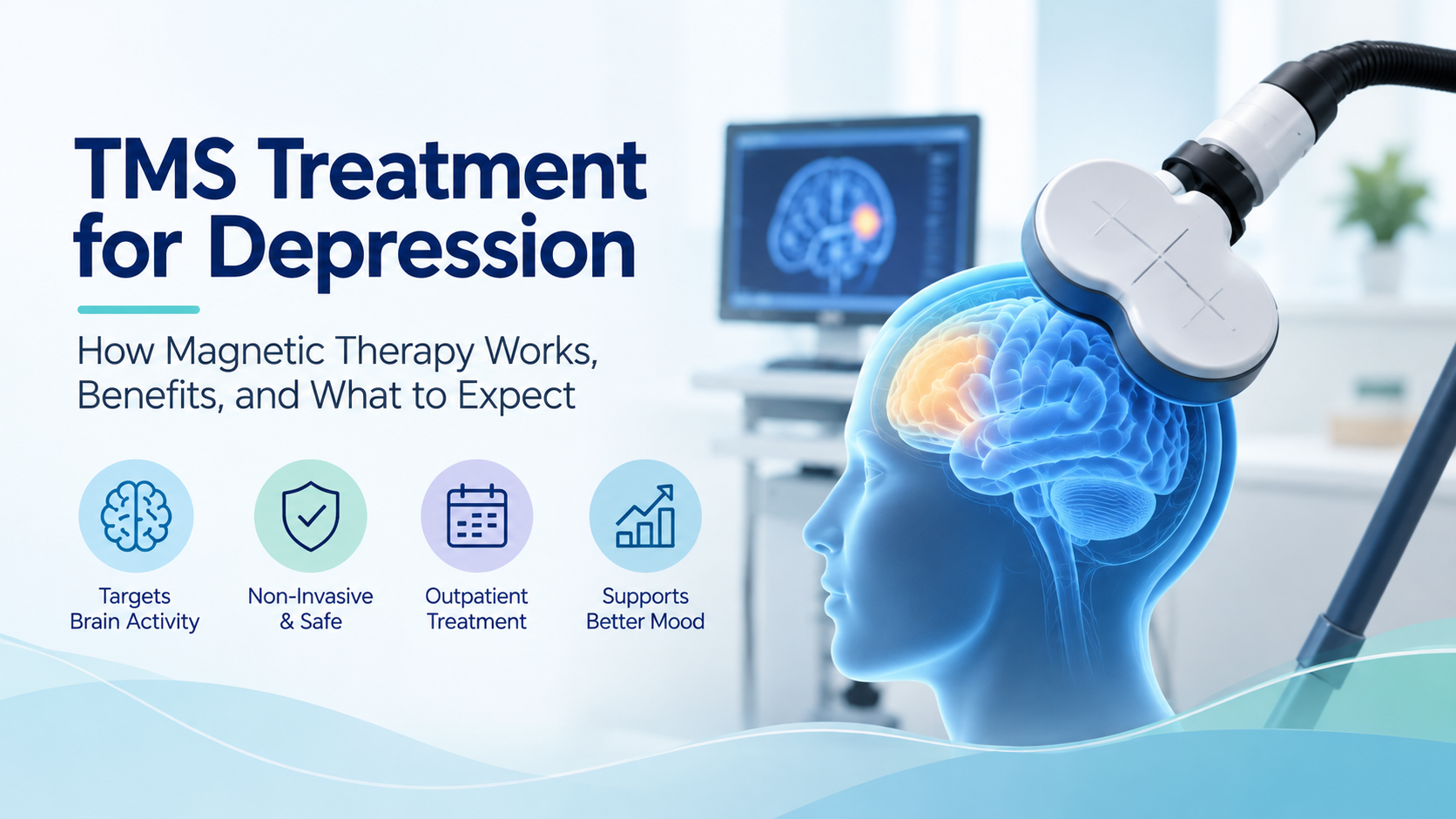
Transcranial Magnetic Stimulation (TMS) is a non-invasive treatment that uses magnetic pulses to stimulate specific brain regions involved in mood regulation. Also known as magnetic therapy for depression in general discussions, TMS has become an established treatment option for certain people with major depressive disorder, particularly when previous treatments have not provided sufficient relief.
At TMS HUBB, patients can learn about rTMS treatment, clinical assessment, and available treatment pathways to understand whether this approach may suit their needs.
What Is TMS Treatment for Depression?
TMS treatment for depression uses a specialised device to deliver magnetic pulses to targeted areas of the brain. These pulses induce small electrical currents that influence the activity of nerve cells and the neural circuits involved in regulating mood.
Depression can involve changes in brain activity and communication between different neural networks. TMS aims to influence these circuits through repeated, carefully controlled stimulation.
Unlike electroconvulsive therapy (ECT), routine TMS treatment does not require general anaesthesia or deliberately induce a seizure. Patients remain awake throughout the session and can generally resume their usual activities afterwards, subject to medical advice.
TMS is particularly relevant for people with major depressive disorder who have not responded adequately to previous treatments. A psychiatrist must assess the patient's diagnosis, medical history, and suitability before treatment begins.
How Does Magnetic Therapy for Depression Work?
Magnetic therapy for depression, when referring to TMS, involves directing magnetic pulses towards specific brain regions associated with mood regulation. The treatment most commonly targets the left dorsolateral prefrontal cortex for depression, although the protocol depends on the individual's clinical needs.
The magnetic field passes through the scalp and skull without surgery. It induces electrical activity in the targeted neural tissue, and repeated sessions may help modify activity and communication within relevant brain networks.
The goal is to improve depressive symptoms over the course of treatment rather than produce an immediate change after a single session.
It is important to distinguish clinical TMS from unregulated magnetic products or general magnet-based wellness treatments. TMS is delivered using specialised medical equipment under appropriate clinical supervision.
Key Benefits of TMS Treatment
TMS treatment offers several potential advantages for appropriately selected patients.
-
Non-invasive approach: Treatment does not require surgery or general anaesthesia.
-
Alternative treatment option: It may be considered when antidepressants or psychotherapy have not provided sufficient relief.
-
No systemic medication exposure from the procedure itself: TMS works through magnetic stimulation rather than administering a drug.
-
Outpatient appointments: Patients typically attend scheduled sessions and return home afterwards.
-
Potential to combine treatments: A clinician may recommend TMS alongside medication or psychotherapy, depending on individual circumstances.
TMS does not guarantee remission, and individual responses vary. Patients should discuss the potential benefits, limitations, and alternatives with their treating psychiatrist.
TMS Treatment Compared With Other Depression Treatments
Understanding the differences between available approaches can help patients prepare for a discussion with their healthcare provider.
| Treatment | How it works | Important consideration |
|---|---|---|
| TMS treatment | Uses magnetic pulses to stimulate targeted brain regions | Requires repeated clinical sessions |
| Antidepressant medication | Acts on chemical signalling involved in mood and other functions | May cause medication-related side effects |
| Psychotherapy | Helps patients address thoughts, behaviours, emotions, and coping strategies | Usually involves multiple appointments |
| Electroconvulsive therapy (ECT) | Uses a controlled electrical stimulus to induce a therapeutic seizure under anaesthesia | Requires a different clinical setting and recovery considerations |
These treatments are not necessarily mutually exclusive. The most appropriate approach depends on symptom severity, previous treatment response, medical history, and professional recommendations.
What Happens During a TMS Treatment Session?
Knowing what to expect can make the process less unfamiliar for people considering magnetic therapy for depression.
1. Psychiatric assessment
The process begins with a clinical assessment. The psychiatrist reviews symptoms, previous treatments, medical history, and possible contraindications to determine whether TMS is appropriate.
2. Treatment planning and positioning
If treatment is recommended, the clinical team identifies the appropriate stimulation target and establishes the treatment settings.
3. Magnetic stimulation
The patient sits in a comfortable chair while a magnetic coil is positioned near the scalp. The device delivers controlled pulses to the selected area. Patients remain awake and may hear clicking sounds or feel a tapping sensation.
4. Repeated appointments
TMS is generally delivered as a course of sessions over several weeks. The exact schedule and duration depend on the protocol prescribed by the treating team.
5. Progress assessment
The clinical team monitors symptoms, treatment tolerance, and progress throughout the course. Improvement may develop gradually, and not everyone responds in the same way.
Is TMS Treatment Safe?
TMS is generally well tolerated when delivered to appropriately screened patients by trained professionals. However, like any medical treatment, it has potential risks and side effects.
Common side effects include scalp discomfort, tenderness around the stimulation site, and headaches. These effects are often mild and may decrease as treatment progresses.
Seizures are a rare but serious potential complication. Certain metal implants, implanted electronic devices, neurological conditions, and other medical factors may affect eligibility or require additional precautions.
Before beginning treatment, patients should disclose relevant medical conditions, medications, and implanted devices to their treating team. A qualified clinician can explain individual risks and determine whether TMS is suitable.
Who May Benefit From TMS Treatment for Depression?
TMS may be considered for adults with major depressive disorder who have not achieved adequate improvement through previous treatments or who have experienced difficulties tolerating them.
Suitability is determined through a professional assessment rather than symptoms alone. The psychiatrist considers the diagnosis, previous treatment history, current medications, medical circumstances, and treatment goals.
In Australia, Medicare-funded rTMS for major depressive disorder is subject to specific eligibility criteria. Coverage should not be assumed for every patient or every condition. Patients should confirm the applicable requirements and fees with their treating clinic.
Frequently Asked Questions
How long does TMS treatment take?
Individual sessions commonly last around 20–40 minutes, depending on the treatment protocol. A full course usually involves repeated appointments over several weeks.
Is magnetic therapy for depression painful?
Most patients remain comfortable, although some experience tapping sensations or scalp discomfort during stimulation. The treating team can assess persistent discomfort and adjust treatment when appropriate.
When will I notice improvements?
Some patients notice changes during treatment, while others improve later or do not respond sufficiently. The clinical team monitors progress throughout the prescribed course.
Can TMS replace antidepressants?
Not necessarily. Some patients receive TMS alongside medication or psychotherapy. Any decision to change or stop medication should be made with the prescribing clinician.
Is TMS treatment covered by Medicare in Australia?
Eligible patients may qualify for Medicare-funded rTMS for major depressive disorder if they meet the relevant requirements. Confirm eligibility and any out-of-pocket expenses with your psychiatrist or clinic.
Conclusion
TMS treatment provides a non-invasive option for certain people living with depression, particularly when conventional approaches have not delivered adequate improvement. By stimulating targeted brain regions through magnetic pulses, TMS aims to influence neural circuits associated with mood regulation.
Understanding how TMS treatment for depression works, what magnetic therapy involves, and which safety considerations apply can help patients have more informed conversations with their healthcare providers.
TMS HUBB offers information about rTMS services and assessment pathways in Queensland. Visit TMS HUBB to learn more or contact the clinical team to discuss whether TMS may be appropriate for your circumstances.

 English
 Arabic
 French
 Spanish
 Portuguese
 Deutsch
 Turkish
 Dutch
Dutch
 Italiano
 Russian
 Romaian
 Portuguese (Brazil)