


Butterfly Ball Valve: Design, Benefits, and Industrial Applications
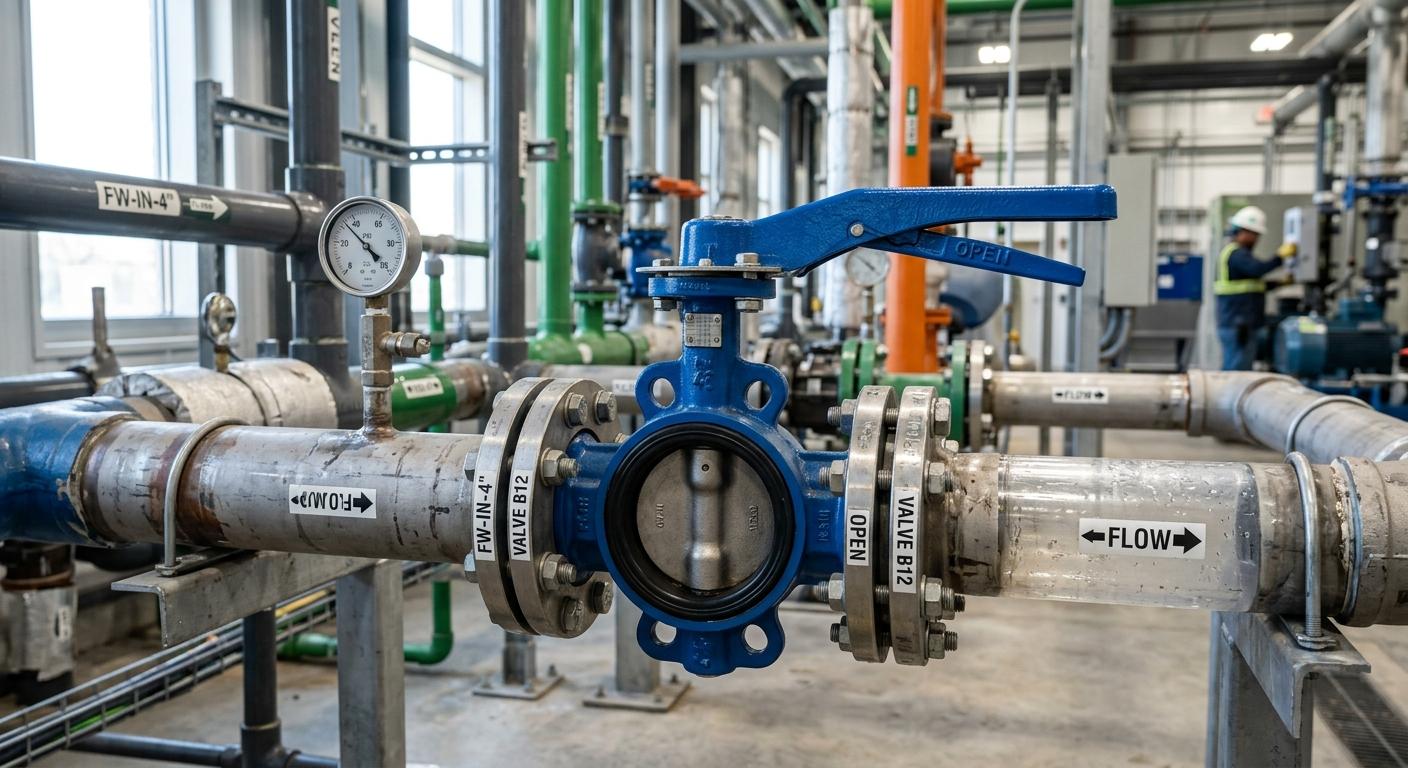
A butterfly ball valve is a type of industrial valve used to control the flow of liquids and gases in pipelines. Valves play an important role in water treatment plants, manufacturing facilities, chemical processing systems, and commercial plumbing networks. Selecting the right valve helps maintain reliable flow control, reduce leakage risks, and improve the performance of an entire piping system.
The term butterfly ball valve may refer to a butterfly valve, a ball valve, or a combination of valve technologies used in specific applications. Although butterfly valves and ball valves have different designs, both are widely used because they offer dependable flow control and practical operation. Understanding their differences helps engineers, maintenance teams, and purchasing managers select suitable equipment for their systems.
Understanding Butterfly and Ball Valve Designs
A butterfly valve uses a circular disc positioned inside the pipeline. The disc rotates around a central shaft to regulate or stop the flow of fluid. When the valve opens, the disc turns to allow fluid to pass through the pipe. When it closes, the disc moves across the flow path to restrict movement.
A ball valve operates differently. It contains a spherical ball with a hole through its center. Turning the handle rotates the ball, aligning the opening with the pipeline or positioning the solid side against the flow. This design makes ball valves suitable for applications that require quick shutoff and reliable sealing.
Both designs offer useful advantages. Butterfly valves are generally lightweight, compact, and suitable for larger pipelines. Ball valves are often preferred where tight shutoff and straightforward operation are important. The right option depends on pressure, temperature, fluid type, pipe diameter, and installation requirements.
Key Benefits of Industrial Flow Control Valves
Industrial valves help maintain consistent system performance by allowing operators to start, stop, and manage fluid movement. Butterfly valves are particularly useful in systems where space and weight are important considerations. Their compact construction can simplify installation and reduce the support requirements of large piping networks.
Ball valves provide another set of advantages. Their quarter-turn operation allows operators to open or close the valve quickly. Many designs also provide dependable shutoff when the valve is correctly selected for the operating conditions.
Durability is another important consideration. Valves manufactured from stainless steel, carbon steel, cast iron, or other suitable materials can serve different industrial environments. Stainless steel options are often selected for applications involving corrosion concerns, while other materials may be more appropriate for general water distribution or less demanding services.
Choosing quality components can also help reduce maintenance interruptions. A properly specified valve can improve operational reliability, support safe isolation, and reduce the likelihood of premature component failure.
Common Industrial Applications
Butterfly and ball valves are used across a wide range of industries. Water treatment facilities use them to control flow through filtration equipment, storage tanks, pumping systems, and distribution pipelines. Their suitability depends on the required pressure rating, valve size, and water quality.
Manufacturing plants use industrial valves in cooling circuits, process water lines, compressed air systems, and production equipment. Chemical processing facilities require careful material selection because certain fluids can damage valve bodies, seals, or internal components.
Food processing and pharmaceutical operations may require hygienic valve designs that support cleaning and meet applicable industry requirements. In these environments, the valve's internal finish, sealing materials, and construction standards can be just as important as its flow capacity.
Heating, ventilation, and air conditioning systems also rely on valves to regulate water movement through chillers, cooling towers, and heating equipment. Selecting the correct valve design helps maintain system efficiency and simplifies routine servicing.
How to Choose the Right Valve
Several factors should be evaluated before purchasing an industrial valve. First, determine the required pipe diameter and connection type. A valve must fit the existing pipeline and provide sufficient flow capacity for the application.
Second, review the operating pressure and temperature. Every valve has defined operating limits, and exceeding those limits can damage components or create unsafe conditions. The selected valve must be rated for the actual operating environment.
Third, consider the fluid being handled. Water, oil, steam, chemicals, and abrasive mixtures can place different demands on valve materials and seals. Compatibility should be confirmed with the manufacturer or supplier.
Operators should also consider whether the valve will provide simple on-off service or require flow regulation. Not every butterfly or ball valve is suitable for every throttling application. The manufacturer's specifications should guide the final selection.
Maintenance and Inspection
Regular inspection helps identify wear before it affects system performance. Maintenance teams should check for external leakage, corrosion, damaged handles, loose connections, and unusual operating resistance. Automated valves may also require inspection of actuators, electrical connections, and control systems.
Valve seats and seals can deteriorate over time because of temperature changes, chemical exposure, pressure fluctuations, or repeated operation. Following the manufacturer's maintenance schedule helps maintain dependable performance.
Before carrying out maintenance, workers should isolate the system, release stored pressure, and follow the applicable safety procedures. Proper installation and periodic testing are essential for extending service life.
Conclusion
Butterfly and ball valves are valuable components in modern industrial piping systems. Their different designs make them suitable for different flow control requirements, from large water distribution networks to process lines that require dependable shutoff. By considering material compatibility, pressure ratings, temperature limits, and maintenance needs, businesses can select a valve that supports safe and efficient operations.

 English
 Arabic
 French
 Spanish
 Portuguese
 Deutsch
 Turkish
 Dutch
Dutch
 Italiano
 Romaian
 Portuguese (Brazil)
 Greek
Greek