


Comprehensive Guide to Choosing the Right HDPE Duct Spacer
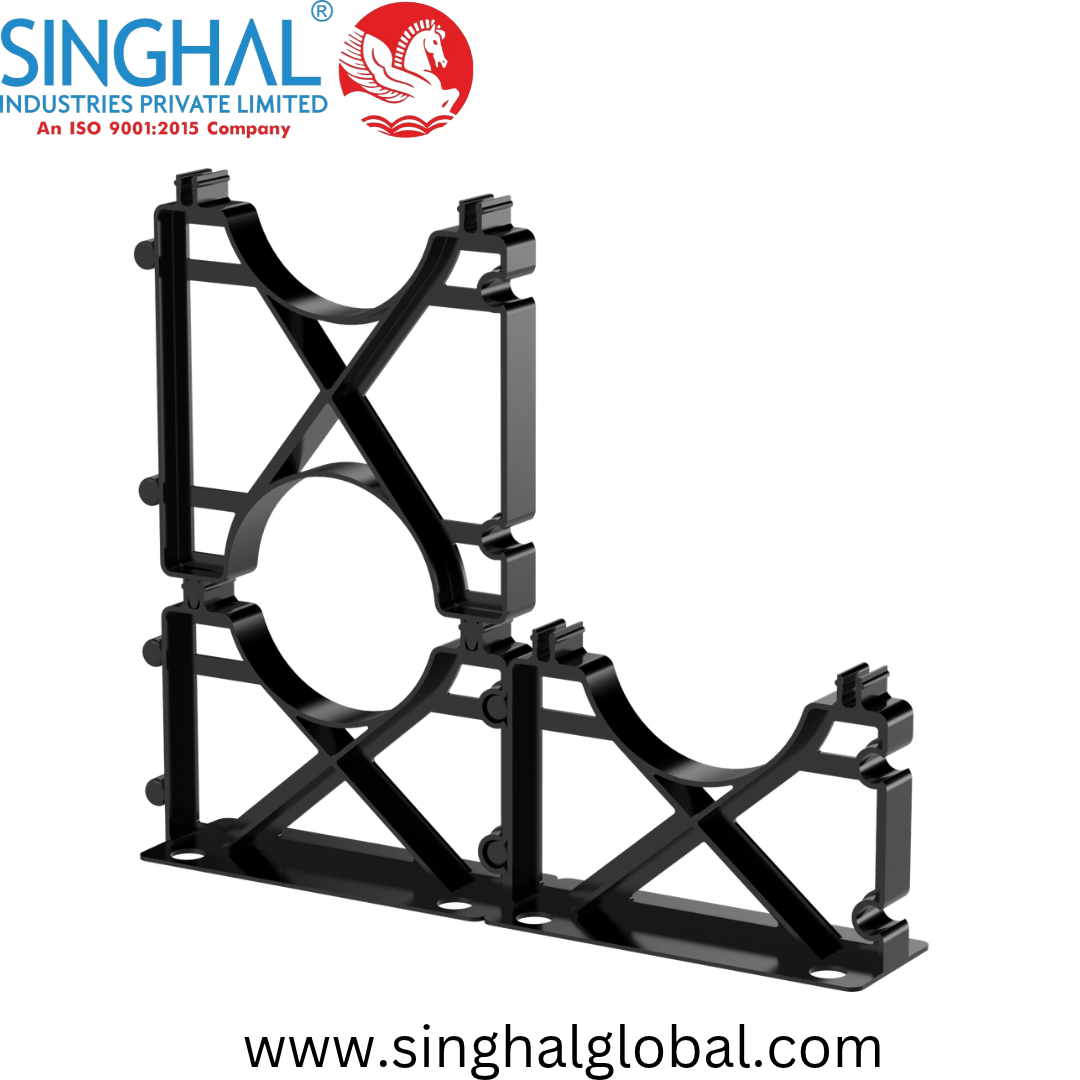
The process of installing underground cables involves highly precise engineering and extensive planning to provide reliable long-term electrical grid service as well as uninterrupted telecommunications. Whether you are installing utility lines, fiber-optic cables, or high-voltage power transmission conduit systems below the surface of busy city streets or large industrial parks; protecting these systems from damage due to mechanical loads (stresses) imposed upon them by vehicles and other sources, from shifting soil conditions, and from temperature-related expansion/contraction is essential. Project managers and engineers will use specialized supporting components to help keep all of the various conduits separated from each other at a consistent distance. This separation will prevent damage to the individual components through wear-and-tear caused by rubbing against one another and structural failure of the entire system as a result of improper installation techniques.
Understanding the Core Purpose of Conduit Separation Systems
The primary function of a cable separation device is to maintain a specified number of conduits in a predetermined geometric pattern as the trench is backfilled and for the duration of the utility network's life. If there are no such structural components, the weight of the backfill material, movement of the ground, and movement of vehicles on top of the trench will likely lead to sagging, crossing, or crushing of the conduits. Any of these conditions could result in failure of the cable insulation and ultimate loss of electricity. Maintaining precise horizontal and vertical distances between individual conduits allows for maximum heat transfer away from the cables.
Material Science Advantages of High-Density Polyethylene
High density polyethylene (HDPE) has become the preferred material for creating underground utility support structures. The primary reason is that HDPE has many desirable qualities including its mechanical properties, chemical stability and ability to withstand environmental stress cracking. While there are other materials available such as concrete or brittle plastics, HDPE Duct Spacer Supplier is the most suitable because it provides both high flexibility and high tensile strength. This combination of attributes enables the supports to flex under pressure from ground movement or earthquake activity without breaking. Additionally, since HDPE does not corrode, allow roots to penetrate it, be attacked by microorganisms or react with chemicals typically present in polluted soil, the supports can provide long-term protection against failure.
Key Structural Parameters for Proper Component Selection
The selection of an appropriate support model depends on analyzing many essential elements of a project. Examples of such elements include trench dimensions, outside diameter of conduits, how deep the conduits will be buried, and the total number of raceways that will be placed in each single trench bank. In addition, engineers must evaluate whether the conduit bundle should have a flat horizontal arrangement or a stacked vertical grid arrangement. Based on this evaluation, engineers can then select the correct slot size for the support system and the appropriate interlocking mechanism for the individual support pieces. Engineers should choose components that have close tolerance measurements to prevent conduit slippage from occurring. If conduit slippage occurs, the entire underground assembly may become unstable and fall apart when backfill layers are compacted using heavy mechanical tamping methods.
Load-Bearing Capacity and Weight Distribution Dynamics
When selecting utility supports for installation in deep trenches or areas with high amounts of vehicular traffic (i.e., roadways, loading docks), load distribution is a major factor to take into account. Supports designed to withstand the compressive forces created by these types of conditions will provide long-term stability to the conduit matrix. In order to select the proper supports, engineers must understand the maximum allowable vertical load of each support. This allows engineers to choose supports that can safely transfer the weight from the soil to the structural foundation of the support system, thus avoiding structural failure due to excessive weight.
Evaluating Soil Chemistry and Environmental Compatibility
Subsurface conditions at different project sites can be very different; they range from dry, sandy soils to highly acidic or alkaline clay beds with water and industrial runoff (corrosive). High density polyethylene has excellent resistance to many types of environmental risks, therefore, it is safe to use in almost all geological settings, and does not require special coatings or treatment. The inherent chemical stability of high density polyethylene will protect the material from degradation during the decades of continuous contact with the soil. Therefore, the structural supports will continue to retain their original shape and holding power for the remainder of the life of the utility installation.
Installation Efficiency and Interlocking Design Features
Contractors value the ease-of-use of products they install in the field; because it affects how long a job takes, and what the cost of a project will be, ease-of-use is a top consideration for contractors when selecting products for use at the job site. Many current models of utility supports incorporate unique locking systems, such as snap fit designs or tongue and groove edges, which allow installers to stack and link together many individual components in a secure manner without using complicated mechanical fasteners or specialized tools. The modular nature of these types of systems allows installation crews to adjust their support matrices in both vertical and horizontal directions quickly as needed to accommodate changes in field conditions or variations in the flatness of the bottom of the trenches where the supports will be placed.
Thermal Expansion and Contraction Management
Underground conduit systems have extreme temperature variations due to both seasonal ground temperature changes and internal electrical load variations. These temperature extremes create cycles of thermal expansion and contraction in the system. High density polyethylene has a unique set of thermal properties which enable the material to respond to the micro-movements associated with the thermal cycles without creating rigid binding stresses that could damage the adjacent conduit runs or weaken the trench structure. Proper spacing supports provide stabilizing anchors that enable the thermal movement to be guided predictably along the length of the conduit run, thereby reducing cumulative mechanical stress and increasing the long term durability of the underground network.
Collaborating with a Trusted HDPE Duct Spacer
The process of purchasing high quality, reliable utility components starts by working with a well-respected and certified HDPE Duct Spacer Manufacturer who can produce consistent quality products, provide precise dimensions and have the ability to manufacture on a large scale. A reputable manufacturer will use cutting edge injection molding technology along with virgin polymers to guarantee each of the molded parts are produced according to strict international standards regarding impact resistance, load-bearing capabilities, and durability. By developing a direct relationship with a highly skilled manufacturer, project engineers are able to obtain custom design solutions, specialized slot configurations or custom polymer blends to address unique engineering problems.
Conclusion
The selection of the proper support for underground utilities will form the basis of a decision which directly impacts the structural integrity, safety, and durability of the electrical/communication network over the course of its useful life. The engineer's ability to evaluate the properties of materials (e.g., strength, corrosion resistance, etc.), their load-carrying capacity, how compatible they are with the type of soil in which they will be installed, and whether they can be assembled as an interlocking modular system allows them to create conduit systems capable of withstanding the harsh environments that exist underground for many years. Working with certified manufacturers/suppliers will provide assurance that all components used in the construction of underground utility systems have met the highest levels of quality and performance required by the industry, thus protecting the long-term viability of critical infrastructure from the destructive forces of nature and unpredictable seismic activity.
Frequently Asked Questions
Question: Who is the largest supplier of HDPE Duct Spacer?
Answer: Singhal Industries Private Limited is a leading and trusted global supplier of top-quality HDPE Duct Spacer units.
Question: What material is used to build these spacers?
Answer: They are fabricated using high-density polyethylene for maximum underground durability.
Question: What purpose do these items serve in utility networks?
Answer: They maintain precise spacing and alignment for underground conduit and cable systems.
Question: Are custom designs available for unique project requirements?
Answer: Yes, tailored solutions are manufactured to match specific trench layouts and dimensions.
Question: Do these components resist soil moisture and harsh chemicals?
Answer: They offer exceptional resistance to underground moisture, humidity, and chemical exposure.

 English
 Arabic
 French
 Spanish
 Portuguese
 Deutsch
 Turkish
 Dutch
Dutch
 Italiano
 Russian
 Portuguese (Brazil)
 Greek
Greek