


How does Laminar Airflow System Turnkey Project Company support efficient embryology workflows?
INTRODUCTION
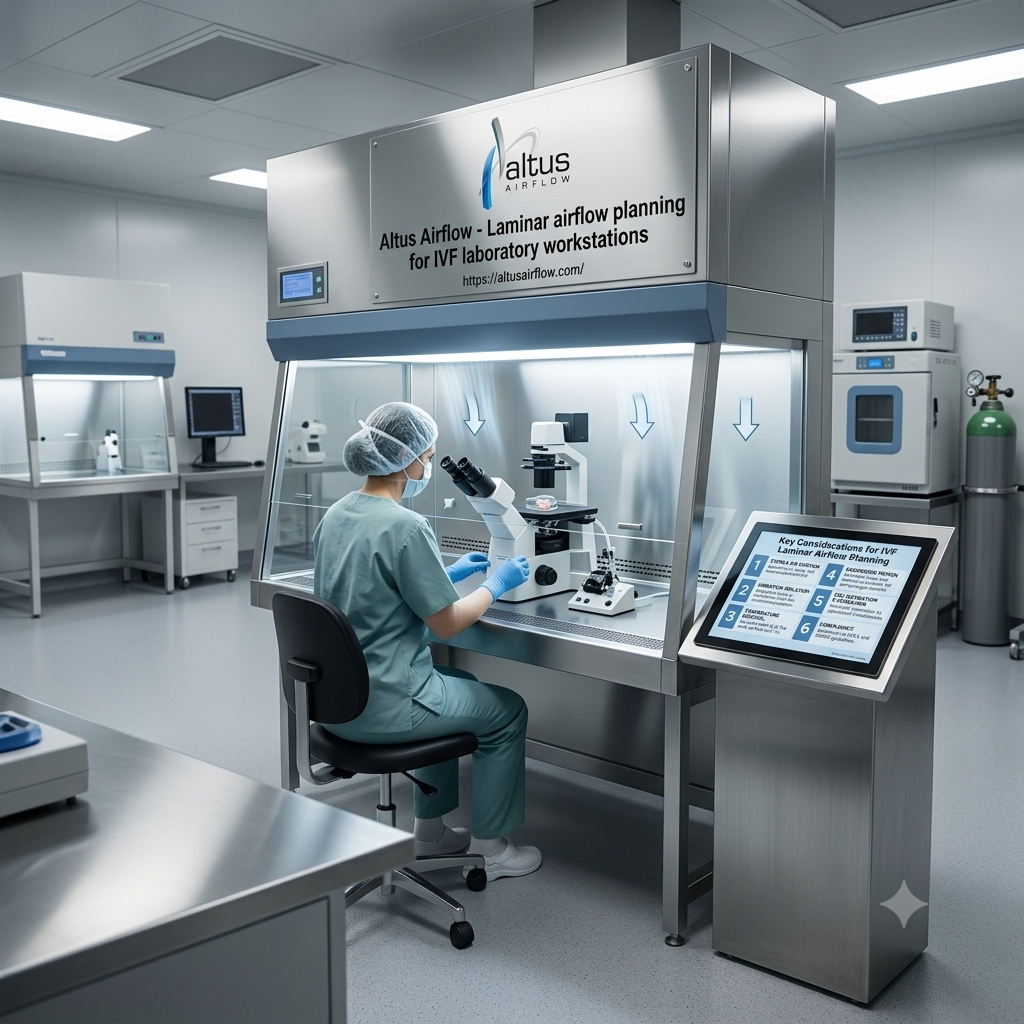
Efficient embryology workflows are essential for IVF laboratories because embryo handling, gamete preparation, fertilization, culture, and cryopreservation require carefully controlled environmental conditions and well-organized workspaces. A Laminar Airflow System Turnkey Project Company can support these requirements by coordinating airflow planning, cleanroom infrastructure, filtration, HVAC integration, equipment positioning, installation, testing, and commissioning. When these elements are designed around the laboratory’s actual procedures, embryologists can work more consistently, reduce unnecessary handling and movement, and maintain better control over environmental risks.
An embryology laboratory is different from a conventional laboratory. Embryos and gametes can be sensitive to temperature changes, pH fluctuations, volatile organic compounds (VOCs), and other environmental factors. Therefore, successful laboratory planning must consider more than clean air alone. It requires a coordinated approach to air quality, equipment layout, temperature stability, workflow sequencing, contamination prevention, and quality assurance.
Why Efficient Embryology Workflows Matter
Embryology workflows involve multiple procedures that must be performed in a controlled and traceable sequence. These may include oocyte identification, sperm preparation, insemination or intracytoplasmic sperm injection (ICSI), embryo culture, embryo assessment, and cryopreservation.
Poorly planned spaces can create unnecessary movement, interruptions, equipment congestion, and inconsistent working conditions. A well-designed environment supports:
-
Logical movement between workstations
-
Reduced unnecessary handling and transport
-
Consistent access to essential equipment
-
Clear separation of clean and support activities
-
Better coordination among embryologists
-
Reliable environmental monitoring
-
Easier cleaning, maintenance, and documentation
The objective is not simply to make the laboratory look organized. It is to build a functional environment that supports repeatable procedures and dependable quality management.
1. Designing Airflow Around Laboratory Activities
A turnkey project provider begins by understanding the procedures performed in the laboratory, the number of workstations, the equipment involved, and the expected workload. This information helps determine how the airflow and ventilation systems should be integrated into the space.
Laminar airflow systems are designed to deliver air in a controlled, generally unidirectional pattern over a defined work area. When appropriately selected and validated, they can help protect specific work zones from airborne particles.
However, a laminar airflow unit is not a complete substitute for a properly designed IVF laboratory ventilation system. The room HVAC system, filtration strategy, pressure relationships, local airflow equipment, and laboratory layout must work together.
The design should consider:
-
The location and type of critical workstations
-
Air supply and return arrangements
-
Potential turbulence caused by equipment or room geometry
-
Access for cleaning and servicing
-
Compatibility with incubators and other sensitive instruments
-
The environmental requirements of each procedure
Airflow must be verified under actual operating conditions rather than assumed to be effective simply because a unit has been installed.
2. Supporting Logical Embryology Workflow and Layout
Laboratory layout has a direct influence on how efficiently embryologists perform routine tasks. A turnkey provider can coordinate workstation placement, utilities, storage, access routes, and environmental controls to minimize unnecessary movement.
For example, the arrangement of oocyte handling, sperm preparation, insemination or ICSI, embryo culture, assessment, and cryopreservation support areas should reflect the clinic’s procedures and operating model. The exact arrangement must be customized to the laboratory’s protocols rather than imposed as a universal layout.
A well-planned layout helps staff:
-
Retrieve frequently used materials quickly
-
Avoid crossing busy work areas unnecessarily
-
Maintain clear access to incubators and microscopes
-
Keep consumables organized
-
Reduce interruptions during critical procedures
-
Maintain clear identification and documentation practices
The provider should collaborate with embryologists and laboratory managers before finalizing the layout. Their practical input helps ensure that engineering decisions support real workflows rather than creating obstacles during daily operations.
3. Integrating HEPA Filtration and HVAC Systems
Airborne particles may carry contaminants, making filtration an important element of environmental control. High-efficiency particulate air (HEPA) filters can remove particles from air passing through them when the filtration system is properly selected, installed, and maintained.
A turnkey project company can coordinate filtration equipment with HVAC design, airflow distribution, room pressure strategy, temperature control, humidity management, and monitoring.
Important considerations include:
-
Filter selection appropriate to the design specification
-
Proper filter housing and sealing
-
Accessible locations for filter replacement
-
Airflow balancing and verification
-
Pressure relationships between designated spaces
-
Preventive maintenance and testing schedules
HEPA filtration primarily addresses particulate contamination; it does not automatically remove gaseous contaminants such as VOCs. Embryology laboratories should also evaluate material emissions, cleaning products, construction finishes, and other possible sources of VOCs. Where required by the design assessment, suitable gas-phase filtration and source-control measures may be necessary.
The aim is to establish a coordinated environmental strategy, not to rely on a single filtration device.
4. Maintaining Stable Temperature and Humidity
Temperature stability is important throughout embryology laboratory operations. Changes in temperature can affect the performance of culture media and the conditions experienced by gametes and embryos during handling.
A well-coordinated project integrates HVAC controls with the laboratory’s equipment requirements and operating procedures. This includes considering the room environment as well as the localized conditions provided by incubators, heated stages, warming devices, and other instruments.
Useful design measures include:
-
Properly sized HVAC equipment
-
Appropriate sensor placement
-
Temperature monitoring and alarm arrangements
-
Humidity management where required
-
Equipment heat-load assessment
-
Defined procedures for responding to deviations
The laboratory should establish acceptable environmental limits based on equipment specifications, validated procedures, and applicable professional guidance. The project team should document testing and confirm that controls perform as intended.
Room temperature alone does not guarantee that culture media or embryos remain at the required temperature. Local equipment settings, handling time, calibration, and staff practices remain important.
5. Reducing Environmental Risks During Critical Procedures
Embryology laboratories must consider contamination risks from airborne particles, VOCs, unsuitable materials, cleaning chemicals, and poorly controlled maintenance activities.
A turnkey provider can help reduce these risks through coordinated material selection, filtration planning, ventilation design, cleanable surfaces, and maintenance access. The project should also include a plan for managing construction dust, commissioning activities, and the period needed for new materials to off-gas before routine laboratory operation.
Key considerations include:
-
Low-emission construction and finishing materials
-
Smooth, durable, cleanable surfaces
-
Appropriate sealing of joints and service penetrations
-
Controlled construction and cleaning procedures
-
Assessment of VOC sources
-
Verification of environmental performance before use
Laminar airflow may help protect a designated work area from airborne particles, but it cannot by itself prevent every form of contamination. A complete strategy also depends on staff technique, consumable quality, cleaning protocols, equipment maintenance, and laboratory quality systems.
6. Coordinating Equipment Placement and Utilities
Embryology laboratories rely on specialized equipment such as inverted microscopes, micromanipulation systems, incubators, warming stages, workstations, refrigerators, and cryostorage systems. Their placement affects both workflow and environmental performance.
A turnkey project company can coordinate engineering layouts with equipment dimensions, electrical requirements, data connections, service access, heat loads, and maintenance clearances.
This coordination helps avoid issues such as blocked airflow paths, inaccessible filters, overcrowded benches, poorly positioned electrical outlets, or equipment that cannot be serviced without disrupting laboratory activities.
The planning process should include input from equipment suppliers and the laboratory team. Critical equipment may also require backup power, alarms, or contingency arrangements based on the clinic’s risk assessment.
Cryostorage areas require particular attention to safe handling, access control, monitoring, and oxygen-deficiency risk where liquid nitrogen is used. These requirements should be addressed as part of the laboratory’s overall safety and operational planning.
7. Improving Standardization and Repeatability
Efficient workflows depend on repeatable working conditions. A carefully planned environment helps laboratory staff follow established procedures without unnecessary adjustments, movement, or interruptions.
A turnkey provider can support standardization by coordinating workstation layouts, consistent utility access, equipment positioning, environmental monitoring points, and maintenance procedures.
For example, frequently used tools can be positioned according to the approved workflow, while equipment requiring regular calibration or servicing can remain accessible without disrupting adjacent activities.
Standardization should also extend to documentation. The completed project should provide clear information about installed systems, equipment settings where applicable, maintenance requirements, test results, and operating procedures.
These arrangements support laboratory quality management, although they do not independently guarantee improved fertilization, embryo development, or pregnancy outcomes. Clinical results depend on many additional biological, technical, and patient-related factors.
8. Providing Testing, Validation, and Commissioning
A major advantage of a turnkey project is coordinated testing before the laboratory enters routine operation. Installation alone does not demonstrate that airflow, filtration, environmental controls, and monitoring systems perform as intended.
Depending on the design and applicable requirements, commissioning may include:
-
Airflow visualization and direction checks
-
Air velocity or volume measurements where specified
-
HEPA filter integrity testing
-
Room pressure differential verification
-
Temperature and humidity control checks
-
Alarm and sensor function testing
-
HVAC performance verification
-
Review of equipment clearances and service access
-
Documentation of results and corrective actions
Testing criteria should be defined in the project specification and aligned with relevant standards, equipment requirements, and professional guidance. The laboratory team should review the results before approving the facility for use.
Where new construction materials or renovations may introduce VOCs, the commissioning plan should also address suitable environmental checks and an appropriate off-gassing period before sensitive laboratory work begins.
9. Supporting Maintenance and Long-Term Performance
Environmental systems need ongoing care to maintain their intended performance. Filter loading, sensor drift, equipment wear, unplanned changes to the room, and poor maintenance practices can affect system operation over time.
A turnkey provider can establish a maintenance plan that identifies inspection intervals, filter replacement requirements, calibration schedules, alarm checks, and documentation responsibilities.
A practical maintenance program should cover:
-
Scheduled HVAC inspections
-
HEPA filter condition and integrity checks as required
-
Sensor calibration and alarm verification
-
Airflow rebalancing after relevant changes
-
Cleaning and inspection of airflow equipment
-
Maintenance records and corrective actions
-
Procedures for protecting laboratory operations during servicing
Maintenance work should be planned with the laboratory manager to minimize disruption. After significant changes to airflow equipment, room layout, or ventilation settings, appropriate reassessment and testing may be necessary.
10. Why a Turnkey Approach Can Be More Efficient
When design, procurement, installation, and commissioning are handled through a coordinated project, hospitals and fertility clinics can reduce the burden of managing multiple contractors independently.
A turnkey project can provide:
-
One coordinated project plan
-
Better communication between engineering and laboratory teams
-
More consistent integration of HVAC and filtration
-
Clear responsibility for installation interfaces
-
Coordinated testing and handover documentation
-
Defined maintenance and support arrangements
Nevertheless, clinics should assess a provider’s experience with IVF or embryology environments, technical capabilities, project references, testing procedures, and after-sales support. A company experienced only in general cleanrooms may not automatically understand all the specific environmental and workflow considerations of an embryology laboratory.
11. How Clinics Can Choose the Right Project Partner
Before appointing a provider, clinics should review the proposed design against their actual laboratory needs. A useful evaluation checklist includes:
-
Relevant experience: Ask about completed laboratory or healthcare cleanroom projects.
-
Workflow consultation: Confirm that embryologists and laboratory managers will contribute to design decisions.
-
Engineering scope: Review the HVAC, filtration, airflow, controls, utilities, and monitoring included in the proposal.
-
Material specifications: Check provisions for cleanability and low-emission materials.
-
Validation plan: Request a clear list of tests, acceptance criteria, and handover records.
-
Maintenance support: Confirm service access, replacement parts, calibration, and preventive maintenance arrangements.
-
Project transparency: Review timelines, responsibilities, exclusions, and commissioning requirements.
The strongest proposal will connect each engineering decision to a defined operational need rather than simply listing equipment.
Conclusion
Efficient embryology workflows require a carefully coordinated environment in which airflow, filtration, HVAC controls, equipment placement, cleanroom materials, and laboratory procedures work together. A specialized Laminar Airflow System Turnkey Project Company can support this goal by coordinating design, installation, testing, commissioning, and maintenance planning around the laboratory’s specific workflow. Clinics should prioritize validated performance, low-emission materials, practical equipment layouts, and collaboration with experienced embryologists. By taking an integrated approach, Altus Airflow helps healthcare facilities plan laboratory environments designed for reliable operations, environmental control, and long-term maintainability.
Frequently Asked Questions
1. How does a Laminar Airflow System Turnkey Project Company support efficient embryology workflows?
A Laminar Airflow System Turnkey Project Company supports efficient embryology workflows by coordinating airflow design, filtration, HVAC integration, equipment placement, installation, testing, and commissioning around the laboratory’s procedures.
2. Why is laminar airflow important in an embryology laboratory?
Laminar airflow can help protect designated work areas from airborne particles when correctly designed and validated. A Laminar Airflow System Turnkey Project Company should integrate local airflow equipment with room ventilation, environmental controls, and laboratory workflow planning.
3. Does a Laminar Airflow System Turnkey Project Company also plan HVAC systems?
Yes. A Laminar Airflow System Turnkey Project Company may coordinate HVAC systems, HEPA filtration, temperature and humidity controls, pressure relationships, and monitoring systems as part of a complete project scope.
4. How does a Laminar Airflow System Turnkey Project Company help reduce contamination risks?
A Laminar Airflow System Turnkey Project Company can help reduce environmental risks through suitable filtration, controlled airflow, low-emission materials, cleanable surfaces, commissioning tests, and maintenance planning. Effective contamination control also requires appropriate laboratory procedures and staff practices.
5. What testing should a Laminar Airflow System Turnkey Project Company provide?
A Laminar Airflow System Turnkey Project Company should specify appropriate tests such as airflow verification, HEPA filter integrity testing, pressure differential checks, environmental control checks, and alarm testing according to the project design and applicable requirements.
Read Our Previous Blog------>What flooring options are suitable for IVF Lab Design In India?

 English
 Arabic
 French
 Portuguese
 Deutsch
 Turkish
 Dutch
Dutch
 Italiano
 Russian
 Romaian
 Portuguese (Brazil)
 Greek
Greek