


What Are the Benefits of Early Root Canal Treatment?
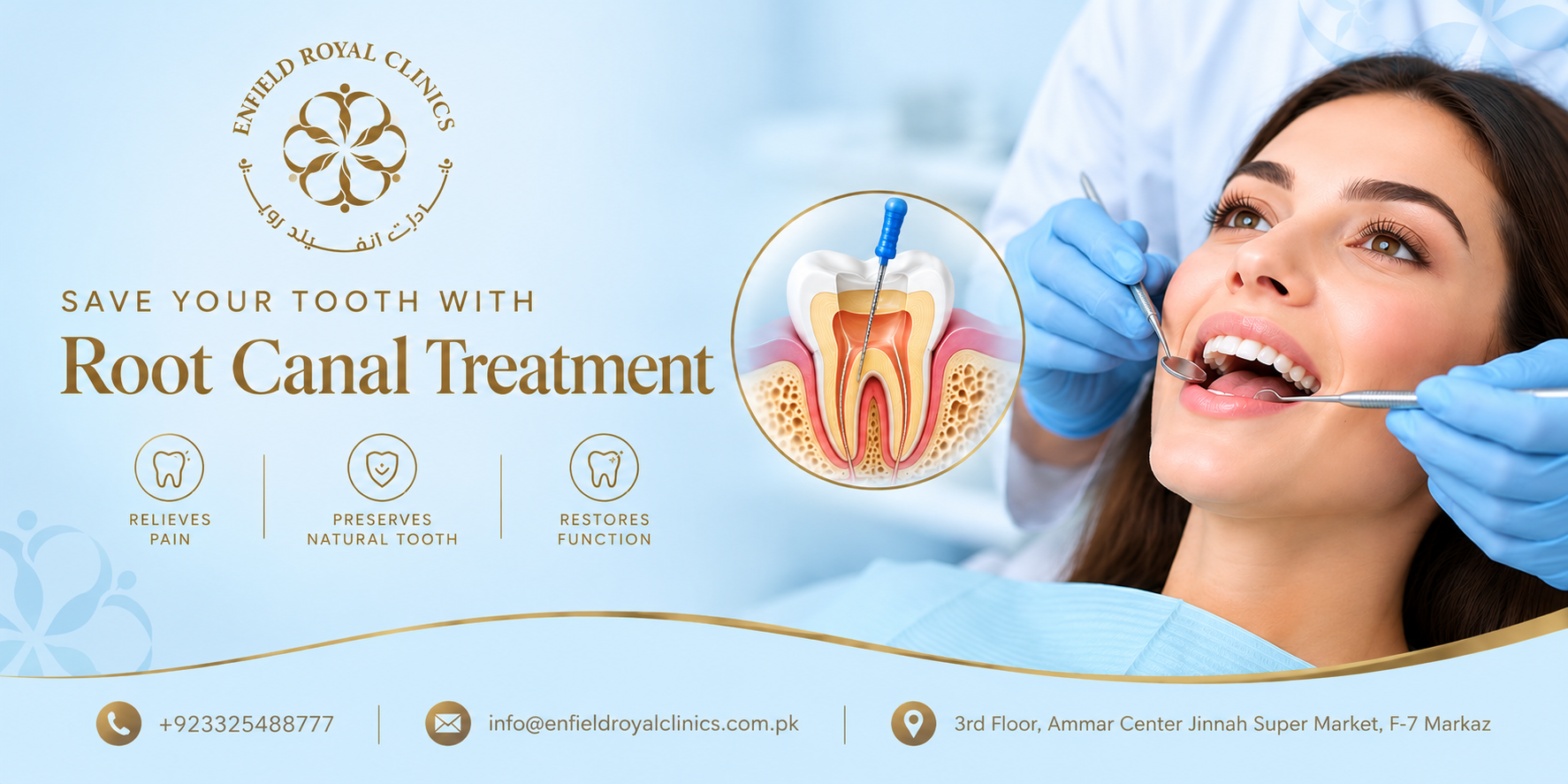
Tooth pain, lingering sensitivity, and discomfort while chewing can be signs of an underlying dental problem. When bacteria reach the inner pulp of a tooth, they may cause inflammation or infection that requires professional treatment. Delaying dental care can allow the problem to worsen, potentially leading to an abscess, damage to surrounding tissues, or the loss of the affected tooth.
Early root canal treatment can help manage an infected or irreversibly inflamed pulp while preserving the natural tooth. The procedure involves removing the damaged tissue, cleaning and disinfecting the root canals, and sealing them before restoring the tooth. Timely treatment can help relieve pain, control infection, and reduce the risk of more extensive dental problems.
For patients considering Root Canal Treatment in Islamabad, understanding the benefits of early intervention can help them make informed decisions about their oral health. Although not every toothache requires a root canal, a timely dental examination helps identify the cause of symptoms and determine the most suitable treatment.
How Does Early Root Canal Treatment Help Save a Natural Tooth?
One of the most important benefits of early root canal treatment is the opportunity to preserve a natural tooth before the damage becomes too extensive.
A tooth contains several layers, including enamel, dentin, and the inner pulp. Deep cavities, cracks, dental injuries, or repeated dental procedures can damage the pulp and allow bacteria to enter. When the pulp becomes irreversibly inflamed or infected, root canal treatment may be needed to prevent further complications.
During the procedure, the dentist removes the affected pulp, cleans the canals, and seals them to reduce the risk of reinfection. The tooth is then restored with a suitable filling or crown, depending on the amount of remaining tooth structure.
Seeking treatment before the damage becomes severe may improve the chances of keeping the tooth when it is still restorable. Preserving a natural tooth helps maintain normal chewing function and can reduce the need for extraction and possible tooth replacement.
However, early treatment does not guarantee that every tooth can be saved. A tooth with a severe fracture or extensive structural damage may still require extraction. A dental examination helps determine whether root canal treatment is appropriate.
Can Early Root Canal Treatment Relieve Tooth Pain?
Yes, early root canal treatment can relieve pain when the discomfort results from irreversibly inflamed or infected pulp. The pulp contains nerves that respond to irritation, pressure, and inflammation. When bacteria enter the pulp chamber, the resulting inflammation may cause persistent or throbbing pain.
Some patients experience sharp sensitivity to hot or cold foods and drinks, while others notice pain that continues even after the source of temperature has been removed. Discomfort may also become worse at night or when chewing.
Root canal treatment addresses the source of this pain by removing the damaged pulp and cleaning the inside of the tooth. Local anaesthesia is used during the procedure to help keep the patient comfortable.
After treatment, mild soreness or tenderness may continue for several days because the tissues surrounding the root can remain inflamed. This discomfort should generally improve as healing progresses.
Patients considering Root Canal Treatment in Islamabad should avoid relying on painkillers alone when tooth pain persists. Pain relief medication may temporarily reduce symptoms, but it does not remove infected pulp. A dentist can identify the cause of the pain and recommend appropriate care.
It is also important to remember that not every painful tooth needs root canal treatment. Cavities, gum problems, cracked teeth, and other conditions can cause similar symptoms, so an accurate diagnosis is essential.
What Are the Benefits of Treating Dental Infection Early?
An untreated pulp infection can extend beyond the root of the tooth and affect the surrounding tissues. In some cases, this may lead to a dental abscess, which is a collection of pus associated with infection.
Early root canal treatment can help control the source of infection and reduce the risk of further damage when the tooth can be saved.
Reduced risk of an abscess: Treating the infected pulp can help prevent bacteria from continuing to spread through the root canals into surrounding tissues. However, an abscess that has already developed may require additional treatment, such as drainage, alongside management of the infected tooth.
Protection of surrounding tissues: Infection around a tooth's root can affect nearby bone and soft tissues. Timely assessment and appropriate treatment help address the problem before further damage occurs.
Lower risk of urgent complications: Delaying treatment may allow symptoms to become more severe and may lead to swelling or difficulty eating. Early evaluation can help identify problems before they become more complicated.
Appropriate management of infection: Antibiotics are not a substitute for root canal treatment when infected pulp requires definitive dental care. A dentist may prescribe antibiotics in selected cases, particularly when there are signs of spreading infection or systemic involvement.
Increasing facial swelling, fever, or worsening symptoms require urgent dental assessment. Difficulty breathing or swallowing, especially with swelling of the face or neck, requires emergency medical care.
How Can Early Treatment Reduce the Need for Tooth Extraction?
Tooth extraction may become necessary when decay, infection, or structural damage makes a tooth impossible to restore. However, an infected pulp does not automatically mean the entire tooth must be removed.
Root canal treatment offers a way to remove damaged tissue from inside the tooth while retaining the outer structure. When the tooth has enough healthy structure to support a restoration, this approach may help preserve it.
Keeping the natural tooth can offer several practical advantages. It maintains the tooth's role in chewing, helps preserve the spacing of neighbouring teeth, and avoids the immediate need for a replacement option.
If a tooth is extracted, a dentist may discuss options such as a dental implant, bridge, or removable partial denture, depending on the patient's oral health and circumstances. Replacement may involve additional appointments and procedures.
Early assessment is particularly valuable when a cavity is deep or tooth pain persists. It allows the dentist to determine whether the pulp is still capable of healing or whether root canal treatment is necessary.
For those seeking Root Canal Treatment in Islamabad, the goal is not simply to stop pain but to preserve a functional natural tooth whenever possible and clinically appropriate.
Does Early Root Canal Treatment Improve Long-Term Dental Health?
Early treatment can support long-term oral health by addressing the source of infection before it causes additional problems. Nevertheless, the long-term success of a root canal-treated tooth depends on several factors, including the extent of the original damage, the complexity of the canals, and the quality of the final restoration.
After the root canals have been cleaned and sealed, the dentist restores the tooth with a suitable filling or crown. A crown may be recommended when the tooth has lost substantial structure or needs extra protection against chewing forces.
Completing the restoration on time is important. A temporary filling is not designed to provide the same long-term protection as a permanent restoration. Delaying the final restoration can increase the risk of contamination or fracture.
The treated tooth also remains vulnerable to new decay. Root canal treatment removes the affected pulp, but it does not protect the tooth from cavities developing around the edges of a filling or crown.
Patients can support long-term results by brushing twice daily with fluoride toothpaste, cleaning between the teeth, limiting frequent sugary snacks, and attending regular dental checkups.
A root canal-treated tooth can remain functional for many years, but no procedure can guarantee that future dental problems will never occur. Consistent care helps maintain the results and protect the surrounding teeth.
What Signs Suggest That a Patient Should Seek Early Dental Care?
Recognizing the warning signs of pulp damage can help patients seek treatment before the condition becomes more complicated.
Common symptoms include:
-
Toothache that persists or returns repeatedly
-
Sensitivity to hot or cold that lingers after exposure
-
Pain when biting or chewing
-
Swelling or tenderness around the gums
-
A pimple-like bump on the gums near a tooth
-
A tooth that becomes darker after an injury
Some pulp infections cause little or no pain, so the absence of symptoms does not always mean the tooth is healthy. Regular dental examinations can help identify deep decay or other problems before noticeable discomfort develops.
A dentist may examine the tooth, perform sensitivity tests, and use dental X-rays when appropriate. These assessments help determine whether the pulp is healthy, inflamed, or infected and whether root canal treatment is necessary.
Patients should arrange a prompt dental appointment when persistent pain or swelling develops rather than waiting for symptoms to become severe.
Frequently Asked Questions
1. Why is early root canal treatment important?
Early treatment can help control an infected or irreversibly inflamed pulp, relieve related pain, and preserve the natural tooth when it remains restorable. It may also reduce the risk of complications associated with an untreated infection.
2. Can early root canal treatment prevent tooth extraction?
It can help save a tooth that might otherwise require extraction, provided enough healthy structure remains to restore it. Severely fractured or extensively damaged teeth may not be suitable for root canal treatment.
3. Does every toothache require root canal treatment?
No. Toothache can result from cavities, gum problems, cracks, sensitivity, or other conditions. A dental examination helps identify the cause and determine whether a root canal, filling, or another treatment is appropriate.
4. How can patients protect a tooth after root canal treatment?
Patients should complete the recommended permanent restoration, brush with fluoride toothpaste, clean between their teeth, avoid excessive biting pressure, and attend regular dental checkups. They should also seek advice if pain or swelling returns.

 English
 Arabic
 French
 Spanish
 Portuguese
 Deutsch
 Turkish
 Dutch
Dutch
 Italiano
 Romaian
 Portuguese (Brazil)
 Greek
Greek