


Precision Engineering for Demanding Flow Control Applications
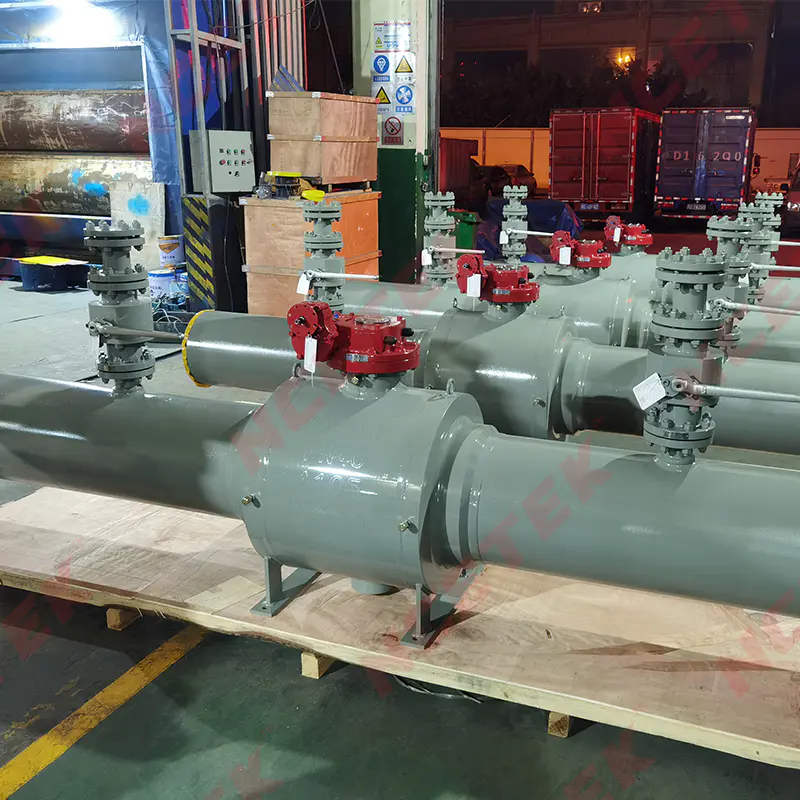
Industrial pipeline systems depend on reliable flow control components to maintain operational stability, manage pressure, and support safe fluid transportation. A qualified Ball Valve Factory combines engineering knowledge, controlled production processes, and appropriate material selection to meet the requirements of different industries. From conventional utility pipelines to demanding oil and gas installations, manufacturing quality influences sealing performance, operating torque, service life, and maintenance needs. Buyers should therefore evaluate not only the finished product but also the production capabilities and quality management practices behind it.
Material selection is an important starting point in valve production. Carbon steel is commonly considered for many general industrial services because of its strength and broad application range. Stainless steel may be selected where corrosion resistance is a priority, while alloy steel can be appropriate for certain demanding pressure or temperature conditions. The final choice depends on the medium, operating temperature, pressure, corrosion characteristics, and applicable project standards. Matching the body, ball, stem, and sealing materials to the actual service environment helps reduce premature wear and supports dependable operation.
Manufacturing precision is equally important. A ball valve relies on the relationship between the ball, seats, stem, and body to achieve effective shut-off. Machining accuracy, dimensional consistency, surface finish, and assembly control can all affect how the valve performs during repeated operation. If critical components are manufactured inconsistently, the result may include increased operating torque, leakage, uneven seat wear, or difficulties during installation. A disciplined production process helps maintain dimensional control and improves consistency between individual units and production batches.
Different pipeline applications require different valve structures. Floating ball valves use the pressure acting on the ball to help establish contact with the downstream seat, making them suitable for many general shut-off applications within their design limits. Trunnion-mounted ball valves support the ball with additional mechanical structures and are commonly used in larger sizes or higher-pressure services, depending on the specific design. Metal-seated options may be considered for certain demanding conditions, while cryogenic designs require specialized materials and construction to accommodate very low temperatures. Selecting the correct configuration is essential to achieving the intended performance.
Quality assurance should cover more than a final visual inspection. Depending on the valve design and purchase specification, manufacturing controls may include material verification, dimensional inspection, pressure testing, seat leakage testing, and operational checks. Documentation may also be required for traceability, project approval, or maintenance records. Buyers should confirm which inspection procedures and standards apply to the specific model instead of assuming that every product follows the same test plan. Clear quality requirements help align expectations between the manufacturer, distributor, contractor, and end user.
Manufacturing flexibility can also influence project efficiency. Industrial buyers may need particular end connections, actuator arrangements, body materials, stem extensions, or accessories to suit existing pipeline layouts. Early communication about installation space, flow direction, medium characteristics, operating frequency, and environmental conditions helps the engineering team identify an appropriate configuration. It can also reduce the risk of late design changes, mismatched connections, and unnecessary installation work. For large projects, consistent specifications across the order can simplify spare-parts planning and future maintenance.
Supplier evaluation should include production capability, technical communication, delivery coordination, and after-sales support. A manufacturer that understands application requirements can help buyers clarify technical details before an order is placed. It is useful to request product drawings, applicable standards, material information, inspection records, and clear confirmation of the selected configuration. Buyers should also verify that stated pressure and temperature ratings correspond to the actual model and materials rather than relying on broad product-category descriptions.
Long-term valve performance depends on correct selection, installation, and maintenance as well as manufacturing quality. Operators should follow the manufacturer's instructions for installation orientation, actuator setup, inspection intervals, and operating limits. Pipeline cleanliness, pressure fluctuations, media compatibility, and operating frequency can all influence service life. Regular inspection can help identify abnormal leakage, difficult operation, or deterioration before these issues interrupt system performance.
For distributors, engineering contractors, and industrial end users, choosing a dependable Ball Valve Factory means looking for a balance of manufacturing consistency, application knowledge, documented testing, and responsive technical support. Zhejiang Naishi Valve Co., Ltd. provides industrial valve solutions for varied pipeline requirements, with product options available for different structures and service conditions. To review available models and discuss project requirements, visit https://www.ncevalve.com/product/.

 English
 Arabic
 French
 Spanish
 Portuguese
 Deutsch
 Turkish
 Dutch
Dutch
 Italiano
 Russian
 Romaian
 Greek
Greek