


Improving Ventilation with Integrated Fan Technology
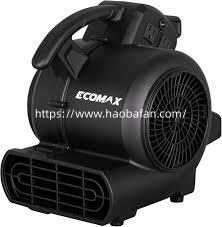
Industrial ventilation equipment must balance airflow performance, installation flexibility, durability, and operating efficiency. In factories, warehouses, commercial buildings, and equipment enclosures, compact fan designs can help move air effectively without occupying excessive space. An External Rotor Fan integrates the motor arrangement with the rotating fan assembly, creating a compact structure that can be suitable for a wide range of ventilation and cooling applications. Understanding its construction and operating characteristics helps buyers select equipment that meets their practical requirements.
The external rotor motor design places the rotor around the stator, allowing the impeller to be mounted directly to the rotating outer structure in many configurations. This arrangement can reduce the need for additional transmission components and create a compact overall assembly. With fewer separate mechanical connections, the design may simplify installation and maintenance while supporting efficient use of available space. The actual benefits depend on motor construction, impeller geometry, operating conditions, and the quality of manufacturing.
Impeller engineering is a major factor in airflow performance. Blade shape, pitch, diameter, and spacing influence how air moves through the fan and how much turbulence develops during operation. A well-designed impeller can provide consistent air circulation while limiting unnecessary resistance and mechanical disturbance. Manufacturers must also consider the intended application because equipment used for general ventilation may have different requirements from fans installed in machinery, electrical enclosures, or heat-generating equipment.
Material selection affects both durability and operating stability. Impellers may be manufactured from suitable metals or reinforced polymer materials, depending on the intended load, environment, and design requirements. Housing and mounting components must provide adequate support while resisting vibration, moisture, dust, and temperature variation. In environments where corrosion is a concern, appropriate surface treatments and material choices can help extend service life.
Thermal management is especially important because the motor operates within a relatively compact assembly. Heat generated during operation needs to be managed according to the motor design, surrounding airflow, and expected duty cycle. Insufficient cooling or operation beyond the intended conditions can accelerate insulation aging and reduce component reliability. Proper motor selection, suitable ventilation paths, and adherence to operating recommendations help maintain stable performance over time.
Mechanical balance is another essential production consideration. An unevenly balanced impeller can generate vibration that affects bearings, mounting structures, and nearby equipment. Excessive vibration may also increase operating noise and accelerate wear. Accurate component processing, controlled assembly, and suitable balancing procedures help maintain smooth rotation. For industrial buyers purchasing multiple units, consistent production quality is particularly important because variations can create differences in noise, airflow, and maintenance requirements.
Noise performance depends on more than the motor alone. Air turbulence around the blades, structural resonance, loose mounting hardware, and vibration transmitted through the installation can all contribute to unwanted sound. Appropriate blade design and stable rotating components can help reduce these sources. Correct installation is equally important, since restricted intake openings or poorly arranged airflow paths may create additional turbulence even when the fan itself is manufactured accurately.
Maintenance planning should begin before equipment is installed. Regular inspection can identify dust accumulation, loose fasteners, damaged blades, unusual vibration, or changes in operating sound. Cleaning the impeller and surrounding airflow passages helps preserve performance, while checking electrical connections and mounting points can reduce the risk of avoidable failures. Maintenance intervals should be adjusted to the actual environment, especially in facilities with high dust levels or continuous operation.
When evaluating suppliers, purchasing teams should consider application experience, manufacturing consistency, material quality, inspection procedures, customization options, and technical support. Initial purchase price is only one part of the overall cost. Equipment that maintains stable performance and can be serviced efficiently may provide better long-term value by reducing downtime and replacement frequency. Buyers should also confirm that the selected design matches the required airflow, installation space, ambient conditions, and operating schedule.
For manufacturers and system integrators, a compact motor arrangement can be particularly useful where equipment dimensions and installation simplicity are important. Taizhou Haoba Electromechanical Co Ltd. provides ventilation solutions for industrial and commercial applications, helping buyers explore suitable equipment for different airflow requirements. More information about its product range is available at https://www.haobafan.com/product/mixed-flow-fan/, where customers can review relevant ventilation options for their projects.

 English
 Arabic
 French
 Spanish
 Portuguese
 Deutsch
 Turkish
 Dutch
Dutch
 Italiano
 Russian
 Romaian
 Greek
Greek