


Efficient Automation for Modern Textile Production
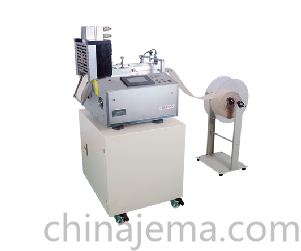
Flexible textile components are widely used in garments and products that require stretch, support, or a comfortable fit. From sportswear and underwear to waistbands, cuffs, medical garments, and protective clothing, manufacturers must prepare these materials carefully to preserve their functional properties. In this environment, elastic cutting is an important process that helps convert continuous elastic tapes and related materials into consistent pieces ready for sewing, fastening, and final assembly.
Elastic materials can contain polyester, nylon, cotton, rubber-based fibers, spandex, or combinations of different fibers. Their physical behavior depends on their structure, weave, elasticity, and surface characteristics. Unlike rigid materials, elastic tapes may stretch under tension and return toward their original length after being released. If material feeding and cutting are not properly controlled, these characteristics can result in inconsistent piece lengths and additional adjustment during later production stages.
A reliable cutting process begins with understanding the material being handled. Different elastic products may require different feeding methods and handling conditions. Smooth tapes may shift during movement, while highly stretchable materials may change length when pulled. Stable feeding, appropriate tension management, and repeatable cutting movements help manufacturers produce components that are easier to handle during subsequent operations.
Consistency is particularly important for garments that rely on elastic components for fit and support. Waistbands need to fit the intended garment dimensions, while cuffs and straps must provide the appropriate balance between flexibility and stability. If components vary significantly in length, sewing operators may need to stretch or reposition them manually, increasing labor requirements and making finished products less uniform. Better cutting control helps establish a predictable starting point for garment assembly.
The benefits also extend to the wearer. Elastic components influence how clothing moves with the body, whether a garment remains comfortably positioned, and how it feels during everyday activities. Sportswear must accommodate movement, while underwear and fitted clothing often depend on carefully prepared elastic sections for comfort. Although consumers rarely consider the machinery behind these components, accurate material preparation contributes to the quality of the finished product.
Automation offers practical advantages when manufacturers handle repetitive cutting tasks. Manual methods may work well for samples, specialized products, or small production runs, but large orders require repeatability and efficient use of labor. Automated equipment can perform recurring operations with greater consistency, allowing operators to concentrate on material loading, process supervision, inspection, and production coordination.
Production flexibility is equally important. Textile manufacturers may serve several customers, each requiring different materials, widths, colors, and component lengths. Equipment that supports changing production requirements can help businesses manage varied orders without repeatedly redesigning their entire workflow. This adaptability is valuable for manufacturers working across sportswear, casual clothing, uniforms, and specialized textile applications.
Material utilization should also be considered when evaluating cutting technology. Inaccurate cuts can lead to rejected pieces, additional trimming, and avoidable material consumption. When these problems occur repeatedly, they can affect production costs and delivery schedules. More consistent processing helps reduce unnecessary rework and supports more responsible use of textile resources.
The relationship between cutting and downstream assembly is another important factor. Once elastic pieces are prepared, they may move to sewing, folding, bonding, or other attachment operations. Consistent dimensions can make these processes easier to organize and reduce the need for manual correction. When each production stage delivers predictable results, the overall manufacturing workflow becomes easier to manage.
JEMA develops textile machinery solutions intended to support practical manufacturing requirements and more efficient production processes. By combining suitable equipment with careful material handling, manufacturers can improve consistency, simplify repetitive work, and strengthen material utilization throughout the production line. For businesses evaluating machinery for elastic cutting, the wider range of textile processing solutions is available at https://www.chinajema.com/product/.

 Arabic
 French
 Spanish
 Portuguese
 Deutsch
 Turkish
 Dutch
Dutch
 Italiano
 Russian
 Romaian
 Portuguese (Brazil)
 Greek
Greek