


Reliable Fluid Delivery for Modern Farming Equipment
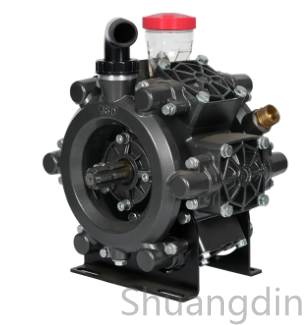
Agricultural spraying equipment operates in demanding environments where reliable liquid delivery, mechanical stability, and resistance to chemical exposure are essential. Farmers and equipment manufacturers depend on pumping systems that can maintain consistent application across changing field conditions, including different crop structures, operating speeds, and treatment requirements. A Sprayer Diaphragm Pump uses a flexible membrane and coordinated valve assembly to move liquids through a controlled pumping cycle. Its design can support agricultural applications involving water-based treatments, fertilizers, and compatible crop protection formulations. Understanding the relationship between material properties, mechanical construction, and hydraulic performance helps equipment buyers select solutions that meet practical operating requirements.
The pumping process begins when the diaphragm moves to increase the volume of the pumping chamber. This creates a pressure difference that draws liquid through the inlet valve. As the diaphragm moves in the opposite direction, the chamber volume decreases and liquid exits through the discharge valve. Repeated movement produces a controlled flow that can supply spray lines, distribution manifolds, and nozzle assemblies. The effectiveness of this process depends on the accuracy of the valve structure, the flexibility of the diaphragm, and the stability of the mechanism driving the movement.
Diaphragm material selection is particularly important because agricultural liquids differ significantly in chemical composition. Certain formulations may contain substances that affect elastomers, metal surfaces, or sealing components over time. EPDM, NBR, and other compatible elastomers may be considered depending on the liquid and operating environment. Each material has different resistance characteristics, so selection should account for chemical concentration, temperature, exposure duration, and cleaning procedures. Proper compatibility evaluation helps reduce swelling, hardening, cracking, and leakage that could otherwise interrupt spraying operations.
The pump housing provides structural support for the internal assembly and helps maintain alignment during repeated pressure cycles. Depending on the application, manufacturers may use aluminum alloys, engineering polymers, or other materials selected for strength, corrosion resistance, and weight requirements. Internal fluid passages should be designed to reduce unnecessary resistance and avoid areas where deposits can accumulate. Consistent machining, reliable sealing surfaces, and accurate assembly tolerances contribute to stable operation. These manufacturing details are important because even small variations in valve seating or chamber geometry may affect flow consistency and overall efficiency.
Hydraulic integration is another essential consideration. A pump does not operate independently; it works with filters, hoses, pressure regulators, distribution lines, and spray nozzles. Each component creates resistance that affects the required flow and pressure. If the pump is poorly matched to the system, the result may include uneven application, excessive vibration, unnecessary energy consumption, or accelerated wear. Equipment designers should therefore evaluate nozzle capacity, hose length, the number of active outlets, and the intended spraying speed before selecting a pump configuration.
Pressure regulation helps protect both the pump and the connected spraying equipment. Regulators and bypass systems can manage excess flow and maintain suitable operating conditions when spraying demand changes. Filters help prevent particles from entering the pumping chamber and damaging valves or sealing surfaces. However, filters must be selected and maintained carefully because blockage can restrict the inlet supply and affect pump performance. A coordinated hydraulic design supports more predictable liquid distribution while reducing the risk of avoidable mechanical problems.
Long-term reliability also depends on diaphragm fatigue resistance. The diaphragm flexes repeatedly during operation, so its geometry, thickness, and material consistency influence service life. Excessive pressure, dry running, incompatible chemicals, and unsuitable operating temperatures can increase deterioration. Manufacturers can assess performance through endurance testing, leakage inspections, pressure-cycle evaluation, and vibration monitoring. These procedures help identify weaknesses in the diaphragm assembly and drive mechanism before the equipment enters regular agricultural use.
Routine maintenance should include checking hoses, fittings, filters, valves, and accessible seals. After chemical application, operators should flush the system according to the chemical label and equipment manufacturer's instructions. Proper cleaning helps prevent residue accumulation and reduces the possibility of cross-contamination between different treatments. Before seasonal storage, the pump should be prepared according to its maintenance guidance, with attention to remaining liquid, temperature exposure, and protection of compatible components. Timely replacement of worn parts can also prevent minor defects from becoming larger operational problems.
When selecting a Sprayer Diaphragm Pump, agricultural machinery manufacturers and distributors should assess material compatibility, required flow, pressure stability, serviceability, and replacement part availability together. This approach helps align the pumping assembly with the demands of the complete spraying system rather than focusing on one performance characteristic alone. SHUANG DIN Co Ltd. provides agricultural diaphragm pump solutions for different fluid handling applications, and buyers can learn more about its company background and technical focus at https://www.agriculturaldiaphragmpump.com/about/ when evaluating equipment options for agricultural machinery projects.

 Arabic
 French
 Spanish
 Portuguese
 Deutsch
 Turkish
 Dutch
Dutch
 Italiano
 Russian
 Romaian
 Portuguese (Brazil)
 Greek
Greek