


How Vets Diagnose Foreign Body Obstructions in Dogs and Cats?
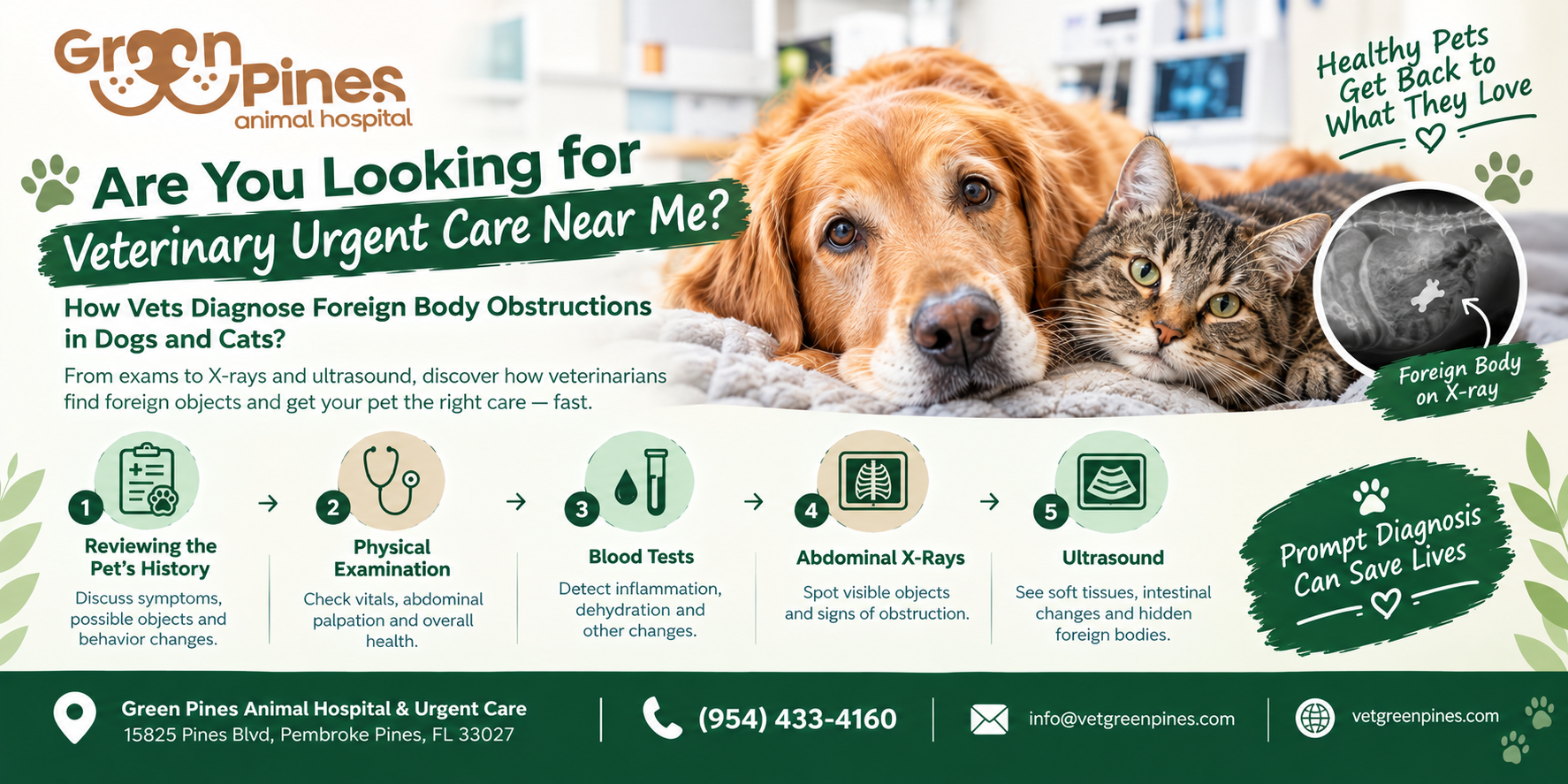
A missing toy, chewed sock, piece of string, or even a small household object can become more than a messy surprise when a pet swallows it. Foreign body obstructions can interfere with the normal movement of food, fluids, and gas through the digestive tract and may become life-threatening if the intestine is damaged. Gastrointestinal obstruction is therefore approached as a diagnostic emergency. If vomiting, abdominal pain, lethargy, or loss of appetite persists, contacting veterinary urgent care near me can help determine whether immediate evaluation is needed.
1. Reviewing the Pet’s History
Diagnosis begins before imaging. A veterinarian will ask when the symptoms started, whether the pet has vomited, what the vomit looks like, whether appetite or bowel movements have changed, and whether the animal could have accessed a potentially dangerous object.
Details about behavior can be particularly valuable. Dogs may swallow toys, fabric, bones, rocks, or plastic, while cats are especially prone to ingesting linear materials such as string, yarn, and thread. Owners should mention missing household items or anything the pet may have chewed. This information can help the veterinary team determine whether an obstruction should be investigated. Pembroke veterinary hospital teams may use this history alongside examination and diagnostic testing.
2. Performing a Physical Examination
The next step is a comprehensive physical examination. The veterinarian evaluates hydration, temperature, heart rate, gum color, and overall behavior while looking for signs of systemic illness.
Abdominal palpation can sometimes reveal pain, abnormal intestinal loops, gas, or a palpable mass. However, a normal-feeling abdomen does not necessarily rule out an obstruction. Some foreign bodies may be difficult to detect through palpation, particularly when they are small or located deeper within the intestinal tract.
For cats, the veterinarian may also carefully inspect the mouth and tongue because a linear foreign body can become anchored there while extending farther into the digestive tract. veterinary urgent care near me may be appropriate when symptoms develop suddenly or worsen rapidly.
3. Using Blood Tests to Assess Complications
Bloodwork does not necessarily identify the foreign object itself or rule out a GI obstruction, but it provides important information about the pet's condition. A complete blood count and serum chemistry testing can help identify inflammation, dehydration, electrolyte abnormalities, and other physiological changes associated with gastrointestinal obstruction.
For example, prolonged vomiting can contribute to dehydration and electrolyte disturbances. More severe obstruction or intestinal perforation may be accompanied by changes associated with infection, tissue damage, or systemic illness.
These results help veterinarians assess how stable the patient is and determine what supportive treatment may be necessary before procedures such as anesthesia, endoscopy, or surgery. Pembroke veterinary hospital teams can use laboratory findings together with imaging and clinical signs to build a complete diagnostic picture.
4. Taking Abdominal X-Rays
Radiographs are among the most commonly used diagnostic tools when a foreign body obstruction is suspected. Some objects, including certain metals and other radiopaque materials, can be directly visible on X-rays. Even when the object itself cannot be seen, radiographs may show indirect evidence such as abnormal gas patterns, intestinal dilation, or other changes associated with obstruction.
However, X-rays do not identify every foreign body. Materials that have a similar radiographic appearance to surrounding soft tissue may be difficult to distinguish. In such cases, veterinarians may consider additional imaging or contrast studies.
This is why a pet with persistent vomiting should not be assumed to have a simple stomach upset merely because an object is not immediately visible. veterinary urgent care near me can provide timely assessment when obstruction remains a concern.
5. Using Ultrasound for a Closer Look
When X-rays do not provide enough information, abdominal ultrasound can offer another perspective. Ultrasound allows veterinarians to evaluate soft tissues and examine the stomach and intestinal tract in real time.
It may help identify foreign material, abnormal intestinal dilation, changes in intestinal motility, or other conditions that can resemble an obstruction. Ultrasound is particularly useful because it can provide information about the intestinal walls and surrounding abdominal structures that may not be as clearly characterized on standard radiographs.
The veterinarian may also recommend ultrasound when the clinical signs strongly suggest an obstruction but the radiographs are inconclusive. Pembroke veterinary hospital diagnostic teams can determine which imaging approach is most appropriate based on the pet's symptoms and initial examination.
Conclusion
Foreign body obstruction diagnosis is a step-by-step process that combines the pet's history, physical examination, bloodwork, and diagnostic imaging. Because symptoms can overlap with other gastrointestinal problems, veterinarians need to identify both the suspected object and its effect on the digestive tract. Early evaluation can help prevent complications such as dehydration, intestinal damage, perforation, and infection. If your pet develops persistent vomiting, abdominal pain, loss of appetite, or unusual lethargy, contact veterinary urgent care near me or your veterinarian promptly.

 English
 Arabic
 French
 Spanish
 Portuguese
 Deutsch
 Turkish
 Dutch
Dutch
 Italiano
 Romaian
 Portuguese (Brazil)
 Greek
Greek