


Advanced Tooling for Automotive Optical Components
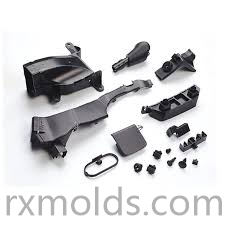
Modern vehicle lighting combines illumination, exterior styling, optical performance, and precise integration with surrounding automotive components. Headlamp lenses, tail lamp covers, reflectors, light guides, and lamp housings each present different manufacturing challenges. Their geometry may include thin walls, curved optical surfaces, intricate internal features, and multiple mounting interfaces. A qualified Automotive Lighting Mold Manufacturer must therefore coordinate product design, resin characteristics, cavity machining, thermal management, and dimensional inspection to help customers achieve consistent component quality throughout development and mass production.
Material selection is one of the first decisions affecting lighting mold design. Polycarbonate is commonly considered for applications requiring impact resistance and optical clarity, while selected acrylic grades may be appropriate for components where transparency and surface appearance are important. Other engineering plastics can be used for housings, reflectors, and supporting structures according to their thermal, mechanical, and chemical requirements. Each resin has its own flow characteristics, shrinkage behavior, and processing window. Mold engineers need to evaluate these properties alongside component geometry to determine suitable gate positions, runner dimensions, vent locations, and cooling arrangements.
Optical components require particularly careful attention to cavity surface quality. Small machining marks, scratches, contamination, or uneven polishing can affect the appearance of transparent parts and may influence light transmission or distribution. The required finish depends on the component's optical function, material, and approved product specifications. Precision CNC machining establishes the basic geometry, while electrical discharge machining can create detailed features that are difficult to produce through conventional cutting. Subsequent polishing, surface treatment where appropriate, and controlled handling help preserve the intended finish before the mold enters trial production.
The cavity design must also account for the way molten polymer fills complex optical geometries. Thin sections, changes in wall thickness, and long flow paths can create uneven filling, weld lines, air traps, or localized pressure differences. Engineers can use mold flow analysis to evaluate potential problems before steel machining is complete. Simulation can support decisions about gate location, filling sequence, and runner balance, but its results should be reviewed alongside material data and practical manufacturing experience. Early analysis helps reduce avoidable design changes and provides a more informed starting point for physical trials.
Thermal management is another essential part of lighting mold engineering. Different areas of a lamp component may have different thicknesses and cooling requirements, especially when a lens includes deep contours or integrated mounting features. Uneven cooling can cause differential shrinkage, residual stress, or warpage that affects assembly and appearance. Cooling channels should be positioned to remove heat efficiently without compromising mold strength or maintenance access. Engineers may also evaluate localized cooling solutions for areas that are difficult to regulate through conventional channel layouts. The final arrangement should balance dimensional stability, achievable cycle time, and long-term reliability.
Mold structure must support accurate part formation as well as dependable production operation. The mold base, core and cavity inserts, guiding elements, sliders, lifters, and ejection mechanisms all contribute to repeatability. Side actions may be necessary when lamp housings or related components include undercuts and complex mounting details. Ejector positions must be selected carefully to prevent visible marks, deformation, or damage to delicate features. Appropriate steel selection, machining accuracy, and wear-resistant design details can help the tooling withstand repeated thermal cycles and mechanical loads.
Trial molding verifies whether the design performs as expected under practical processing conditions. During the first trials, engineers inspect filling behavior, surface appearance, dimensional accuracy, demolding, and potential defects. Parameters such as melt temperature, mold temperature, injection speed, holding pressure, and cooling time must be adjusted according to the selected resin and part requirements. For transparent or optical components, inspection may also include evaluating haze, surface imperfections, and other appearance characteristics defined by the customer's acceptance criteria. Trial records provide a reference for subsequent adjustments and help establish a stable process window.
Quality management continues after the mold is approved. Routine inspection can identify wear, vent blockage, cooling inefficiencies, and damage to polished cavity surfaces before these issues affect production output. Maintenance plans should include cleaning, lubrication, examination of moving components, and verification of critical dimensions. Clear documentation also helps production teams trace changes and maintain consistent results across manufacturing batches. For international automotive supply chains, communication about drawings, material grades, inspection criteria, and revision control is particularly important because even small differences can affect assembly or appearance.
Selecting a tooling partner involves evaluating engineering capability, manufacturing accuracy, communication, and support during mold trials and production. Taizhou Renxin Mould Co., Ltd. works with customers on automotive mold development projects where precision, functional integration, and repeatable manufacturing are important considerations. Buyers can review the company's capabilities at https://www.rxmolds.com/product/ and discuss project requirements, component drawings, materials, and production expectations with the team when evaluating an Automotive Lighting Mold Manufacturer for a new vehicle lighting program.

 English
 Arabic
 French
 Spanish
 Portuguese
 Deutsch
 Turkish
 Dutch
Dutch
 Italiano
 Russian
 Romaian
 Greek
Greek