


SEO Agency Vaughan: Why Ranking Reports Miss the Search Journeys That Generate Profitable Customers
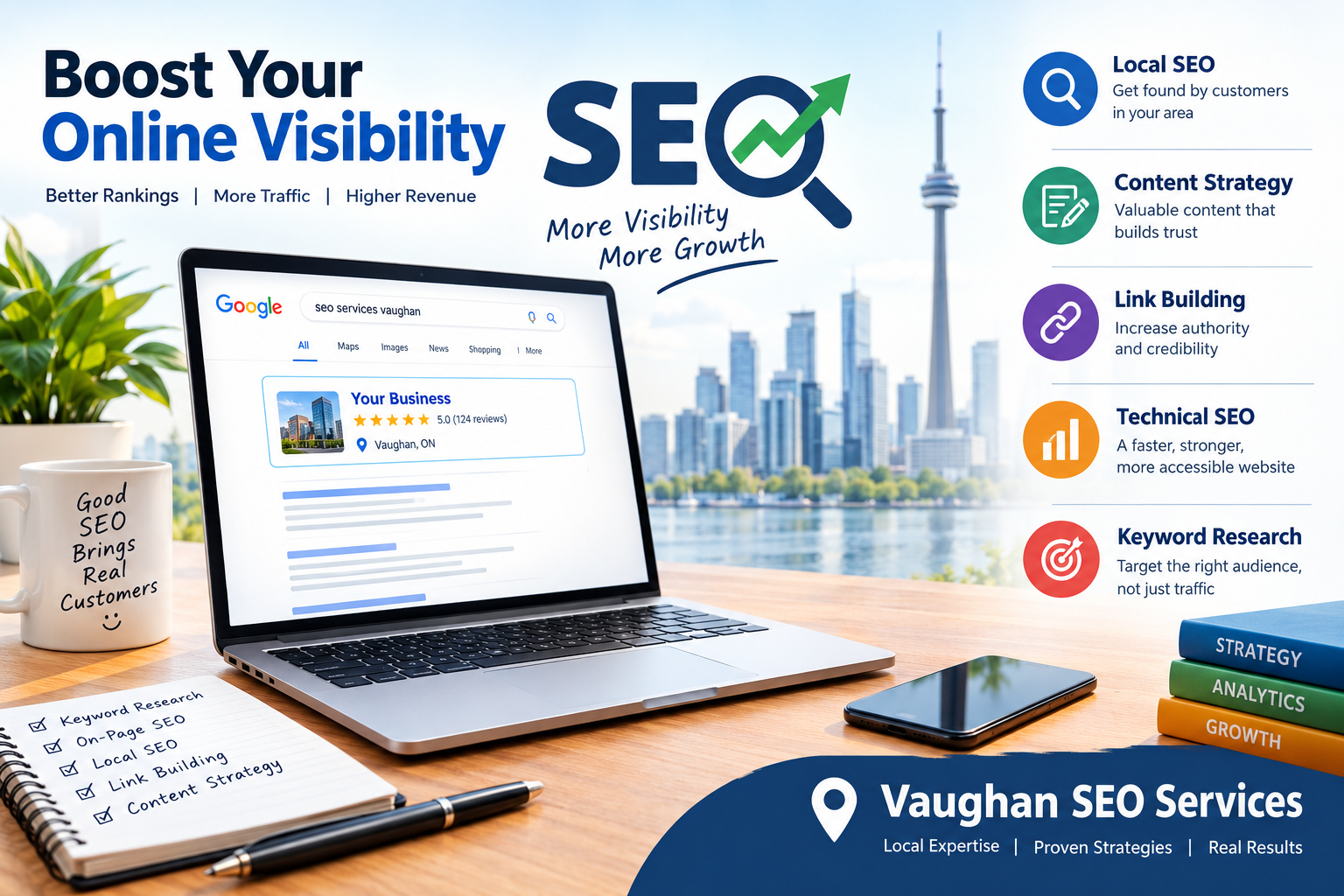
Rankings Look Good, but Are They Generating Business?
A website can rank on the first page of Google, attract hundreds of visitors, and still struggle to generate profitable customers. The reason is simple: visibility does not automatically translate into revenue. A visitor might be researching options, comparing prices, looking for a quick answer, or preparing to contact a service provider. Each action reflects a different stage of the buying journey.
For businesses in Vaughan, measuring SEO performance only through keyword positions and organic traffic can hide valuable opportunities. A page attracting fewer visitors may generate more qualified enquiries than a popular blog post. Likewise, a customer may discover a business through one search, return several days later, and finally submit a contact form after researching its services.
An effective SEO Agency Vaughan strategy should therefore connect search visibility with customer intent, lead quality, and commercial outcomes. Instead of asking only whether a website ranks, businesses should investigate which searches attract potential buyers, what information helps them make decisions, and which pages contribute to sales.
Google Search Console provides data about impressions, clicks, click-through rates, and average search positions. Google Analytics can help businesses investigate user behaviour and key events. However, neither ranking reports nor traffic figures alone provide a complete picture of business profitability. The real value comes from connecting these data sources with enquiry and sales information.
1. Why Keyword Rankings Can Give Businesses an Incomplete Picture
Keyword rankings are useful diagnostic measures, but they are not business outcomes. A company might rank well for a broad informational phrase while remaining difficult to find for a specific service query with stronger purchase intent.
Consider a Vaughan-based home renovation company. Someone searching for renovation ideas may visit a blog post, read it, and leave without contacting the business. Another person searching for a contractor to renovate a kitchen in Vaughan may visit a service page and request a consultation.
Both visits have value, but their immediate commercial potential differs.
Ranking reports can overlook this difference when they focus primarily on position changes, total keywords, and traffic growth. A better analysis examines:
-
Search intent: Is the visitor learning, comparing providers, or ready to enquire?
-
Landing page relevance: Does the page answer the specific question behind the search?
-
Engagement: Does the visitor explore relevant services or take meaningful action?
-
Lead quality: Does the enquiry match the company's services, location, and customer requirements?
-
Commercial outcome: Does the enquiry progress to a sale, and does that sale produce an acceptable return?
2. Understand the Four Stages of a Profitable Search Journey
Customers rarely make every buying decision after one search. Their journey may include discovering a problem, exploring solutions, comparing providers, and finally contacting a business.
Stage 1: Problem discovery
At this stage, people search for symptoms, challenges, or questions. A business owner might look for ways to reduce website enquiries, while a homeowner may research signs that a roof needs repairs.
Helpful educational content can introduce the business to potential customers before they know which provider to choose. Measure the page's ability to attract relevant visitors and encourage useful next steps rather than expecting every reader to convert immediately.
Stage 2: Solution research
Visitors begin exploring possible approaches. They might compare different services, learn about costs, or investigate whether professional assistance is necessary.
Create content that explains available solutions, their advantages, limitations, and suitability for different circumstances. Clear explanations help visitors determine whether your business can address their needs.
Stage 3: Provider comparison
Potential customers begin evaluating businesses. They may review service details, testimonials, project examples, qualifications, guarantees, and pricing information.
Service pages should answer practical questions without exaggerating results. Make contact details easy to find, describe your process, and provide evidence of relevant experience where available.
Stage 4: Decision and enquiry
The customer is ready to take action. A straightforward enquiry form, clear phone number, transparent next steps, and relevant service information can reduce unnecessary friction.
A capable SEO Agency Vaughan partner should help businesses understand which content attracts customers at each stage and whether the website makes progression from research to inquiry straightforward.
3. Connect Search Data With Leads and Sales
The next step is to move beyond traffic reporting and build a measurement process that connects search activity with business outcomes.
Google Search Console helps identify which queries generate impressions and clicks, which pages attract organic search visits, and where click-through rates may need attention. Google Analytics can track defined events, such as form submissions, phone-link clicks, and other meaningful website interactions when configured correctly.
However, an online form submission is not automatically a qualified lead, and a qualified lead is not necessarily a paying customer. Businesses should connect analytics with their customer relationship management (CRM) system or maintain a consistent lead-tracking process.
For each enquiry, record information such as:
-
The service requested and the customer's location.
-
The landing page or available source information.
-
Whether the enquiry meets the business's qualification criteria.
-
Whether a consultation or estimate was booked.
-
Whether the opportunity became a customer.
-
The sale value and, where possible, the associated gross profit.
Respect privacy requirements and collect only the information needed for legitimate business purposes.
This process helps distinguish traffic that merely increases website activity from search journeys that contribute to revenue. It also reveals where potential customers drop out, such as visitors who view a service page but never submit an enquiry.
4. Measure Lead Quality, Not Just Lead Volume
Imagine a Vaughan-based professional services firm receives 40 organic enquiries in one month. Many are outside its service area or seek services the company does not provide. Meanwhile, a second month produces only 22 enquiries, but 12 match its target customers and several become paying clients.
The second month may deliver greater commercial value despite having fewer enquiries. These numbers are illustrative, not industry benchmarks, but they demonstrate why lead quality matters.
Businesses should establish consistent definitions for a qualified lead. Depending on the industry, qualification may involve location, budget, service requirements, project timing, or decision-making authority.
Useful metrics include:
|
Metric |
What it reveals |
|
Qualified organic leads |
How many enquiries match your target customers |
|
Lead-to-customer rate |
How effectively qualified leads become customers |
|
Cost per qualified lead |
How much the SEO investment costs per suitable enquiry |
|
Organic customer revenue |
Sales associated with organic search journeys |
|
Gross profit contribution |
Whether the resulting business is commercially worthwhile |
For example, if a company spends $3,000 on SEO in a month and records 15 qualified organic leads, its SEO cost per qualified lead is $200. This calculation does not establish profitability by itself; the business must also consider conversion rates, sale value, delivery costs, and the time required to close opportunities.
A clear measurement framework helps an SEO Agency Vaughan team prioritize pages and queries that support real business objectives rather than pursuing traffic growth without context.
5. Understand Why Customers Visit Multiple Pages Before Converting
A common measurement mistake is to credit the final page or channel with the entire conversion. In reality, a customer might discover an article through organic search, return through a branded search, review a service page, and then contact the company directly.
If reporting looks only at the final interaction, earlier touchpoints may receive little recognition. Google Analytics offers attribution reports and models that help analyse how different interactions contribute to key events, although attribution remains an estimate rather than perfect proof of causation.
To investigate these journeys, review:
-
Which informational pages commonly appear before enquiries.
-
Which service pages are visited by converting customers.
-
Whether visitors return before completing a contact form.
-
Which organic landing pages are associated with qualified leads.
-
How long customers typically take to progress from first visit to enquiry.
Avoid assuming that every customer follows the same sequence. A person needing an urgent repair may contact a provider immediately, while a business purchasing a complex service may compare several companies over weeks.
These insights help businesses improve the connections between educational articles, service pages, case studies, and contact options. Instead of evaluating every page in isolation, assess how effectively the website supports a complete buying journey.
6. Turn Reporting Insights Into a Practical SEO Strategy
Data only becomes valuable when it informs action. Businesses should establish a regular review process that combines search performance, website behaviour, and sales feedback.
A practical 90-day approach can provide a useful starting point.
Days 1–30: Establish the baseline. Review Search Console performance, identify priority service pages, configure relevant analytics events, and document how enquiries are qualified. Check that phone calls and form submissions can be measured reliably where technically possible.
Days 31–60: Improve the customer journey. Identify pages attracting relevant visitors but generating few enquiries. Improve service explanations, clarify calls to action, answer common customer objections, and strengthen internal links between related content.
Days 61–90: Evaluate commercial outcomes. Compare qualified leads, conversion rates, and available sales data against the baseline. Identify which pages deserve further investment and which need a different approach. Account for seasonal patterns and longer sales cycles before drawing conclusions from short-term changes.
A structured process allows an SEO Agency Vaughan campaign to evolve according to evidence rather than relying on monthly ranking reports alone.
7. Why Helpful Content and Trust Still Matter
Analytics can identify where customers struggle, but content quality influences whether visitors find the answers they need.
Google's guidance recommends creating helpful, reliable, people-first content that demonstrates appropriate expertise and provides genuine value. E-E-A-T—experience, expertise, authoritativeness, and trustworthiness—is a framework discussed in Google's quality guidance, not a single standalone ranking factor.
For Vaughan businesses, practical ways to strengthen trust include publishing accurate service information, explaining the process clearly, providing genuine customer testimonials with permission, and using relevant examples that demonstrate actual experience.
Avoid inventing case studies, promising guaranteed rankings, or publishing unsupported statistics. Where results are presented, explain the timeframe, context, and measurement method. Honest information helps customers make informed decisions and supports a more credible online presence.
Businesses looking for professional assistance can explore Knovatek's SEO services in Vaughan to understand its service offering and consider how SEO could fit their digital marketing objectives.
Conclusion: Measure the Journey, Not Just the Position
Keyword rankings remain useful, but they cannot independently explain whether organic search is attracting suitable customers or contributing to profitable growth. Businesses need to understand what people search for, which pages help them make decisions, whether enquiries meet qualification criteria, and how those enquiries progress into sales.
By connecting Search Console data, analytics, lead records, and commercial outcomes, companies can make better-informed decisions about content and SEO investment. They can also identify underperforming pages, strengthen important customer touchpoints, and focus resources on opportunities that align with business goals.
The right SEO Agency Vaughan strategy should ultimately make search performance easier to connect with measurable business results. Rankings tell you where your website appears; a well-designed measurement process helps explain whether that visibility is attracting the right people and creating meaningful commercial opportunities.

 Arabic
 French
 Spanish
 Portuguese
 Deutsch
 Turkish
 Dutch
Dutch
 Italiano
 Russian
 Romaian
 Portuguese (Brazil)
 Greek
Greek