


Reliable Linear Motion Components for Factories
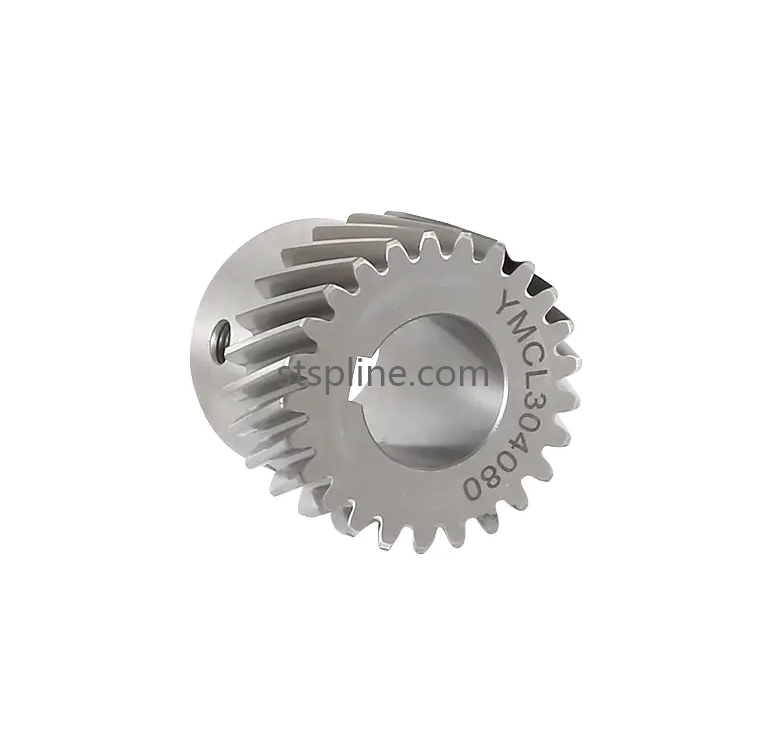
Industrial automation depends on mechanical transmission systems that convert motor power into controlled movement. A properly selected Industrial Rack And Pinion assembly provides linear travel by engaging a rotating pinion with a straight toothed rack. This mechanism is widely used in CNC machining centers, laser cutting machines, gantry systems, robotic manipulators, and automated production lines. Its operating performance depends on tooth geometry, material quality, manufacturing accuracy, mounting stability, and coordination with the complete motion control system.
Steel is commonly used for industrial rack and pinion components because it offers useful mechanical strength and machining flexibility. Carbon steel can suit many general-purpose applications, while alloy steel may be selected when operating loads or wear requirements are more demanding. Depending on the design, heat treatment or surface hardening can improve resistance to repeated contact. Material decisions should reflect the expected load, operating speed, duty cycle, lubrication method, and environmental conditions.
The geometry of the gear teeth directly affects transmission performance. Module, pressure angle, tooth spacing, and profile accuracy determine how the rack and pinion engage. Dimensional errors or incompatible tooth specifications may lead to uneven contact, excessive backlash, noise, or vibration. These issues can affect positioning consistency and accelerate component wear. Engineers should evaluate the transmission together with the motor, gearbox, coupling, linear guide, and machine frame to ensure that the components work as a coordinated system.
Manufacturing quality is another important consideration. Depending on the design and accuracy requirements, production may include material cutting, blank machining, tooth milling, gear cutting, heat treatment, grinding, and dimensional inspection. Each operation contributes to the final component's geometry and surface condition. Rack straightness, pitch consistency, tooth profile, and mounting dimensions should be checked against the technical drawings. Consistent process control helps reduce variation and supports more predictable installation and operation.
A well-designed Industrial Rack And Pinion system can support different machine sizes and travel requirements. Compact machinery may use short rack sections, while large gantry systems require longer travel paths assembled from multiple sections. In multi-section installations, the joints must be aligned carefully to maintain consistent tooth engagement. Poor alignment can create changes in resistance as the pinion moves between sections. Stable mounting surfaces, accurate positioning, and appropriate fastening procedures help maintain smooth travel.
Industrial applications differ in their requirements. CNC equipment relies on coordinated axis movement for machining operations. Laser cutting machines need predictable movement to follow programmed cutting paths. Robotic handling systems use linear transmission to position tools, fixtures, and workpieces. Material handling and packaging machinery may prioritize repeatability and continuous operation. Selecting the correct rack dimensions and supporting components requires consideration of load capacity, speed, travel distance, positioning accuracy, and environmental exposure.
Installation practices have a direct influence on system performance. The rack should be mounted securely to a stable machine structure, and alignment should be checked along the full travel path. The pinion must engage correctly without excessive clearance or localized tight spots. Lubrication helps reduce friction and tooth wear, while covers and protective barriers can limit exposure to dust, chips, and moisture. Regular inspection of fasteners, backlash, tooth surfaces, and operating noise helps identify developing problems.
Quality assurance should cover the characteristics most relevant to the application. Inspection may include tooth profile, pitch deviation, straightness, surface finish, hardness where required, and mounting dimensions. For equipment manufacturers, reviewing drawings and confirming mating component specifications before production can prevent assembly issues. Supplier capabilities should also be evaluated in terms of machining processes, inspection equipment, production consistency, and technical communication.
SOTER supplies rack and pinion products for industrial transmission and automated motion applications. For manufacturers planning new machinery or upgrading existing equipment, reviewing available product configurations can help establish a suitable starting point for technical discussions. Explore straight-tooth rack options at https://www.stspline.com/product/straight-teeth-rack/ and compare the available configurations with your equipment's mechanical and installation requirements.

 English
 Arabic
 French
 Spanish
 Portuguese
 Turkish
 Dutch
 Italiano
 Russian
 Romaian
 Portuguese (Brazil)
 Greek