


When Is the Best Time to Start Cranial Helmet Therapy for Positional Plagiocephaly?
A baby's head shape changes rapidly during the first months of life. While this flexibility supports healthy growth, it can also make an infant's skull susceptible to flattening when pressure repeatedly affects the same area. For parents noticing an uneven head shape, understanding when to seek treatment can make the next steps less stressful. Early evaluation helps determine whether repositioning, physical therapy, or a cranial orthosis may be appropriate, giving families a clearer path toward supporting their baby's healthy development.
Why Timing Matters for Helmet Therapy?
Positional plagiocephaly occurs when an infant develops flattening on one side of the head, often because of repeated pressure on that area. Brachycephaly, by comparison, involves flattening across the back of the head, resulting in a wider appearance. Both conditions can sometimes be managed with conservative measures, depending on their severity.
A brachycephaly helmet may be recommended when an infant has moderate to severe cranial flattening that does not improve sufficiently with repositioning or other appropriate interventions. Because an infant's skull grows quickly during early development, treatment timing can influence how effectively a helmet guides growth. A healthcare professional can assess the baby's head shape and recommend an individualized treatment plan.
The Ideal Age to Begin Treatment
Helmet therapy is commonly considered between four and six months of age when moderate to severe positional head flattening persists. During this period, the skull is growing rapidly, allowing a properly fitted cranial orthosis to guide growth toward a more balanced shape.
However, the ideal starting age varies by infant. Some babies may benefit from earlier evaluation, while others with mild flattening may improve without helmet treatment. Cranial helmets are generally considered after a qualified clinician evaluates the degree of asymmetry, the baby's age, and the response to conservative care.
Parents should not assume that every flat spot requires a helmet. A timely assessment helps establish whether treatment is necessary and whether the potential benefits justify the commitment.
What Happens If Treatment Starts Later?
Helmet therapy may still be considered for older infants, but skull growth gradually slows as babies get older. Consequently, treatment may take longer and produce less correction than it might when started during the earlier growth period.
For this reason, parents who notice persistent flattening should discuss it with their pediatrician rather than waiting several months to see whether the shape changes independently. An evaluation can identify the appropriate next step without unnecessary delays.
A brachycephaly helmet should always be recommended based on a clinical assessment, not age alone. The severity of the flattening, overall skull growth, and previous treatment efforts all help determine whether helmet therapy remains a suitable option.
Can Repositioning Help Before Helmet Therapy?
Yes. For many infants with positional plagiocephaly, conservative measures are the first step. These may include supervised tummy time while the baby is awake, alternating head positions during feeding, and encouraging the baby to look in different directions.
If limited neck movement or torticollis contributes to the flattening, a healthcare professional may recommend physical therapy. These measures can reduce prolonged pressure on one part of the skull and support normal movement.
If head shape does not improve adequately, a specialist may evaluate whether cranial helmets could provide additional benefit. Parents should continue placing babies on their backs for every sleep, following safe-sleep recommendations. Pillows, positioning devices, and sleep wedges should not be used to reshape an infant's head during sleep.
What Should Parents Expect During Helmet Therapy?
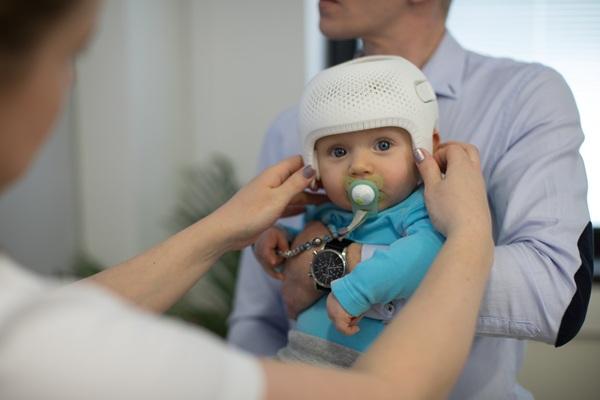
When helmet treatment is recommended, a trained orthotist or cranial remolding specialist assesses the baby's head shape and determines the appropriate fit. The helmet is designed to create space where growth is needed while providing gentle contact in other areas to guide the developing skull.
Treatment commonly involves wearing the helmet for approximately 23 hours a day, with time allowed for bathing, cleaning, and skin checks according to the provider's instructions. The duration varies, but many treatment courses last several months.
Regular follow-up appointments allow the specialist to monitor head growth, assess fit, and make adjustments. Parents should report persistent redness, skin irritation, or discomfort promptly. A brachycephaly helmet should never be modified at home or used without professional supervision.
Take the Next Step at the Right Time
The best time to address positional plagiocephaly is when parents first notice persistent flattening, not after waiting for it to become more pronounced. Early evaluation gives families time to explore conservative treatment and determine whether helmet therapy is appropriate.
Although cranial helmets can help selected infants achieve improved head symmetry, treatment decisions should be based on professional assessment and individual needs. By consulting a pediatrician or qualified cranial remolding specialist early, parents can make informed decisions and support their baby's healthy growth with greater confidence.

 English
 Arabic
 French
 Spanish
 Portuguese
 Deutsch
 Turkish
 Dutch
 Italiano
 Russian
 Portuguese (Brazil)
 Greek