


Why Every Business Needs CRM Software in 2026
Customer expectations continue to evolve, and businesses must keep pace to remain competitive. In 2026, companies are no longer competing only on price or product quality they are competing on customer experience. Whether you run a startup, a retail business, a healthcare practice, or a large enterprise, managing customer relationships efficiently has become essential for long-term success. This is where Customer Relationship Management (CRM) software plays a critical role.
CRM software is more than just a digital contact book. It centralizes customer information, automates repetitive tasks, tracks sales opportunities, and helps businesses provide personalized experiences. As artificial intelligence, automation, and data-driven decision-making become standard business practices, CRM software has evolved into one of the most valuable tools for organizations of every size. This article explains why every business needs CRM software in 2026 and how it contributes to sustainable growth.
What Is CRM Software?
Customer Relationship Management (CRM) software is a business solution designed to manage customer interactions throughout the entire customer lifecycle. It stores customer information, tracks communication history, manages leads, monitors sales pipelines, and automates routine workflows.
Modern CRM systems integrate with email platforms, marketing tools, customer support channels, accounting software, and business communication applications. Instead of maintaining scattered spreadsheets and disconnected records, businesses gain a centralized platform where every department has access to updated customer information.
Why CRM Software Has Become Essential in 2026
Digital transformation has accelerated across nearly every industry. Customers now expect immediate responses, personalized communication, and seamless interactions across multiple channels. Businesses relying on manual processes often struggle to meet these expectations.
CRM software enables organizations to organize customer information, automate operations, and gain valuable insights from data. Rather than reacting to customer needs, businesses can proactively identify opportunities, resolve issues quickly, and build stronger relationships that increase customer loyalty.
Centralized Customer Information
One of the biggest advantages of CRM software is having a single source of truth for customer data. Customer details, purchase history, previous conversations, support requests, invoices, and follow-up reminders are stored in one secure location.
This centralized approach eliminates duplicate records, reduces confusion among departments, and ensures employees always have access to accurate information. Whether a customer contacts sales, support, or billing, everyone can provide consistent service based on complete customer history.
Better Lead Management
Businesses receive leads from websites, social media, advertisements, referrals, and marketing campaigns. Managing these leads manually often results in missed opportunities.
CRM software automatically captures leads, assigns them to sales representatives, tracks communication, and schedules follow-up activities. Sales teams can prioritize high-quality prospects while ensuring no potential customer is forgotten. This structured lead management significantly improves conversion rates and overall sales performance.
Improved Sales Performance
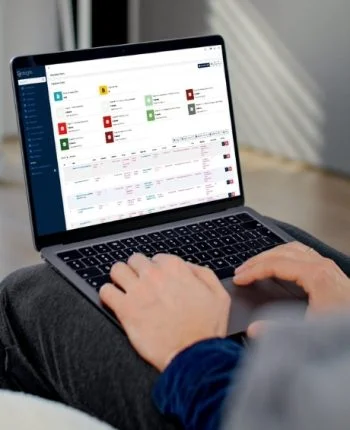
Sales teams perform better when they have complete visibility into every opportunity. CRM software provides real-time dashboards showing active deals, sales stages, expected revenue, and conversion trends.
Managers can monitor team performance, identify bottlenecks, forecast revenue accurately, and make informed business decisions. Automated reminders also help sales representatives follow up at the right time, increasing the chances of closing deals successfully.
Enhanced Customer Experience
Customer experience has become a major competitive advantage in 2026. Today's customers expect businesses to understand their preferences and respond quickly to their needs.
CRM software stores valuable customer insights, allowing businesses to personalize emails, recommendations, offers, and communication. Personalized interactions make customers feel valued, resulting in stronger relationships, higher satisfaction, and increased loyalty.
Additionally, customer support teams can resolve issues faster because they immediately access previous interactions and account history.
Marketing Automation and Personalization
Modern CRM platforms include powerful marketing automation capabilities that simplify campaign management.
Businesses can segment customers based on demographics, interests, purchasing behavior, or engagement history. Automated email campaigns, promotional messages, appointment reminders, and follow-up sequences can be scheduled without manual effort.
Artificial intelligence further enhances personalization by recommending the best time to contact customers, predicting buying behavior, and suggesting relevant products or services.
AI-Powered Business Intelligence
Artificial intelligence is transforming CRM software in 2026. Instead of simply storing customer data, CRM systems analyze patterns and generate actionable insights.
AI features include:
-
Sales forecasting
-
Customer churn prediction
-
Intelligent lead scoring
-
Automated customer segmentation
-
Smart workflow automation
-
Personalized product recommendations
-
Predictive analytics
-
AI-generated reports
These capabilities enable businesses to make faster and more informed decisions while improving operational efficiency.
Improved Team Collaboration
Many businesses struggle because departments work independently. Sales, marketing, customer support, finance, and operations often maintain separate records, leading to communication gaps.
CRM software creates a shared workspace where all departments collaborate using the same customer information. Employees can leave notes, assign tasks, monitor progress, and share updates in real time.
Improved collaboration reduces errors, speeds up response times, and creates a more consistent customer experience.
Increased Productivity Through Automation
Employees spend considerable time performing repetitive administrative tasks such as entering customer information, scheduling meetings, sending follow-up emails, and updating spreadsheets.
CRM software automates many of these routine activities, allowing employees to focus on higher-value work like relationship building, strategic planning, and customer engagement.
Automation commonly includes:
-
Email reminders
-
Task assignments
-
Workflow approvals
-
Meeting scheduling
-
Lead distribution
-
Follow-up sequences
-
Document generation
-
Reporting
Greater automation leads to higher productivity while reducing operational costs.
Better Customer Retention
Acquiring new customers is often more expensive than retaining existing ones. CRM software helps businesses strengthen customer relationships by monitoring satisfaction, identifying inactive customers, and scheduling timely follow-ups.
Businesses can proactively address concerns before customers leave. Loyalty programs, personalized promotions, and regular engagement campaigns become easier to manage using CRM software, contributing to higher customer retention rates.
Data-Driven Decision Making
Business decisions are most effective when supported by accurate information. CRM software provides detailed reports on customer behavior, marketing performance, sales trends, employee productivity, and revenue growth.
Managers can analyze key performance indicators (KPIs), identify profitable customer segments, evaluate campaign effectiveness, and allocate resources more efficiently.
Real-time analytics eliminate guesswork and support strategic planning.
Scalability for Growing Businesses
Business growth introduces additional customers, employees, products, and operational complexity. CRM software scales alongside organizational growth without requiring businesses to redesign their workflows.
Whether expanding into new markets, opening multiple branches, or increasing sales teams, CRM systems accommodate larger customer databases and more advanced automation capabilities while maintaining operational efficiency.
Stronger Data Security and Compliance
Data privacy regulations continue to evolve worldwide. Businesses must protect sensitive customer information while maintaining compliance with industry standards.
Modern CRM software includes role-based access controls, encrypted databases, automated backups, audit logs, and secure cloud infrastructure. These security features help reduce data breaches while ensuring authorized employees access only the information relevant to their responsibilities.
Industries That Benefit from CRM Software
CRM software delivers value across nearly every industry, including:
-
Healthcare
-
Retail
-
Manufacturing
-
Real estate
-
Education
-
Banking and finance
-
Insurance
-
Hospitality
-
E-commerce
-
Professional services
-
Telecommunications
-
Logistics
Regardless of industry, organizations benefit from improved customer engagement, streamlined workflows, and better decision-making.
Choosing the Right CRM Software
Selecting the right CRM solution requires careful evaluation of business needs. Organizations should consider ease of use, scalability, automation features, integration capabilities, reporting tools, mobile accessibility, security, customer support, and customization options.
Cloud-based CRM platforms are increasingly preferred because they offer flexibility, lower infrastructure costs, remote accessibility, and regular software updates without complex installations.
Businesses should also evaluate future requirements to ensure the CRM system continues supporting growth over the coming years.
Conclusion
In 2026, CRM software is no longer a luxury reserved for large enterprises it is a necessity for businesses that want to improve customer relationships, increase efficiency, and drive sustainable growth. From AI-powered automation and advanced analytics to personalized customer engagement and seamless collaboration, CRM software enables organizations to stay competitive in an increasingly digital marketplace. Companies looking to modernize operations and strengthen customer relationships should consider reliable solutions such as Instacare.com.pk, which provides innovative business management technologies designed to improve operational performance. Investing in the right CRM Software in Pakistan can help businesses enhance productivity, deliver exceptional customer experiences, and build a strong foundation for long-term success.

 English
 Arabic
 French
 Portuguese
 Deutsch
 Turkish
 Dutch
Dutch
 Italiano
 Russian
 Romaian
 Portuguese (Brazil)
 Greek
Greek