


How Young Leaders Can Bring Positive Change to Local Communities
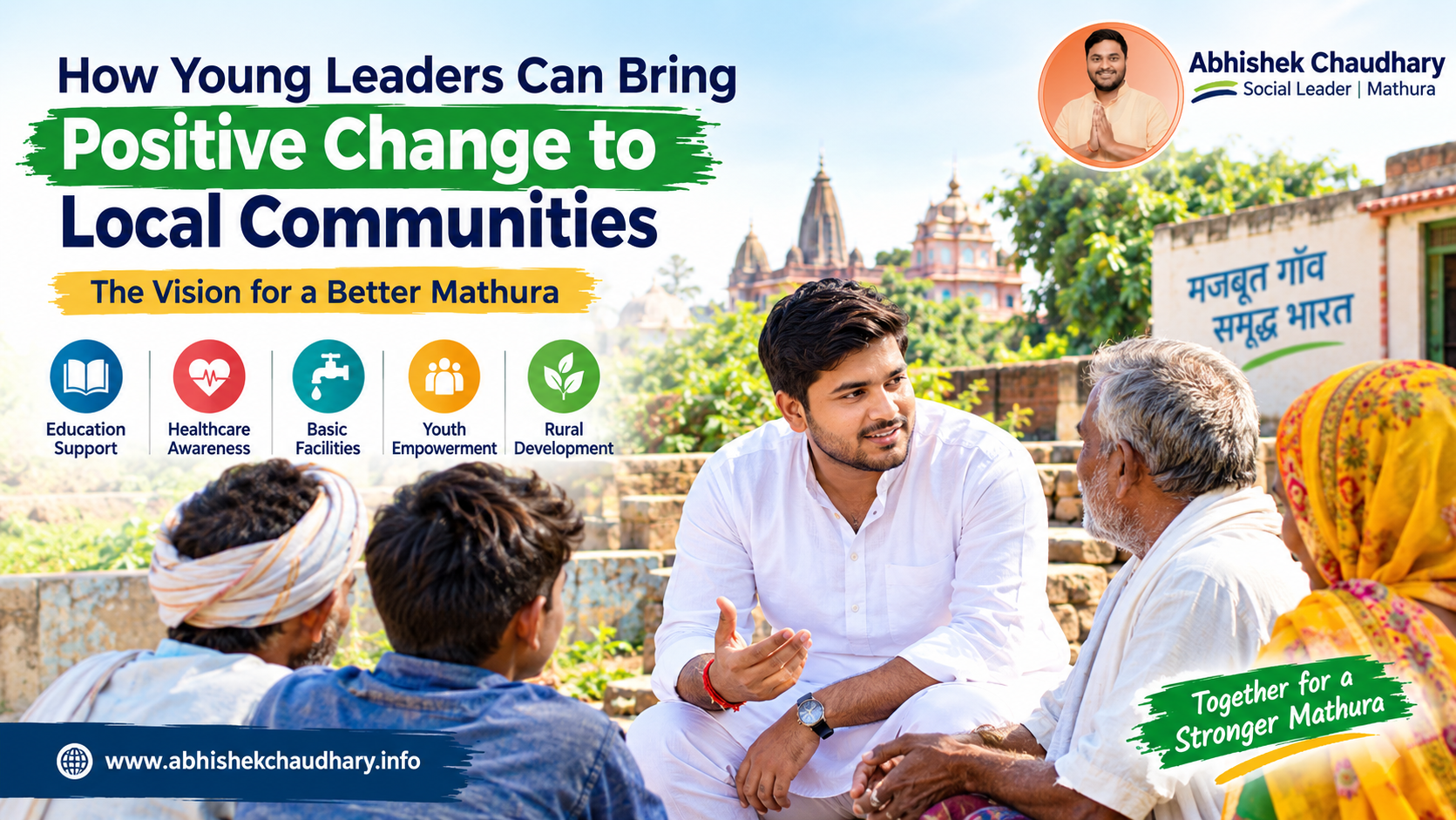
Leadership is not only about holding a position or having a title. It is about understanding people's problems, listening to their concerns, and taking practical steps to improve everyday life. In villages and towns, young leaders can play an important role in community development by encouraging people to work together and finding solutions to local challenges.
Mathura, a city known for its cultural heritage and religious importance, also has many communities that need attention in areas such as education, healthcare, sanitation, drinking water, and youth development. Responsible leadership can help bring people together and encourage progress at the local level.
Why Young Leadership Matters in Community Development
Young people bring energy, fresh ideas, and a willingness to learn. When they participate in social work, they can help identify problems that affect families, students, elderly people, and other members of society.
A young leader can begin by understanding the needs of the local community. For example, residents may need assistance with basic village facilities, access to health information, educational support, or awareness of government schemes. Listening carefully helps leaders understand which issues require immediate attention.
Young leaders can also motivate other young people to volunteer in community activities. This participation builds teamwork and encourages residents to take an active role in improving their surroundings.
Abhishek Chaudhary and Community-Focused Leadership in Mathura
Abhishek Chaudhary is associated with social work and public service in Mathura, Uttar Pradesh. His community-focused approach highlights the importance of understanding local needs and encouraging practical efforts for public welfare.
As an Emerging Leader of Mathura, his public profile reflects an interest in community development, youth participation, rural welfare, and social awareness. These areas are important for building stronger communities where residents can share their concerns and work together toward solutions.
Community service can take many forms. Helping people understand available healthcare services, supporting educational awareness, raising concerns about non-functional handpumps, and encouraging improvements in village facilities are examples of issues that local representatives and social workers can address.
The value of such efforts lies in identifying real needs, coordinating with the appropriate authorities, and following up to understand whether a problem has been resolved.
Improving Basic Facilities in Villages
Basic facilities have a direct effect on people's daily lives. Clean drinking water, proper sanitation, usable roads, street lighting, and public seating can make villages safer and more comfortable.
Local leaders can help by collecting feedback from residents and preparing a list of important issues. Problems such as damaged handpumps or broken streetlights should be reported to the relevant authorities and followed up until appropriate action is taken.
Community meetings can also help residents decide which issues should receive priority. When people work together, they can communicate their needs more clearly and encourage responsible action.
An Emerging Leader of Mathura can contribute to this process by promoting cooperation between residents, local institutions, and government departments. Even small improvements can make a meaningful difference to everyday life.
Supporting Education and Youth Empowerment
Education gives young people the knowledge and confidence they need to build a better future. However, students may face challenges such as limited learning resources, a lack of career guidance, or insufficient awareness of educational opportunities.
Community initiatives can help address these concerns. Volunteers can organise educational awareness activities, share information about scholarships, encourage school attendance, and guide students toward suitable learning resources.
Youth empowerment is equally important. Young people should have opportunities to develop communication, leadership, teamwork, and problem-solving skills.
Local leaders can encourage youth participation through cleanliness drives, educational campaigns, sports activities, and other community programmes. Such activities help young people understand their responsibilities and become active members of society.
Making Healthcare and Social Welfare More Accessible
Healthcare awareness is another important part of community development. Families may not always know where to find suitable medical services or how to access available welfare programmes.
Social workers and community leaders can help share reliable information about health check-ups, eye-care services, sanitation, and preventive healthcare. They can also help residents identify the appropriate facilities and organisations for assistance.
Elderly people and families with limited resources may need additional guidance to understand available services. With proper coordination, community volunteers can help them find relevant information and reach the appropriate support systems.
These efforts should be based on genuine needs, reliable information, and cooperation with qualified healthcare professionals and authorised organisations.
The Importance of Honesty and Accountability
Good leadership requires honesty, patience, and responsibility. People need leaders who listen to different viewpoints, communicate clearly, and treat everyone fairly.
A responsible leader should avoid making promises that cannot be fulfilled. Instead, it is better to explain what action is possible, identify the people or departments responsible, and provide updates about progress.
Transparency also builds trust. When community members understand what has been done, what remains pending, and what challenges exist, they can participate more effectively in local development.
Regular communication, public feedback, and practical follow-up can help ensure that community initiatives remain focused on people's needs.
How Communities Can Build a Better Future Together
Community development is a shared responsibility. Residents, social workers, educational institutions, local representatives, and government departments all have roles to play.
People can contribute by reporting local problems, participating in community meetings, helping elderly neighbours, supporting educational activities, and keeping public spaces clean.
Young leaders can encourage these efforts by creating opportunities for cooperation and helping residents communicate their concerns through appropriate channels.
The journey toward development begins with small, consistent actions. When community service is supported by honesty, teamwork, and accountability, it can create lasting benefits for local families.
Conclusion
Positive leadership begins with listening to people and understanding the challenges they face. From improving basic village facilities to encouraging education, healthcare awareness, and youth participation, local initiatives can support meaningful community development.
Abhishek Chaudhary's public-service profile in Mathura reflects the importance of community involvement and rural welfare. The idea of an Emerging Leader of Mathura is most meaningful when leadership is demonstrated through responsible action, public participation, and a genuine commitment to addressing local needs.
By working together and focusing on practical solutions, communities can take steady steps toward a safer, healthier, and more supportive future.

 English
 Arabic
 French
 Spanish
 Portuguese
 Deutsch
 Turkish
 Italiano
 Russian
 Romaian
 Portuguese (Brazil)
 Greek