


Resistance Seam Welder: Precision, Strength, and Productivity
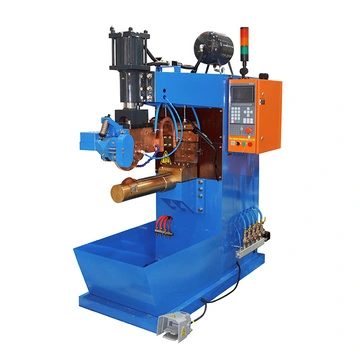
A resistance seam welder is an advanced industrial welding machine designed to join metal sheets and components by creating continuous, strong, and consistent welds. It uses rotating electrode wheels to apply pressure and electrical current along the joint, producing a series of overlapping welds that form a continuous seam. This technology is especially valuable for manufacturing products that require durable joints, smooth finishes, and reliable sealing performance.
HERON Intelligent Equipment is a recognized manufacturer of industrial joining equipment, offering resistance seam welding solutions for a wide range of production requirements. With a focus on welding technology, automation, and customized equipment, HERON helps manufacturers improve production efficiency and achieve consistent joining quality across different applications.
How a Resistance Seam Welder Works
The working principle of a resistance seam welder combines electrical resistance, controlled pressure, and continuous movement. Metal components are positioned between rotating electrode wheels, which press the materials together as electrical current passes through the contact area. The resulting heat creates a series of welds along the joint, forming a strong and uniform seam.
This process is particularly useful when manufacturers need continuous welds instead of individual spot welds. With suitable welding parameters, electrode pressure, and travel speed, a resistance seam welder can produce dependable joints that meet specific production and quality requirements.
HERON provides AC and medium-frequency direct-current (MFDC) seam welding solutions, including longitudinal and circular configurations, to support different component designs and manufacturing processes.
Key Features of HERON Resistance Seam Welders
HERON offers seam welding machines in different power capacities, including models within the 50–200 kVA range. These solutions are designed to accommodate various workpiece sizes, seam geometries, and industrial production requirements.
Important features include:
-
Continuous seam welding: Creates consistent welds along metal joints for applications requiring dependable joining and sealing.
-
AC and MFDC technology: Provides different welding power options to suit specific materials and manufacturing needs.
-
Longitudinal seam welding: Supports components that require welding along their length.
-
Circular seam welding: Suitable for cylindrical and round components that require circumferential joints.
-
Industrial production capability: Helps manufacturers integrate seam welding into organized production workflows.
-
Flexible equipment configurations: Supports the selection of suitable equipment according to component geometry and application requirements.
These features make HERON a practical choice for businesses seeking specialized resistance welding equipment for modern manufacturing operations.
Advantages of Using a Resistance Seam Welder
One of the major advantages of a resistance seam welder is its ability to produce strong, continuous joints with consistent quality. By combining controlled electrical current and electrode pressure, the machine helps manufacturers achieve reliable results across repeated production cycles.
Improved welding consistency is another important benefit. When the welding parameters are properly established, manufacturers can maintain uniform seams across multiple components, helping support quality standards and reduce unnecessary rework.
High production efficiency is also a key advantage. The continuous movement of electrode wheels enables rapid processing of suitable components, making seam welding particularly useful for production environments with repetitive joining requirements.
Furthermore, resistance seam welding typically requires no additional filler metal for the joint formation process. This can simplify material handling and support efficient production planning.
Benefits for Industrial Manufacturing
A high-quality resistance seam welder can contribute to better productivity, improved product reliability, and more organized manufacturing operations. HERON's equipment portfolio supports businesses that require dependable metal joining for demanding industrial applications.
1. Strong and Durable Joints
Resistance seam welding produces firm joints suitable for metal products that must withstand regular use and operational stress. Correctly configured welding parameters help achieve the required joint strength and performance.
2. Reliable Sealing Performance
For products that contain liquids or gases, seam integrity is especially important. Resistance seam welding can create liquid-tight or gas-tight joints when the material, joint design, and process parameters are properly selected and validated.
3. Consistent Product Quality
Repeatable welding operations help manufacturers maintain uniform product standards. This is particularly beneficial for high-volume production, where consistent weld appearance and joint integrity are essential.
4. Increased Manufacturing Productivity
The continuous welding process supports efficient component processing and can be incorporated into automated production systems. This helps manufacturers organize workflows and improve production output.
5. Cleaner Joining Operations
Resistance seam welding creates joints without the need for filler materials or an open flame in the welding process. This supports a streamlined manufacturing environment when appropriate equipment safeguards and process controls are in place.
Applications of HERON Resistance Seam Welders
The versatility of a resistance seam welder makes it suitable for numerous industries that depend on dependable metal joining. HERON's seam welding solutions are designed to support applications across automotive manufacturing, home appliances, electrical products, and hardware production.
Automotive Industry: Seam welding can be used to manufacture fuel tanks, shock absorbers, and other suitable metal components that require reliable joints and consistent production quality.
Home Appliance Manufacturing: Manufacturers can use seam welding for products such as electric kettles, oil heaters, and water-related appliance components, depending on their construction and material requirements.
Metal Containers and Drums: Resistance seam welding is well suited to joining compatible sheet-metal components used in containers, tanks, and drums where continuous seams are required.
Electrical and Hardware Industries: The technology supports the production of selected metal enclosures, formed components, and fabricated parts that benefit from consistent joining.
Industrial Equipment Manufacturing: Circular and longitudinal seam welding configurations can be selected for suitable cylindrical structures and sheet-metal assemblies.
By matching the machine configuration to the workpiece design, manufacturers can achieve reliable welding performance across a variety of production tasks.
Why Choose HERON for Resistance Seam Welding?
HERON Intelligent Equipment combines industrial welding expertise with a broad portfolio of metal joining technologies. Its product range includes resistance welders, seam welders, welding guns, automation solutions, and customized production equipment.
Application-focused equipment selection helps manufacturers identify a suitable welding configuration based on material type, workpiece dimensions, seam geometry, and output requirements.
Advanced welding technology provides options for businesses seeking AC or MFDC seam welding systems, allowing equipment selection to reflect the demands of the manufacturing process.
Customized manufacturing solutions can help companies address specialized production requirements. HERON's wider equipment portfolio supports different joining processes and production-line configurations, providing flexibility for businesses with specific manufacturing objectives.
For companies investing in industrial welding equipment, choosing a manufacturer with experience in multiple joining technologies can help simplify equipment planning and support long-term production goals.
Tips for Getting the Best Results from a Resistance Seam Welder
To achieve excellent results, manufacturers should select a machine that matches their materials, component dimensions, and production requirements.
Choose suitable welding parameters: Current, welding speed, electrode pressure, and pulse settings should be established according to the material and required seam characteristics.
Maintain electrode wheels: Regular inspection and appropriate maintenance help preserve stable contact conditions and consistent welding quality.
Prepare workpieces properly: Clean, accurately positioned components support dependable electrical contact and uniform seam formation.
Validate the welding process: Sample testing and appropriate inspection procedures help confirm that the finished joints meet strength and sealing requirements.
Plan for production integration: For high-volume operations, consider how the welder will fit into the existing workflow, including component handling, operator access, and quality monitoring.
Following these practices helps manufacturers make effective use of their seam welding equipment and maintain dependable production standards.
Final Thoughts on Resistance Seam Welder Solutions
A resistance seam welder is an essential solution for manufacturers seeking strong, continuous, and consistent metal joints. Its ability to support efficient production, dependable sealing, and repeatable weld quality makes it valuable across automotive, appliance, container, electrical, and general metal fabrication industries.
HERON Intelligent Equipment offers AC and MFDC seam welding solutions designed to support diverse industrial applications. With options for longitudinal and circular seam welding, along with a wider portfolio of resistance welding and automation technologies, HERON provides manufacturers with flexible choices for their joining requirements.
For businesses aiming to improve production efficiency, maintain consistent product quality, and develop reliable manufacturing processes, HERON resistance seam welding technology represents a valuable investment in modern industrial joining. Choosing the appropriate equipment and establishing suitable welding parameters can help manufacturers achieve durable seams, dependable performance, and sustainable productivity over the long term.

 English
 Arabic
 French
 Spanish
 Portuguese
 Deutsch
 Dutch
 Italiano
 Russian
 Romaian
 Portuguese (Brazil)
 Greek