


FUE Hair Transplant: Procedure, Benefits, Recovery, and What to Expect
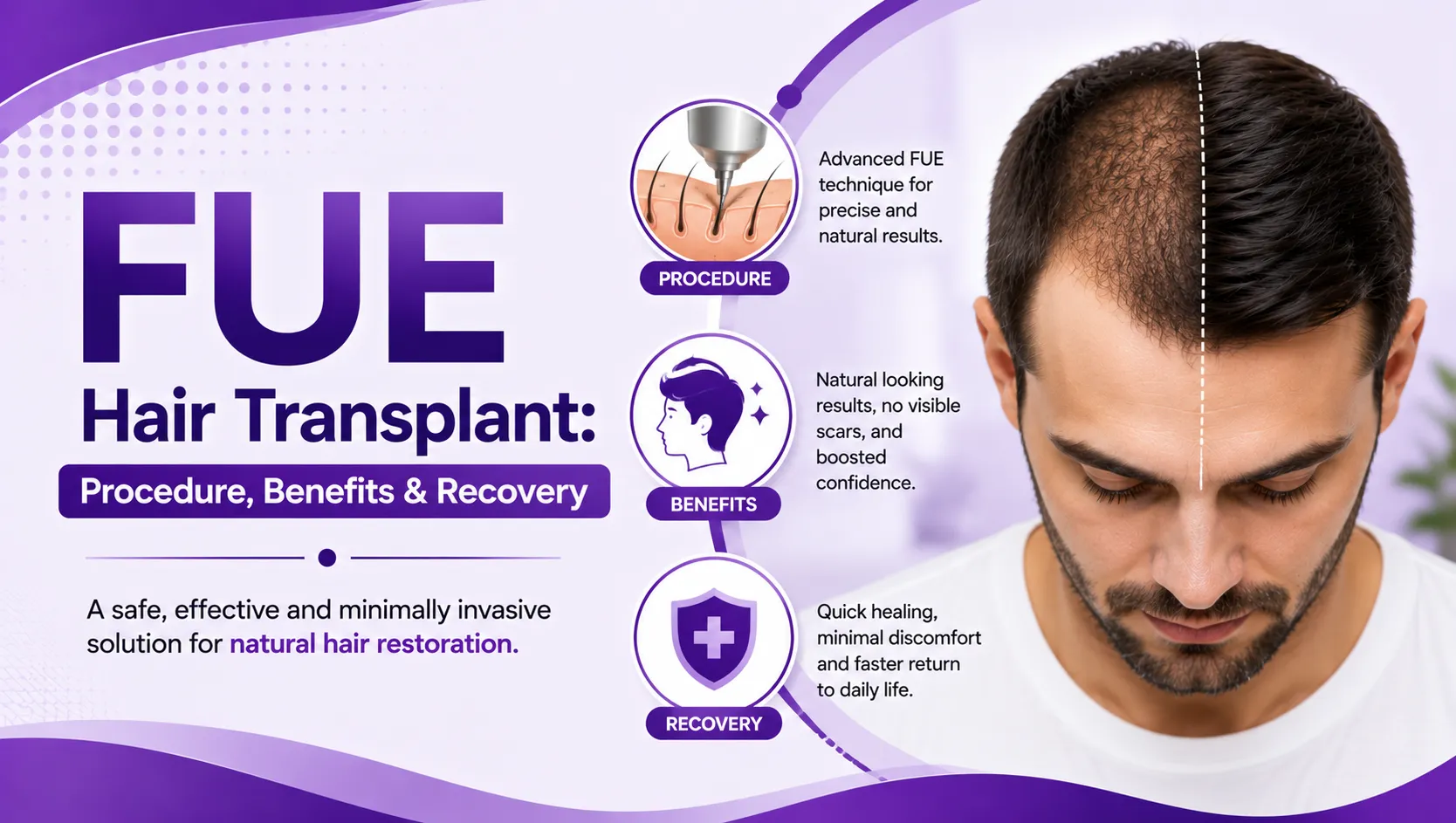
Hair loss can affect a person's appearance and confidence. Although several treatments can help manage hair thinning, some people may consider a hair transplant when hair loss becomes more noticeable. Follicular Unit Extraction (FUE) is one of the techniques used to restore hair in areas affected by hair loss.
Before choosing this procedure, it is important to understand how FUE works, who may benefit from it, and what to expect during recovery.
What Is an FUE Hair Transplant?
FUE stands for Follicular Unit Extraction. It is a hair transplant technique in which individual hair follicle units are removed from a donor area, usually the back or sides of the scalp. These follicles are then placed into areas with thinning hair or baldness.
Unlike older strip-based techniques, FUE does not require removing a strip of scalp. Instead, it leaves small extraction marks that usually become less noticeable as they heal.
The procedure requires careful planning because the number of available donor follicles is limited. A suitable treatment plan should consider the patient's hair loss pattern, donor density, scalp condition, and future hair loss risk.
How Does the FUE Hair Transplant Procedure Work?
An FUE hair transplant generally involves several steps.
1. Scalp and donor area assessment
The surgeon examines the scalp, evaluates the pattern of hair loss, and checks donor hair density. This assessment helps determine whether the patient is a suitable candidate.
2. Hairline design and preparation
The surgeon plans the hairline according to facial proportions, age, and the patient's existing hair pattern. The donor area is prepared before extraction begins.
3. Follicle extraction
Individual follicular units are extracted using a small specialized instrument. Careful extraction helps reduce unnecessary damage to the follicles and preserve the donor area.
4. Graft placement
The extracted follicles are implanted into the recipient area. Their direction, angle, and distribution are important for creating a natural-looking appearance.
5. Aftercare and follow-up
Patients receive instructions for scalp care, washing, sleeping, and returning to normal activities. Follow-up appointments help the clinical team monitor healing and hair growth.
What Are the Benefits of FUE Hair Transplant?
FUE offers several potential benefits for suitable candidates.
-
No linear donor scar: FUE does not require a long strip incision, although tiny scars may remain.
-
Natural-looking results: Appropriate hairline design and graft placement can produce results that blend with existing hair.
-
Shorter initial recovery: Many patients can resume light daily activities within a few days, depending on healing and their surgeon's advice.
-
Flexible hairstyle options: The absence of a long linear scar may allow patients to wear shorter hairstyles.
-
Targeted hair restoration: Follicles can be placed in specific areas, such as the hairline, temples, crown, or selected beard areas.
However, results vary between individuals. FUE does not stop the progression of genetic hair loss in untreated areas.
Who Is a Suitable Candidate for FUE?
FUE may be suitable for people experiencing male or female pattern hair loss who have enough healthy donor follicles. It may also help some people with selected cases of scarring or hair loss following injury, depending on their condition.
A consultation is important before treatment. The surgeon should assess the cause of hair loss, donor capacity, medical history, and expectations.
People with active scalp conditions, unstable hair loss, or insufficient donor hair may need other treatments or further evaluation before considering surgery.
FUE Hair Transplant Recovery and Results
Recovery varies from person to person. Mild swelling, redness, tenderness, and small scabs may appear during the first few days. Following the surgeon's aftercare instructions can help support healing.
Transplanted hairs commonly shed during the first few weeks. This is an expected part of the hair growth cycle and does not necessarily mean the transplant has failed.
New growth often becomes noticeable after three to four months. More visible changes may develop over six to nine months, while the final result can take around 12 months or longer.
Patients should maintain realistic expectations. Hair density depends on donor quality, graft survival, the extent of hair loss, and individual healing.
FUE Hair Transplant Cost: What Affects the Price?
The cost of an FUE hair transplant varies by clinic and treatment plan. Important factors include the number of grafts required, the surgeon's experience, the complexity of the procedure, and the facilities provided.
Patients should ask for a clear quotation that explains what is included. The consultation should also cover expected results, possible risks, aftercare, and whether additional treatment may be needed.
Choosing a clinic based only on the lowest price may overlook important factors such as surgical expertise, safety standards, and appropriate follow-up care.
How to Choose the Right Hair Transplant Clinic
Before booking a procedure, consider these practical steps:
-
Verify the surgeon's qualifications and relevant experience.
-
Ask who will perform the extraction and implantation.
-
Review realistic before-and-after photographs.
-
Discuss possible complications and limitations.
-
Confirm the clinic's hygiene standards and follow-up arrangements.
-
Request a personalized treatment plan rather than relying only on a graft count.
A qualified medical professional should explain both the potential benefits and the limitations of hair transplantation.
Conclusion
FUE hair transplant is a widely used method of restoring hair by moving individual follicular units from a donor area to areas affected by hair loss. It avoids a long linear incision and can provide natural-looking results when carefully planned and performed.
However, not everyone is a suitable candidate, and results depend on several individual factors. A professional assessment can help determine whether FUE is appropriate and what outcome may realistically be expected.
People researching treatment options can learn more about FUE hair transplant in Pakistan and the factors involved in selecting a suitable procedure.

 English
 Arabic
 French
 Spanish
 Portuguese
 Deutsch
 Turkish
 Dutch
 Russian
 Romaian
 Portuguese (Brazil)
 Greek