


F-theta Lens: Precision Optics for High-Quality Laser Marking
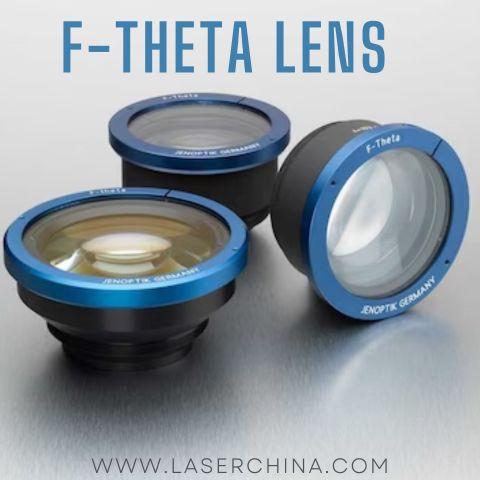
A reliable optical system is essential for achieving accurate, consistent, and professional laser marking results. An F-theta Lens is a specialized optical component designed to focus laser beams across a defined working area, making it an important part of modern laser marking and engraving equipment. Its optical design helps maintain consistent positioning and supports precise processing of different materials in industrial applications.
What Is an F-theta Lens?
An F-theta lens is a flat-field focusing lens commonly used in laser systems equipped with galvanometer scanners. It converts the angular movement of a scanning laser beam into a nearly proportional linear movement across the working surface. This allows the laser to mark or engrave specific positions with improved accuracy and consistency.
Unlike conventional focusing lenses, this optical component is designed to produce a relatively flat focal plane across its intended scanning field. This characteristic is particularly important when processing flat materials that require uniform marking throughout a designated area.
How Does an F-theta Lens Work?
The lens works together with a galvanometer scanning system, which directs the laser beam across the target material. As the scanning mirrors change the beam's direction, the lens focuses the beam onto different positions within the working field.
The optical design helps control field curvature and distortion, supporting consistent focus across the designated area. However, the actual performance depends on the lens specifications, laser wavelength, beam quality, scanner calibration, and working distance.
Choosing the correct lens helps manufacturers achieve the desired balance between marking precision, processing speed, and coverage area.
Applications of F-theta Lens Technology
An F-theta Lens is widely used in industrial laser processing because it supports precise beam positioning across a defined field. Common applications include:
1. Laser Marking
Laser marking machines use these lenses to engrave serial numbers, product identification codes, logos, barcodes, and other information on metal and selected non-metal materials.
2. Laser Engraving
In engraving applications, accurate beam focusing helps produce detailed patterns, text, and decorative designs. The appropriate lens can support consistent results across the working area.
3. Electronics Manufacturing
Electronics manufacturers use laser systems for marking components, circuit boards, and product labels where accurate positioning and repeatable results are important.
4. Industrial Product Identification
Automotive parts, tools, machinery components, and other industrial products may require permanent identification. A properly configured laser marking system helps deliver clear markings for traceability and quality control.
5. Precision Laser Processing
Depending on the laser source and optical configuration, these lenses can also support selected cutting, surface processing, and microprocessing applications.
How to Choose the Right Lens
Selecting suitable optics requires careful consideration of the laser system and the intended application. Several specifications deserve attention before purchasing.
Laser wavelength: The lens coating and optical materials must be compatible with the laser source, such as a fiber, CO₂, or UV laser.
Scanning field: Common working fields include 70 × 70 mm, 110 × 110 mm, 150 × 150 mm, and larger formats. The appropriate size depends on the required marking area and machine configuration.
Focal length: Focal length affects the working distance, focused spot characteristics, and available scanning field. It should match the scanner and machine design.
Optical quality: Lens quality, coating performance, and distortion control influence marking accuracy and processing consistency.
System compatibility: Confirm that the lens is compatible with the galvanometer scanner, mounting interface, laser wavelength, and required beam specifications.
Maintenance and Installation Tips
Proper handling helps preserve optical performance and extend service life. Always follow the equipment manufacturer's installation instructions and avoid touching optical surfaces directly.
Inspect the lens periodically for dust, fingerprints, or contamination. Use suitable optical cleaning materials and approved procedures rather than ordinary cloths or harsh chemicals. Keep the lens protected when it is not installed, and ensure that the optical assembly is mounted securely.
If marking quality becomes inconsistent, inspect the optical path and verify scanner calibration, focus settings, and lens condition before replacing components.
Why Quality Matters When Purchasing Laser Optics
Investing in suitable laser optics helps businesses maintain dependable production quality. A correctly specified lens can support accurate marking, repeatable processing, and efficient operation when paired with a compatible laser source and scanning system.
When comparing suppliers, review technical specifications, coating details, manufacturing quality, compatibility, and after-sales support. Request assistance if you are unsure which configuration suits your machine.
Final Thoughts
Choosing the right F-theta Lens is an important step toward achieving precise and consistent results in laser marking and engraving applications. By evaluating wavelength compatibility, scanning field, focal length, optical quality, and installation requirements, businesses can select optics suited to their production needs. Quality components and proper maintenance help keep laser systems operating reliably while supporting professional marking results.

 English
 Arabic
 French
 Spanish
 Portuguese
 Deutsch
 Turkish
 Dutch
 Italiano
 Russian
 Portuguese (Brazil)
 Greek