


Responsive Switching for Automated Water Systems
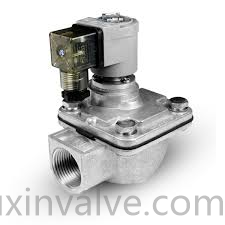
Automated fluid-control equipment requires components that respond accurately to electrical commands while maintaining dependable flow regulation. A Pulse Solenoid Valve uses an electrical pulse to activate an electromagnetic mechanism and change the position of an internal valve element. Depending on its design, the valve may return to its original position after the pulse ends or retain its new state until another signal is received. Understanding this operating distinction is essential when selecting a valve for electronic faucets, automatic flushing equipment, and other water-control applications.
The valve's operating mechanism begins when the control circuit supplies electrical energy to the coil. The resulting magnetic field generates force that moves the armature or another internal switching component. This movement opens or closes a flow passage according to the valve's configuration. In conventional pulse-activated designs, the mechanism may return through spring force when power is removed. In latching designs, a short pulse can change the state while the internal magnetic or mechanical structure maintains that position. The control method must match the system's required operating sequence.
Coil design is a major factor in switching reliability. Copper winding quality, insulation performance, coil resistance, and heat management influence the electromagnetic force available during activation. The magnetic circuit must be designed to move the internal mechanism under the intended operating pressure and mechanical load. Precision control of the armature, air gap, and related components helps improve response consistency and reduce the risk of incomplete switching. These factors are especially relevant in equipment that operates repeatedly throughout the day.
Hydraulic performance depends on the dimensions and configuration of internal passages. Flow openings, valve seats, and connecting channels must provide suitable water delivery without creating unnecessary pressure loss. Precision machining helps maintain consistent dimensions, while accurate assembly supports reliable movement and sealing. The valve should be evaluated according to the system's flow demand, operating pressure, and installation conditions rather than selected by electrical characteristics alone.
Sealing components protect the system against unwanted leakage. O-rings, diaphragms, gaskets, and valve seats must remain compatible with the working fluid and withstand repeated changes in pressure. For sanitary water-control applications, material selection should account for temperature, water quality, and expected service cycles. Appropriate sealing structures help maintain stable shutoff performance and reduce unnecessary water loss. Consistent assembly practices are equally important because damaged or incorrectly positioned seals can compromise otherwise well-designed components.
Pulse-controlled valves can be integrated with sensors, timers, microcontrollers, and other electronic control devices. In a sensor-operated faucet, for example, a controller may activate the valve when a user is detected and stop water delivery when the programmed condition is met. In other systems, pulse signals can coordinate intermittent water delivery or automated switching sequences. Electrical compatibility between the valve and controller is essential, including operating voltage, current demand, pulse duration, and signal timing.
Manufacturing quality directly influences product consistency. Controlled coil winding, precision machining, component inspection, and stable assembly procedures help reduce variation between individual units. Testing may include electrical continuity checks, insulation inspection, actuation-response verification, leakage tests, and repeated operating cycles. Where the application involves water delivery, functional testing under representative hydraulic conditions helps verify that the valve opens and closes as intended.
For procurement teams, the selection process should begin with a clear technical specification. Important considerations include whether the valve is normally open or normally closed, whether it returns automatically or retains its position, the required voltage and pulse characteristics, connection dimensions, flow requirements, and sealing materials. Buyers should also confirm maintenance expectations and compatibility with the finished equipment. These details help avoid integration issues and support more efficient OEM product development.
Zhejiang Fuxin Electrical Technology Co., Ltd. supplies electromagnetic valve solutions for sanitary ware and water-control applications. B2B buyers sourcing a Pulse Solenoid Valve can review the company's product range at https://www.fuxinvalve.com/product/sanitary-ware-solenoid-valves/ to identify potential solutions for automated water systems and related equipment.

 English
 Arabic
 French
 Spanish
 Portuguese
 Deutsch
 Turkish
 Italiano
 Russian
 Romaian
 Portuguese (Brazil)
 Greek