


What Should Buyers Know About Parallel Shaft Gear Motor Efficiency
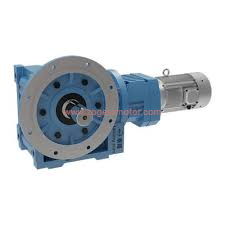
A Gear Motor Parallel Shaft configuration can support material handling systems by delivering controlled rotation, usable output torque, and a practical shaft arrangement for industrial machinery. Conveyors, sorting equipment, carton handling units, filling lines, and automated packaging stations depend on drive components that match their operating loads and movement requirements. For manufacturers and purchasing teams exploring industrial drive options, zpgearmotor provides a starting point for reviewing Zhanpeng gear motor products and understanding their potential applications. How can the right gearbox configuration support dependable material transport while helping packaging equipment operate efficiently?
Applications in Material Handling and Packaging
Material handling systems require steady motion to transfer products between processing stages, storage areas, and dispatch stations. Belt conveyors, roller conveyors, lifting mechanisms, and sorting equipment all rely on drive systems selected according to load weight, travel speed, start-stop frequency, and working schedules. A suitable parallel shaft arrangement can fit equipment layouts where the motor and output shaft need to remain aligned in parallel, making it practical for many conveyor and production line designs.
Packaging machinery has similarly specific operating demands. Cartoning, sealing, filling, labeling, and wrapping equipment must coordinate product movement with each processing stage. When a drive system delivers an unsuitable speed or insufficient torque, materials may move irregularly, machine timing can become inconsistent, and production quality may be affected. Selecting an appropriate gear ratio and motor rating helps coordinate the movement of conveyors, rollers, feeders, and other connected mechanisms.
These applications do not all require the same drive configuration. Light-duty transport equipment may prioritize compact dimensions and simple installation, while heavier systems need sufficient starting torque and capacity for continuous operation. Buyers should assess the full operating cycle, including loaded starts, intermittent pauses, speed changes, and possible variations in transported material.
What Efficiency Levels Can Packaging Gear Motors Achieve?
Gearbox efficiency describes the proportion of mechanical input power transmitted to the output shaft after transmission losses. The achievable level depends on the gear design, reduction ratio, number of gear stages, lubrication, bearing condition, manufacturing tolerances, and operating load. Parallel shaft units using helical gearing can offer high transmission efficiency, with some single-stage designs reaching approximately 95% to 98% under suitable conditions. Multi-stage assemblies may experience additional losses because power passes through successive gear meshes.
These figures describe gearbox performance rather than the efficiency of the complete motor-driven system. Electrical energy is also consumed by the motor and, where fitted, the variable frequency drive or other control equipment. The combined efficiency therefore depends on the motor, gearbox, controller, and operating point. Buyers should confirm whether a quoted percentage refers to the gearbox alone or the entire drive assembly.
Packaging machinery often performs repeated movements throughout a production shift, so transmission losses can influence energy use and heat generation over time. However, efficiency should not be judged by a percentage alone. A suitable drive must also deliver the required output speed, torque, starting performance, and service life. A unit with an unsuitable ratio may fail to meet the machine's operating needs even when its published efficiency appears attractive.
Factors That Influence Drive Performance
Load matching is central to reliable operation. The motor and reducer should be selected according to the transported weight, conveyor resistance, acceleration requirements, and expected duty cycle. If the drive is undersized, it may struggle during startup or experience excessive temperature rise. An oversized unit can also create unnecessary initial expense and may not operate at its intended efficiency under every load condition.
Gearbox construction and installation affect the transmission process as well. Correct shaft alignment, secure mounting, suitable lubrication, and regular inspection help reduce avoidable friction and mechanical wear. Excessive vibration, unusual noise, lubricant deterioration, or rising operating temperatures can indicate a maintenance issue that deserves attention. Following the manufacturer's instructions helps preserve performance and supports predictable maintenance planning.
Environmental conditions should also be considered when choosing equipment for packaging and material handling. Dust, humidity, washdown exposure, ambient temperature, and limited installation space may influence housing protection, mounting style, and maintenance access. Where speed changes are required, the motor must also be compatible with the selected controller and intended operating range.
Selecting a Suitable Drive Solution
Before placing an order, buyers should define the target output speed, required torque, power rating, reduction ratio, shaft dimensions, mounting arrangement, operating schedule, and available power supply. Providing drawings or a description of the machinery can help clarify space restrictions and connection requirements. It is also useful to discuss expected load variation, starting frequency, noise limits, and environmental conditions with the supplier.
Zhanpeng's product information gives industrial purchasers a starting point for reviewing gear motor options and identifying configurations for different machinery applications. Buyers should check the current technical specifications for each model rather than assuming that all units share the same performance range or accessories. For OEM projects, questions about shaft configuration, installation options, product customization, and quality documentation can be discussed during the quotation process.
For businesses planning conveyor upgrades, packaging line integration, or new material transport equipment, zpgearmotor offers an online point of reference for exploring the company's drive products. A Gear Motor Parallel Shaft model should be selected according to the actual application rather than a general efficiency claim, and buyers can review relevant information at https://www.zpgearmotor.com before contacting Zhanpeng to discuss load requirements, output speed, installation conditions, and the configuration needed for their equipment.

 English
 French
 Spanish
 Portuguese
 Deutsch
 Turkish
 Dutch
 Italiano
 Russian
 Romaian
 Portuguese (Brazil)
 Greek