


Does Exosome Hair Therapy Help Reduce Hair Thinning?
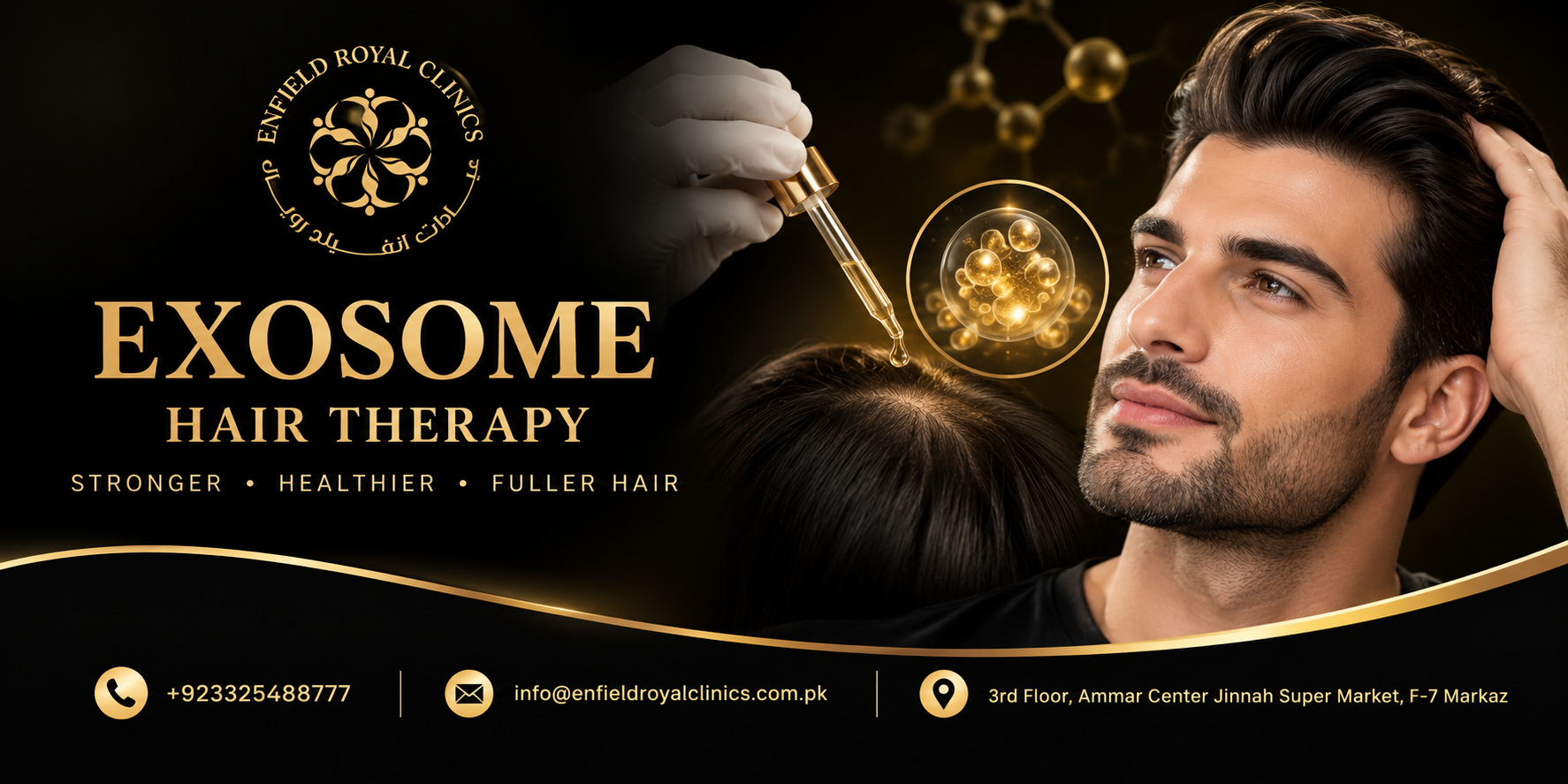
Hair thinning is a common concern that can affect people of different ages. Gradual hair loss, a widening part, reduced hair density around the crown, or a receding hairline may make the hair appear less full. Because these changes can influence confidence and appearance, many people explore modern hair restoration options that may help improve hair health.
One treatment receiving increasing attention is exosome-based hair therapy. Researchers are investigating whether exosomes, which carry biological signals between cells, could support processes involved in hair follicle function. For people considering Exosome Hair Therapy in Islamabad, understanding its potential benefits, limitations, and safety considerations is essential before choosing a treatment.
The important question is whether exosome therapy can genuinely reduce hair thinning. Early research offers some promising findings, but the evidence remains limited, and the treatment cannot yet be considered a proven solution for every type of hair loss. A careful evaluation of the scalp and the underlying cause of thinning can help individuals make informed decisions.
What Is Exosome Hair Therapy?
Exosome hair therapy is an emerging approach that uses tiny extracellular vesicles released by cells. These vesicles carry various biological molecules, including proteins, lipids, and other signals that help cells communicate with one another.
In hair restoration research, scientists are examining whether these signals may influence processes associated with inflammation, tissue repair, and hair follicle activity. The aim is to investigate whether the scalp environment can be supported in ways that may encourage healthier hair growth.
Unlike a hair transplant, exosome therapy does not involve surgically moving hair follicles from one part of the scalp to another. Instead, a preparation containing exosomes is delivered to the treatment area using a method determined by the product and treatment protocol.
However, products marketed for exosome therapy may differ in their source, composition, manufacturing quality, and biological activity. Findings from one study therefore cannot automatically establish the effectiveness of every commercially available preparation.
Patients should also understand that exosome therapy is still an evolving field. More rigorous clinical research is needed to establish the most effective formulations, appropriate treatment schedules, long-term safety, and the types of hair loss that might respond.
How Can Exosome Therapy Help Reduce Hair Thinning?
Hair growth depends on the activity of hair follicles and the natural cycle through which individual hairs grow, transition, and rest. When this cycle changes or follicles gradually become smaller, hair may appear thinner and less dense.
Researchers are studying whether exosomes can influence cellular signaling pathways involved in follicle function. Some early studies have reported improvements in hair density or thickness after certain exosome-based interventions, but the available evidence is not yet strong enough to confirm a consistent benefit across different patients and products.
The potential effects being investigated include:
-
Supporting follicle activity: Researchers are examining whether exosome-related signals can influence biological processes involved in hair growth.
-
Improving the appearance of hair density: Some early findings suggest that particular treatments may improve measured hair density in selected participants.
-
Influencing scalp conditions: Scientists are exploring how cellular communication may affect the scalp environment and processes associated with tissue repair.
-
Supporting hair restoration research: Exosomes may provide new opportunities for developing treatments, although their practical role in routine hair care remains uncertain.
These potential effects should not be confused with established outcomes. Exosome therapy has not been proven to stop every form of hair loss, restore permanently lost follicles, or produce the same results in all individuals.
The response may depend on the type of hair loss, the condition of the follicles, the preparation used, and other individual factors. A professional assessment is therefore an important first step before considering this approach.
Which Types of Hair Thinning May Respond to Exosome Therapy?
The cause of hair loss plays a major role in determining which treatment may be appropriate. Exosome therapy is being studied for several types of hair thinning, but evidence remains limited for each condition.
Hereditary hair loss
Androgenetic alopecia, commonly known as pattern hair loss, can cause gradual thinning around the crown, temples, or central scalp. Early research has explored whether exosome-based preparations may improve hair density in some people with this condition. However, further controlled studies are necessary to determine how reliably these improvements occur.
Stress-related hair shedding
Temporary hair shedding may develop after significant stress, illness, surgery, or other physical changes. This condition, known as telogen effluvium, may improve when the underlying trigger resolves. Identifying and addressing that trigger is generally more important than choosing an emerging cosmetic treatment.
Nutritional or medical hair loss
Low iron levels, thyroid disorders, inadequate nutrition, and certain medications can contribute to thinning. Appropriate investigations and treatment of the underlying problem may help reduce shedding. Exosome therapy should not replace necessary medical care.
Advanced hair loss
When hair follicles have been permanently destroyed or an area has become completely bald, regrowth from an emerging treatment cannot be assumed. A professional assessment can help determine whether established medical treatments or hair transplantation may be more appropriate.
For anyone researching Exosome Hair Therapy in Islamabad, distinguishing between these conditions is essential before selecting a treatment plan.
What Should Patients Expect During Treatment and Recovery?
The treatment process varies according to the product and method used. Some approaches involve applying a preparation to the scalp, while others use injections or microneedling to deliver it. These methods have different risks and should not be treated as interchangeable.
Before the procedure, the healthcare professional should review the patient's medical history, examine the scalp, and explain the available evidence. The patient should also receive information about the product's source, manufacturing standards, sterility, and regulatory status.
After treatment, mild redness, tenderness, itching, or swelling may occur, particularly when needles or microneedling are involved. The patient should follow the specific aftercare instructions provided and seek medical attention for severe pain, fever, spreading redness, or signs of infection.
There is no universally established schedule for exosome hair treatments. Some published studies have followed patients for several weeks or months, but those study schedules do not establish a standard treatment course. Long-term results and the need for repeat sessions remain uncertain.
Progress should be assessed using consistent photographs and, where appropriate, scalp measurements. Patients should be cautious about promises of immediate regrowth or guaranteed results.
Is Exosome Hair Therapy Safe, and What Are the Alternatives?
Safety deserves careful consideration because products marketed as exosomes can vary significantly. A systematic review published in 2025 identified encouraging early findings but also highlighted small study populations, differences in treatment methods, and limited follow-up. Larger, better-designed studies are needed to establish reliable conclusions about effectiveness and safety
The US Food and Drug Administration states that no exosome products are FDA-approved. Patients in Pakistan should separately verify the relevant local regulatory requirements and the authorization status of the specific product being offered.
Before agreeing to treatment, patients should ask:
-
What is the source and composition of the exosome preparation?
-
What evidence supports its use for the particular type of hair loss?
-
What quality-control and sterility testing has been performed?
-
What side effects and uncertainties are known?
-
What established treatments are available as alternatives?
Depending on the diagnosis, alternatives may include topical minoxidil, prescription treatments when medically appropriate, nutritional correction for a confirmed deficiency, or hair transplantation for selected candidates. Platelet-rich plasma (PRP) may also be discussed, although its suitability and evidence differ from those of exosome therapy.
The best option depends on the individual's diagnosis, health history, treatment goals, and tolerance for uncertainty. An emerging treatment should not automatically replace an established option with stronger supporting evidence.
For more information visit Enfield royal clinic in islamabad
Frequently Asked Questions
1. Does Exosome Hair Therapy help reduce hair thinning permanently?
Permanent improvement has not been established. Early studies suggest that some exosome-based treatments may improve hair density or thickness, but long-term effectiveness and the need for repeat treatment remain uncertain. The underlying cause of hair loss also affects the outcome.
2. How many sessions are needed to reduce hair thinning?
There is no standardized number of sessions supported by strong clinical evidence. Treatment schedules vary across published studies and commercial protocols. A qualified professional should explain the evidence behind the proposed schedule rather than promise a fixed number of sessions.
3. Can Exosome Hair Therapy in Islamabad replace a hair transplant?
Not necessarily. Exosome therapy is an emerging approach being investigated for its potential effects on existing hair follicles. A hair transplant physically moves follicles into selected areas of the scalp. The procedures have different purposes, and suitability depends on the extent of hair loss and the patient's goals.
4. What is the best way to prepare for Exosome Hair Therapy?
The first step is a professional assessment to identify the cause of thinning. Patients should disclose their medications and medical history, ask about the product's source and quality, understand possible side effects, and review alternative treatments before proceeding.
Conclusion
Exosome hair therapy is an emerging option that researchers are investigating for reducing hair thinning and improving hair density. Early findings are encouraging, but current evidence does not establish that every product is effective, that results will be permanent, or that the treatment is suitable for every type of hair loss.
People considering Exosome Hair Therapy in Islamabad should prioritize an accurate diagnosis, verified product quality, realistic expectations, and an informed discussion of established alternatives. These steps can help them make a safer and more appropriate decision about their hair restoration goals.

 English
 Arabic
 Spanish
 Portuguese
 Deutsch
 Turkish
 Dutch
 Italiano
 Russian
 Romaian
 Portuguese (Brazil)
 Greek