


Efficient Exhaust Ventilation for Industrial Buildings
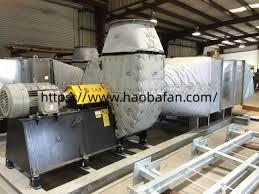
Factories, workshops, warehouses, and commercial buildings can accumulate heat, humidity, dust, fumes, and stale air when ventilation is insufficient. Mechanical exhaust systems help remove unwanted indoor air and support the movement of fresh air into occupied spaces. Selecting an appropriate Axial Flow Exhaust Fan can provide a practical solution for applications requiring direct air movement, straightforward installation, and effective air exchange across industrial and commercial environments.
Axial exhaust fans move air primarily parallel to the rotating shaft. This direct airflow arrangement makes them suitable for wall-mounted exhaust, general building ventilation, machinery cooling, and other applications where air needs to move through a relatively open path. Their compact structure can help simplify installation in building openings and equipment enclosures. However, the final ventilation result depends on the fan's operating characteristics, the layout of the building, and the resistance created by the exhaust system.
Correct airflow planning should begin with the requirements of the facility. Factors such as building volume, heat generation, occupancy, indoor contaminants, and the location of exhaust points influence the amount of air that needs to be removed. If exhaust capacity is insufficient, heat and pollutants may remain trapped in certain areas. If replacement air cannot enter freely, the fan may struggle to maintain the intended airflow. Coordinating exhaust locations with suitable air inlets helps improve circulation throughout the building.
Impeller design directly affects exhaust performance. Blade pitch, curvature, diameter, and spacing influence airflow volume, turbulence, and operating efficiency. A suitable blade configuration should match the intended application rather than relying on a universal design for every installation. Manufacturing accuracy helps ensure that blade geometry remains consistent and that rotating components operate smoothly. Proper balancing is also important because uneven mass distribution can cause vibration and premature wear.
Motor reliability is another consideration for exhaust equipment that may operate for extended periods. The motor should be appropriate for the expected workload, electrical supply, ambient temperature, and operating schedule. Secure mounting and accurate assembly help reduce unnecessary mechanical stress. Depending on the installation environment, suitable electrical protection and motor enclosure design may also be necessary to support safe and dependable operation.
Material selection should reflect exposure to moisture, dust, corrosive substances, and temperature changes. Fan blades and housings may use different metal or polymer materials depending on the design. Protective coatings can help reduce corrosion in demanding environments, while robust mounting components help maintain stability during operation. Buyers should consider the actual working conditions when choosing equipment instead of evaluating materials only by appearance or initial cost.
Noise and vibration deserve attention in both industrial and commercial settings. Air turbulence, unbalanced rotating components, loose fasteners, and structural resonance can all contribute to unwanted sound. Proper impeller balancing and secure installation help reduce mechanical vibration, while unobstructed intake and discharge openings support smoother airflow. Where noise levels are important, equipment selection should account for the surrounding work environment and any relevant acoustic requirements.
The exhaust system itself can affect performance. Protective grilles, shutters, filters, ducts, and abrupt airflow transitions may increase resistance. A fan that performs well in an open installation may deliver less airflow when connected to a restrictive system. Buyers should therefore assess the complete air path and ensure that replacement air can enter the building. This helps avoid ineffective air exchange and unnecessary energy use.
Maintenance is essential for reliable exhaust operation. Dust and debris may accumulate on the impeller or protective grille, gradually restricting airflow. Loose mounting hardware, damaged blades, worn bearings, and deteriorated electrical connections can also affect performance. Regular inspections and cleaning help identify these problems before they lead to equipment failure. All servicing should follow the manufacturer's instructions, with power safely isolated before maintenance begins.
For purchasing teams, distributors, and ventilation contractors, product evaluation should include airflow suitability, construction quality, motor reliability, installation requirements, spare-part availability, and supplier support. Consistent manufacturing is especially important when several units are needed for a single project or when repeat orders are expected. Clear communication about application conditions can help prevent specification mismatches and installation delays.
Taizhou Haoba Electromechanical Co Ltd. offers ventilation solutions for a range of industrial and commercial environments. Businesses can explore its product range at https://www.haobafan.com/product/mixed-flow-fan/ when evaluating options for exhaust and air circulation projects. Choosing a suitable Axial Flow Exhaust Fan and coordinating it with the overall ventilation layout can help maintain effective air exchange, reliable operation, and practical long-term maintenance.

 English
 Arabic
 French
 Spanish
 Portuguese
 Turkish
 Dutch
 Italiano
 Russian
 Romaian
 Portuguese (Brazil)
 Greek