


How Thoughtful Soap Packaging Supports Product Quality, Sustainability, and Retail Appeal
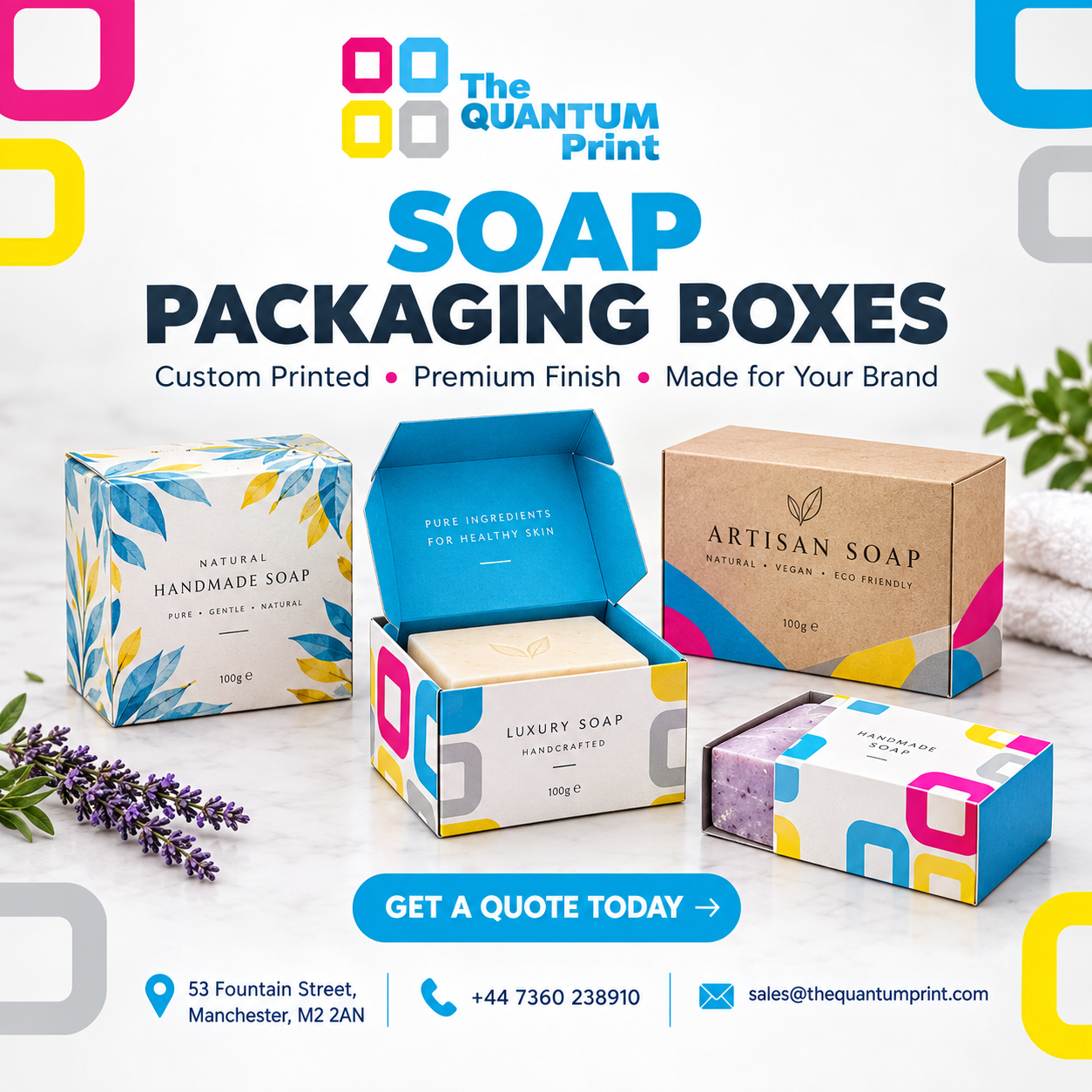
Soap packaging plays an important role in protecting products, communicating brand values, and creating a positive customer experience. Whether a business produces handmade soaps, organic skincare bars, luxury bath products, or everyday cleansing essentials, the packaging must balance durability, appearance, hygiene, and cost. In the UK retail market, where consumers increasingly consider product presentation and environmental impact, choosing suitable soap packaging boxes has become an important part of product development.
Well-designed packaging does more than contain a soap bar. It helps prevent damage during storage and transportation, provides space for essential product information, and allows businesses to establish a consistent visual identity. Understanding the available materials, structural designs, and printing options can help soap manufacturers and retailers make informed packaging decisions.

Why Soap Packaging Matters for Modern Retail
Soap products are available in many forms, including cold-process handmade bars, glycerine soaps, exfoliating bars, and fragranced skincare products. Each type has different packaging requirements. For example, handmade soap may retain some moisture during curing, while premium gift soaps may require more elaborate presentation.
Suitable packaging can offer several practical benefits:
- Product protection: Sturdy materials help reduce scratches, chipped edges, and other physical damage during handling.
- Brand recognition: Consistent colours, typography, and visual elements make products easier to identify on retail shelves.
- Customer information: Packaging provides space for ingredients, usage instructions, net weight, batch details, and other relevant information.
- Storage convenience: Properly sized cartons help products remain organised in warehouses, shops, and delivery boxes.
- Presentation: Carefully considered designs can communicate whether a product is natural, luxurious, minimalist, or intended for everyday use.
Packaging should therefore be selected according to the soap’s characteristics, distribution method, and target audience rather than appearance alone.
Choosing the Right Materials and Box Designs
Material selection affects the strength, print quality, sustainability, and overall cost of a packaging solution. Paperboard and kraft board are commonly considered for boxed soap products because they offer a balance between structure and visual flexibility.

Kraft Soap Boxes for a Natural Appearance
Kraft soap boxes are often associated with handmade, botanical, and environmentally conscious products. Their brown paper appearance can complement simple typography, botanical illustrations, and restrained colour palettes. They may also be suitable for businesses seeking a straightforward packaging style without extensive decorative finishes.
However, kraft packaging is not automatically sustainable in every situation. Businesses should consider the material’s recycled content, sourcing, coatings, inks, and compatibility with local recycling facilities. Clear material specifications are more useful than relying solely on natural-looking colours or environmental claims.
Soap Boxes with Window Features
Soap boxes with window designs allow customers to see part of the product without opening the package. This can be helpful when colour, texture, decorative details, or handmade patterns influence purchasing decisions.
A window can also reduce the need for additional product imagery. However, its size and placement require careful consideration. A large opening may reduce structural strength or expose the soap to dust and handling. Where a transparent film is used, its material should be assessed alongside the paperboard to determine whether the complete package can be recycled through available local systems.
Small Soap Box Packaging for Individual Products
Small soap box packaging is useful for travel soaps, sample products, guest amenities, promotional sets, and individual retail bars. Compact dimensions can help reduce unnecessary material use and improve the efficiency of shipping cartons.

Accurate measurements are essential. The internal dimensions should accommodate the soap comfortably without leaving excessive empty space or creating pressure on the product. Businesses should test finished boxes with actual soap bars because handmade products may vary slightly in size.
Eco-Friendly Packaging: Materials, Waste, and Practical Decisions
Interest in eco friendly soap packaging reflects a broader shift towards reducing unnecessary packaging and improving material transparency. Nevertheless, sustainability depends on the entire packaging system, including manufacturing, transport, product protection, and disposal.
Several practical measures can help businesses make more responsible choices:
- Reduce excess material: Use appropriately sized boxes instead of oversized cartons that require additional filling.
- Evaluate recycled paperboard: Consider recycled-content options that still meet strength and printing requirements.
- Review coatings and laminations: Some surface treatments can complicate recycling, so compare their benefits against end-of-life limitations.
- Use clear environmental information: Support sustainability claims with reliable material specifications and evidence.
- Avoid unnecessary components: Extra inserts, sleeves, and decorative elements should serve a clear protective or functional purpose.
Packaging must also suit the soap itself. Some formulations may be sensitive to moisture, heat, fragrance loss, or prolonged exposure to air. Paperboard alone may not provide every required barrier, so manufacturers should test packaging under realistic storage and transport conditions before selecting a final design.

Buying Wholesale Soap Boxes: What Businesses Should Evaluate
For established soap makers, subscription-box companies, gift retailers, and growing skincare brands, wholesale soap boxes can help maintain consistency across larger production runs. Ordering in volume may reduce the cost per unit, but the lowest unit price does not necessarily represent the best overall value.
Before placing a bulk order, businesses should evaluate several factors:
- Dimensions and fit: Confirm the length, width, and depth of the finished package using representative soap samples.
- Board strength: Check whether the chosen material can withstand stacking, handling, and shipping.
- Printing consistency: Review colour accuracy, text readability, logo placement, and the quality of finished samples.
- Minimum order quantities: Compare production requirements with realistic sales forecasts and available storage space.
- Lead times: Allow sufficient time for artwork approval, production, delivery, and quality checks.
- Compliance: Ensure that product information and environmental claims meet applicable UK requirements.
Sampling is particularly important when introducing a new design. A prototype can reveal problems with folding, closure, product movement, or print placement before a large quantity is manufactured.
Businesses researching customised packaging options may review resources such as The Quantum Print’s soap packaging page to understand the types of box solutions available. The key is to compare specifications against the product’s practical requirements rather than choosing a design based on appearance alone.

Designing Packaging That Works Across Sales Channels
Soap packaging often needs to perform in several environments, from physical retail shelves to online orders and gift hampers. A design that looks attractive in a shop may need additional protection when shipped directly to customers.
For retail products, clear branding and readable information can improve shelf presentation. For e-commerce orders, the outer shipping carton and internal packing materials must provide adequate protection against movement, compression, and impact.
Artwork should also be planned carefully. Use readable fonts, sufficient contrast, and a clear information hierarchy. Important details should remain visible even when the package is displayed in a crowded retail setting. Before printing, check spelling, ingredient declarations, barcode placement where required, and the accuracy of all product claims.

Conclusion
Effective soap packaging combines protection, practical design, brand communication, and responsible material selection. From natural-looking kraft soap boxes to display-friendly window cartons and compact individual packaging, the most appropriate option depends on the soap formulation, customer expectations, distribution method, and production budget.
By testing samples, reducing unnecessary material, checking environmental claims, and planning for both retail and online sales, businesses can develop packaging that performs reliably throughout the supply chain. Thoughtful decisions about soap packaging boxes can help protect product quality, improve presentation, and support a more consistent customer experience without compromising practical requirements.
Contact Us : https://www.thequantumprint.com/contact-us/
About Us : https://www.thequantumprint.com/about-us/
Website Link : https://www.thequantumprint.com/

 English
 Arabic
 French
 Spanish
 Portuguese
 Deutsch
 Turkish
 Dutch
 Italiano
 Russian
 Romaian
 Portuguese (Brazil)