


Geocell Slope Stabilization Engineering: Stronger Slopes, Lasting Protection
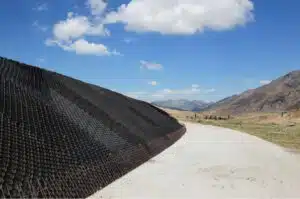
Slopes are exposed to constant environmental pressure. Rainwater, surface runoff, soil movement, and changing weather conditions can gradually weaken exposed ground. On construction sites, highways, embankments, and drainage channels, these problems can lead to erosion, unstable surfaces, and costly repairs.
Geocell slope stabilization engineering offers a practical way to reinforce suitable slopes and control surface erosion. Instead of relying only on loose soil, gravel, or heavy rock, engineers can use a three-dimensional cellular confinement system to hold infill materials in place.
According to BaseCore's official slope protection page, its geocell panels are designed to follow the contours of the ground and support different slope protection approaches. Depending on the project, the cells can be filled with soil, aggregate, vegetation-supporting topsoil, or concrete.
The key to successful slope protection is choosing the right system for the slope angle, soil conditions, water exposure, and structural requirements.
How Geocell Technology Stabilizes Slopes
Three-Dimensional Cellular Confinement
Geocell panels expand into a honeycomb-like structure that creates individual pockets for infill material. Once secured and filled, the cell walls help limit lateral movement and keep the material in position.
This confinement can reduce surface displacement and improve resistance to erosion when the system is properly designed and installed.
Improved Distribution of Forces
Slopes experience forces caused by gravity, water movement, and external loads. Without adequate protection, these forces can displace soil and aggregate, leaving the surface vulnerable to further erosion.
A geocell system helps distribute forces through the confined infill and its supporting foundation. However, it is primarily a surface stabilization measure; deep-seated slope instability may require additional geotechnical reinforcement or retaining structures.
Key Benefits of Geocell for Slope Protection
1. Effective Surface Erosion Control
Heavy rainfall can wash away exposed topsoil and create channels across a slope. Geocell confines suitable infill and helps limit the movement of soil and aggregate during runoff.
For sites with concentrated water flow, engineers must evaluate hydraulic forces and select appropriate infill, anchoring, and drainage measures.
2. Flexible Design for Different Slopes
Every slope has different requirements. A gentle landscaped embankment does not need the same design as a steep highway cut or an industrial drainage channel.
BaseCore's geocell panels can be configured for different project conditions. Cell depth, panel strength, anchor spacing, and reinforcement details should be selected according to the engineered design.
3. Support for Vegetation Growth
Vegetated slopes can provide an attractive finish while helping protect the soil surface. When filled with suitable topsoil, geocell cells can support grass and other appropriate vegetation.
The cellular structure helps retain the growing medium, while drainage openings can allow water movement. Successful vegetation still depends on climate, soil quality, plant selection, irrigation where needed, and maintenance.
4. More Efficient Use of Infill Materials
Traditional slope protection may require large quantities of rock or extensive concrete work. Geocell can provide an alternative that uses locally available soil or aggregate in suitable applications.
This may reduce material handling and transportation costs. Actual savings depend on site conditions, product selection, installation requirements, and the design of competing solutions.
5. Adaptability to Natural Ground Contours
Geocell panels are flexible enough to follow many ground profiles when installed correctly. This helps contractors work with slopes that have irregular contours and varying site dimensions.
The system can be used with vegetated, aggregate-filled, or concrete-filled designs, depending on the project's structural and environmental needs.
Where Can Engineers Use Geocell Slope Stabilization?
Highway Embankments and Roadside Slopes
Roadside embankments can experience erosion from rainfall, runoff, and changing ground conditions. Geocell can help stabilize the exposed surface and support vegetation or aggregate protection when specified for the site.
Drainage Channels and Waterways
Channels may experience continuous or intermittent water flow that displaces soil and damages unprotected surfaces. Engineers should calculate flow velocity, hydraulic shear stress, and expected water levels before selecting a suitable geocell and infill combination.
Commercial and Industrial Sites
Construction projects, mining facilities, utility corridors, and industrial developments may require slope protection around access roads, drainage areas, and graded embankments. A properly designed system can help manage erosion and reduce surface maintenance.
Geocell Slope Installation: Important Engineering Steps
Prepare and Secure the Slope
Start by grading the slope to the approved design, removing debris, filling voids, and preparing a smooth surface. Install geotextile where specified to provide separation or filtration.
Position the collapsed panels at the top of the slope, expand them down the grade, and connect adjoining sections according to the manufacturer's instructions.
Install Anchors and Fill the Cells
Secure the panels using suitable anchors, rebar, or tendons as required by the engineering design. Steeper slopes generally need more careful anchoring and may require additional reinforcement.
Fill the expanded cells with the specified material, working in the recommended direction and avoiding displacement of the panels. Complete compaction, vegetation, or surface finishing according to the project requirements.
Conclusion: Build More Stable Slopes with BaseCore
Effective slope protection begins with understanding the ground, water movement, and forces acting on the site. Geocell slope stabilization engineering offers a flexible approach to surface erosion control, infill confinement, and vegetation support when the system is designed for the specific application. For contractors, engineers, and commercial property owners seeking a suitable solution, BaseCore provides geocell products, installation resources, and project evaluation support.
Frequently Asked Questions
1. What is geocell slope stabilization engineering?
It is the design and application of cellular confinement systems to improve surface stability, control erosion, and retain soil or aggregate on suitable slopes.
2. Can geocell be used on steep slopes?
Yes, some geocell systems can be designed for steep slopes. The appropriate cell depth, anchoring, and reinforcement depend on slope geometry, soil conditions, and engineering calculations.
3. Which infill materials work best for slope protection?
Soil and topsoil are useful for suitable vegetated slopes, while aggregate can provide a durable erosion-resistant surface. Concrete may be appropriate where greater surface protection is needed. Selection depends on hydraulic conditions and design requirements.
4. Does geocell prevent every type of slope failure?
No. Geocell can help control surface erosion and stabilize confined infill, but it does not automatically prevent deep landslides or failures caused by groundwater pressure or weak underlying soil. Those risks require a geotechnical assessment.

 English
 Arabic
 French
 Spanish
 Portuguese
 Deutsch
 Turkish
 Italiano
 Russian
 Romaian
 Portuguese (Brazil)
 Greek