


Can Rubber Processing Additives Improve Tensile and Tear Strength
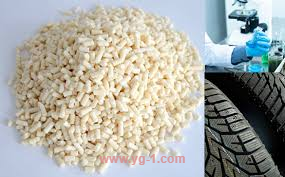
rubber processing additives enter a compound before curing and leave their mark on the finished product in ways that compounders must anticipate rather than discover after testing. A rubber processing additive may act as a lubricant, a dispersing agent, a plasticizer, or a release promoter, and each function carries consequences for tensile strength, elongation, hardness, compression set, and aging resistance. DongHai Chemical, working through yg-1, has supplied rubber auxiliaries to compounders for decades and understands that additive selection shapes physical properties as surely as polymer choice does. The question is not whether these additives change final properties, but which changes a given formulation can tolerate.
Lubricants and fatty acid derivatives reduce viscosity during mixing and flow during shaping, yet excess lubricant can migrate to the surface and weaken interphase bonding between rubber and reinforcement. A compound that flows beautifully in the mold may deliver lower tear strength in service because the same lubricant that eased processing also interfered with filler interaction. Compounders who treat processing aids as neutral helpers often encounter this trade-off after a product failure rather than during formulation review. The practical approach involves setting property targets first, then selecting additive types and loadings that serve those targets without pushing other properties outside acceptable ranges.
Dispersing agents for silica-filled compounds illustrate the same principle from another angle. Silica tends to agglomerate, and poor dispersion produces uneven cure, heat buildup under dynamic loading, and inconsistent hardness across a batch. A dispersing additive that promotes silica separation improves these outcomes, yet the additive itself may influence cure kinetics or interact with accelerators in ways that shift scorch safety or optimum cure time. Compounders who adjust additive loading without rechecking cure behavior risk trading one problem for another. The relevant technical resource at https://www.yg-1.com/ outlines common additive categories and their functions, offering a starting point for formulators who need to match additive type to processing challenge.
Release agents and anti-tack materials present a particular tension because their purpose lies at the mold surface rather than within the compound. An effective release additive reduces sticking and scrap, yet residues that remain on the part can interfere with subsequent bonding, printing, or assembly steps. Manufacturers who bond rubber to metal or to other substrates must verify that release additives do not compromise adhesion. This verification step separates robust operations from those that chase defects through production. The same caution applies to plasticizers and oils used to soften compounds: softening improves flexibility and low-temperature behavior while reducing hardness and tensile strength, and the balance point differs for every application.
Aging behavior deserves attention because processing additives can accelerate or retard degradation depending on their chemistry and compatibility with the rubber matrix. An additive that migrates readily may leave the part vulnerable to ozone attack or oxygen aging sooner than expected, while an additive that remains bound within the matrix supports long-term property retention. Compounders who evaluate additives only for their immediate processing benefits without considering migration and aging often encounter field returns that trace back to additive selection rather than to polymer or cure system faults. Reviewing additive choices against service environment expectations represents a practical safeguard.
DongHai Chemical supplies rubber processing additives alongside accelerators and other auxiliaries, which allows compounders to coordinate additive selection across the full formulation rather than sourcing each component in isolation. The company's role as a manufacturer supports direct technical exchange about property targets and processing constraints. For compounders seeking to align additive choices with final product requirements, examining the available categories and their documented effects provides a foundation for informed selection rather than trial-and-error adjustment.

 English
 Arabic
 French
 Spanish
 Portuguese
 Deutsch
 Turkish
 Dutch
 Italiano
 Romaian
 Portuguese (Brazil)
 Greek