


Staff Scheduling Problems: 10 Common Rota Mistakes and How Managers Can Fix Them
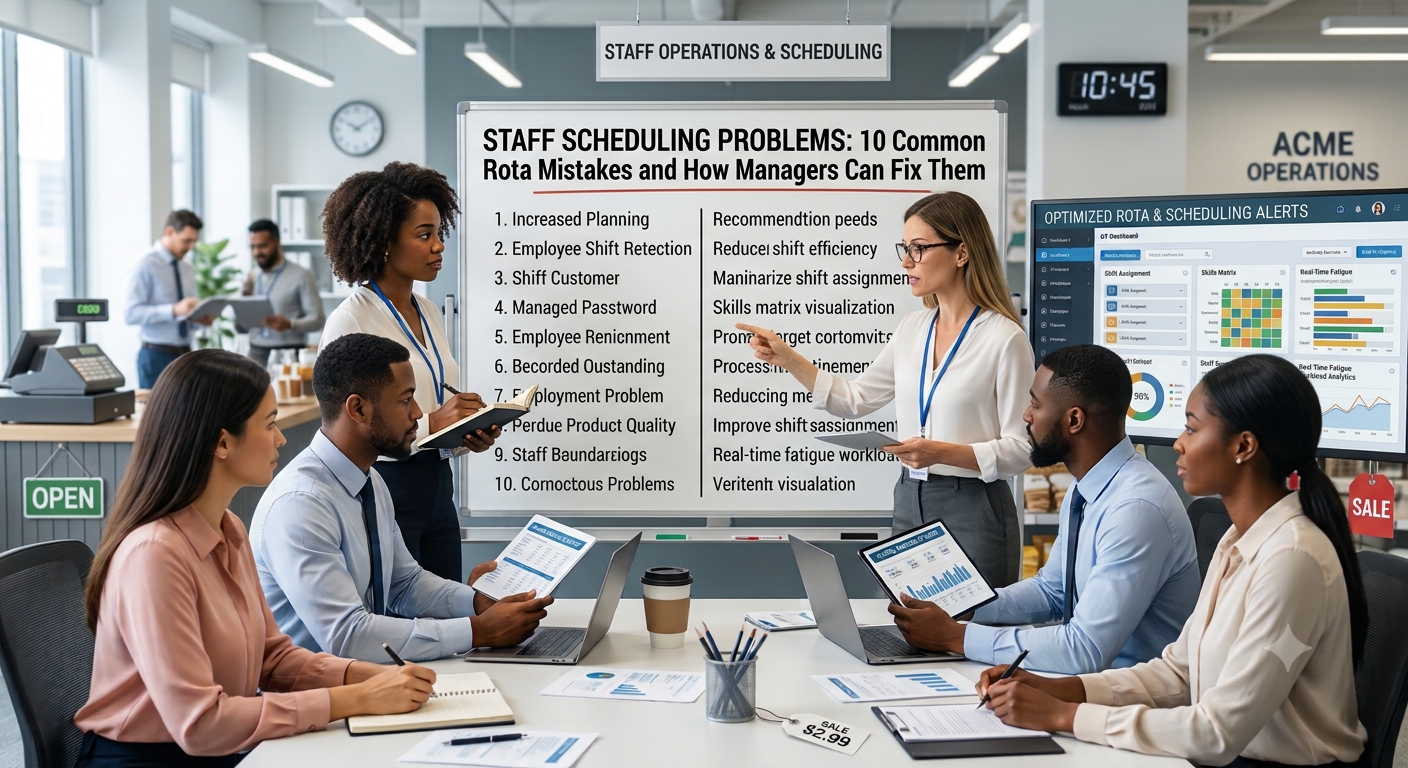
Building a functional employee schedule is one of the most critical daily responsibilities for store, venue, and operational managers. A well-designed staff schedule balances business demand with labor costs, statutory compliance, and employee preferences. When executed effectively, it keeps operational floors running smoothly, maintains high customer service standards, and protects profit margins.
However, staff scheduling problems remain a persistent challenge across shift-based industries like retail, care homes, logistics, and leisure. In fast-paced operational environments, even small scheduling missteps can trigger a cascade of negative outcomes—including budget overruns, severe burnout, high staff turnover, and regulatory fines.
Most scheduling errors stem from relying on outdated manual processes, such as spreadsheets, paper noticeboards, and scattered messaging apps. Recognizing these common pitfalls and updating your operational framework allows you to convert shift planning from a chaotic weekly chore into a streamlined strategic advantage.
Below are 10 of the most common rota mistakes managers make and practical steps to fix them across your organization.
The 10 Most Common Rota Mistakes & How to Fix Them
1. Publishing Schedules at the Last Minute
-
The Mistake: Releasing the upcoming work schedule only 24 or 48 hours before the working week begins gives employees minimal notice. This disrupts their personal lives, makes organizing childcare or travel difficult, and inevitably leads to high absenteeism and last-minute shift drops.
-
The Fix: Implement a strict schedule publication lead time (e.g., 14 days in advance). Utilizing cloud-based Rota Software enables managers to save reusable shift templates and roll out future schedules in minutes, giving employees predictable working hours well in advance.
2. Overstaffing Low-Demand Periods and Understaffing Peak Hours
-
The Mistake: Scheduling a fixed number of workers every day without analyzing expected footfall, sales volume, or seasonal trends leads to wasted wage budget during quiet hours and overwhelmed teams during peak demand.
-
The Fix: Align shift planning directly with historical sales data, customer footfall metrics, or booking forecasts. Match staffing levels dynamically with anticipated customer demand rather than relying on fixed shift patterns.
3. Ignoring Employee Skills and Certified Role Mixes
-
The Mistake: Assigning shifts based solely on total headcounts rather than skill levels leads to operational bottlenecks. A shift populated entirely by junior staff without experienced supervisors, keyholders, or specialized skill sets leads to service errors and floor disorganization.
-
The Fix: Tag employee profiles with specific skill certifications, permissions, and job roles inside your scheduling platform. Configure system rules so a schedule cannot be published unless every shift contains the required mix of qualified roles.
4. Over-relying on "Go-To" Staff Members
-
The Mistake: When coverage is needed, managers frequently call on their most reliable full-time employees. While this solves the immediate staffing gap, it regularly pushes those key team members into overtime, causing fatigue, resentment, and premature burnout.
-
The Fix: Distribute extra shifts evenly across your entire team. Use open-shift features that notify all qualified part-time or flexible workers, ensuring hours are distributed fairly while keeping full-time staff below overtime thresholds.
5. Managing Shift Swaps Through Informal Messaging Chats
-
The Mistake: Allowing team members to arrange shift trades over informal WhatsApp groups or verbal agreements creates major data gaps. Managers lose track of who is working, double-bookings occur, and timesheets fail to reflect actual hours worked.
-
The Fix: Mandate a single, centralized digital platform for all shift exchanges. Employees should submit peer-to-peer swap requests through a mobile application, requiring a single manager sign-off to automatically update the live schedule and payroll records.
6. Failing to Account for Industry-Specific Operational Demands
-
The Mistake: Treating all shift environments identically leads to friction. High-volume, fast-changing shift environments—such as restaurants, bars, and hotels—require much higher schedule flexibility than static office settings.
-
The Fix: Deploy specialized industry tools tailored to dynamic environments. Utilizing dedicated hospitality staff scheduling software enables managers to handle rapid demand changes, manage split shifts, track specialized roles (like baristas or line cooks), and allow staff to claim open shifts straight from their smartphones.
7. Overlooking Statutory Break Rules and Rest Intervals
-
The Mistake: Scheduling an employee for a late-night closing shift followed immediately by an early-morning opening shift ("clopening") breaches statutory rest interval rules, causing severe fatigue and legal compliance issues.
-
The Fix: For UK organizations, strict adherence to Working Time Regulations is mandatory. Implementing compliant workforce scheduling software uk features embeds these legal checks into your system. Built-in compliance engines automatically flag instances where a proposed shift violates mandatory 11-hour daily rest intervals, weekly rest periods, or maximum weekly working caps.
8. Lacking Real-Time Visibility Into Shift Costs Prior to Publishing
-
The Mistake: Drafting a schedule without viewing live wage calculations leads to budget surprises at the end of the pay period. Unplanned overtime pay rates and higher holiday pay bands often push labor spending way over budget.
-
The Fix: Adopt workforce systems that display live labor expenditure, wage percentages, and total hours in real time as you draft the roster. Review pre-publish wage estimates to make cost-saving shift adjustments before sending the schedule to staff.
9. Failing to Centralize Leave and Availability Tracking
-
The Mistake: Accepting holiday requests, medical notes, and availability changes through paper notes, verbal requests, or scattered emails leads to scheduling absent workers and scrambling for last-minute replacements.
-
The Fix: Require all holiday, leave, and availability requests to be submitted exclusively through an integrated workforce portal. Approved time-off requests should automatically block out employee availability on the scheduling grid, preventing accidental double-bookings.
10. Neglecting Employee Work-Life Balance and Flexibility
-
The Mistake: Creating rigid, inflexible schedules without considering employee working preferences creates a demotivating work environment, leading to elevated staff turnover and ongoing recruitment expenses.
-
The Fix: Give your frontline workforce self-service tools through a mobile app. Letting employees set recurring availability preferences, submit leave requests easily, and trade shifts with peers fosters a culture of trust, improves morale, and boosts retention rates.
Comparing Manual Scheduling vs. Modern Rota Software
|
Scheduling Aspect |
Manual Spreadsheets / Paper |
Modern Digital Workforce Software |
|
Creation Speed |
3–6 hours of weekly data entry |
Under 1 hour using automated templates |
|
Shift Distribution |
Physical noticeboards or printed PDFs |
Real-time push notifications to mobile devices |
|
Cost Transparency |
Blind scheduling; manual post-payroll formulas |
Live wage budget warnings prior to publishing |
|
Shift Exchanges |
Disorganized text messaging chains |
Peer-to-peer swaps with one-click manager sign-off |
|
Compliance Safeguards |
Subject to human oversight and memory |
Automated checks for break laws & rest periods |
Action Plan: 5 Steps to Fix Your Staff Scheduling Process
Resolving persistent staff scheduling problems requires a structured operational transition:
-
Audit Your Current Process: Track how many hours managers spend drafting schedules, resolving shift conflicts, and correcting timesheet errors each week.
-
Standardize Shift Rules and Roles: Clear up job titles, site locations, pay bands, and contract structures across your business before moving to a digital platform.
-
Adopt Digital Scheduling Tools: Replace static workbooks with modern Rota Software that automates schedule generation, tracks wage budgets, and syncs directly with payroll.
-
Train Site and Shift Managers: Conduct brief training workshops to show managers how to build optimized rosters, monitor availability, and approve shift swaps.
-
Empower Frontline Teams via Mobile: Onboard your team onto an employee self-service app where they can view published schedules, set availability preferences, and request leave instantly.
Conclusion
Recurring staff scheduling problems consume valuable manager time, inflate labor budgets, and damage employee satisfaction. Continuing to manage complex shift environments using manual spreadsheets, paper notes, and disorganized messaging app chains limits your operational efficiency and exposes your business to regulatory risks.
Upgrading to intuitive hospitality staff scheduling software and compliant workforce scheduling software uk standards provides the real-time budget controls, automated compliance protections, and employee self-service tools needed to run an agile workforce. By addressing common scheduling errors and modernizing your shift planning workflows, you can eliminate administrative overhead, reduce labor costs, and build a motivated, productive team ready to support business growth.

 English
 French
 Spanish
 Portuguese
 Deutsch
 Turkish
 Dutch
 Italiano
 Russian
 Romaian
 Portuguese (Brazil)
 Greek