


Smart Electronics Market Overview
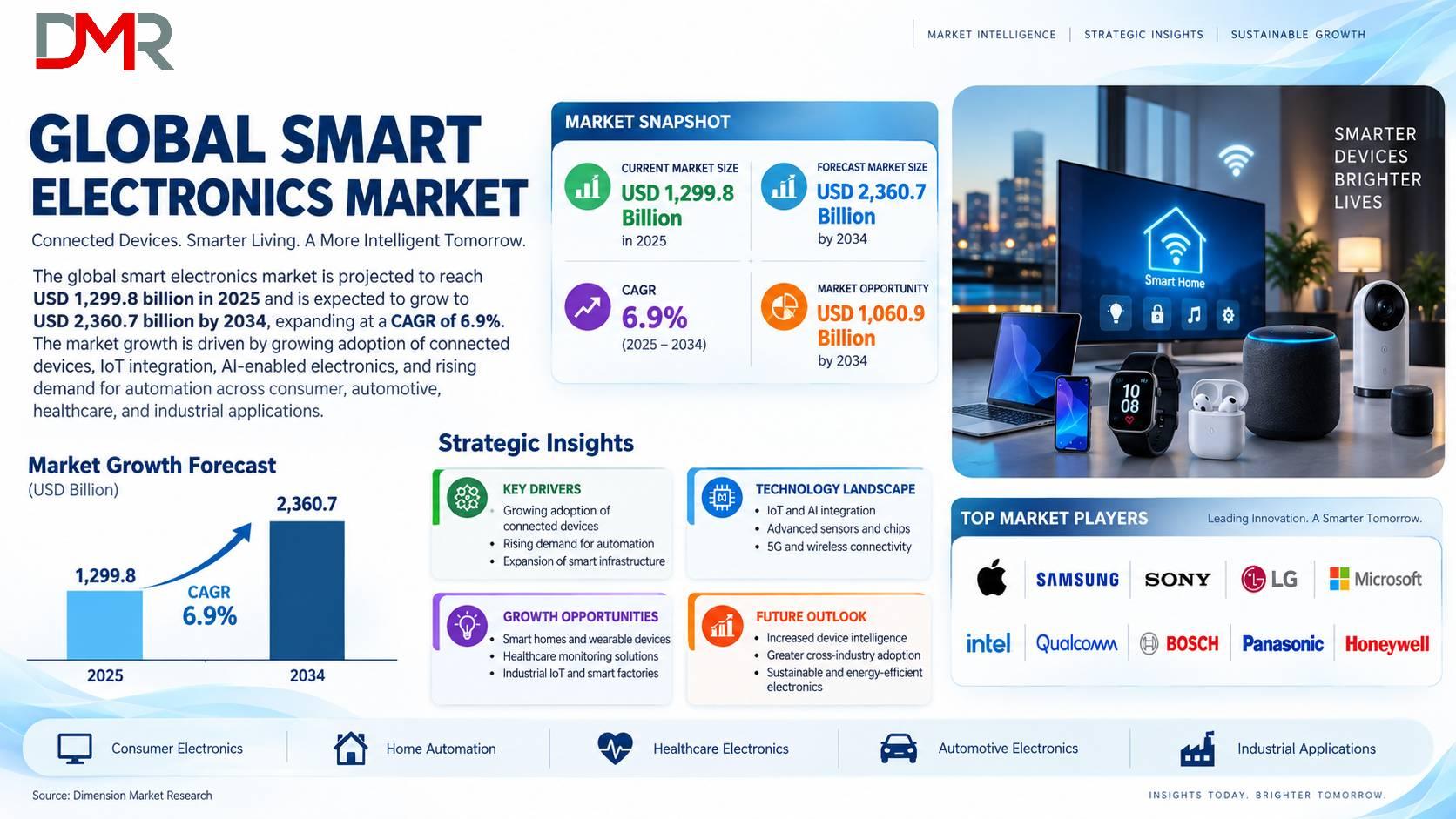
The global smart electronics market is entering a strong growth phase as connected devices, artificial intelligence, Internet of Things integration and high-speed connectivity become increasingly important across consumer and industrial applications. According the Dimension Market Research, the smart electronics market size was valued at USD 1,299.8 billion in 2025 and is projected to reach USD 2,360.7 billion by 2034, expanding at a 6.9% CAGR from 2025 to 2034.
Smart electronics combine hardware, software, sensors, connectivity and data processing to deliver intelligent functions. Unlike traditional electronic products, these devices can communicate with users and other systems, support automation, collect real-time data and enable remote monitoring or predictive decision-making.
The market covers a broad ecosystem, including smartphones, wearables, smart TVs, connected appliances, security systems, healthcare devices, automotive electronics, industrial IoT equipment and electronic components. Increasing demand for convenience, personalization, automation and real-time information is helping expand adoption across both personal and professional environments.
Smart Electronics Market: Key Highlights
- Market size is projected to reach USD 2,360.7 billion by 2034.
- Global market growth is expected at a 6.9% CAGR through 2034.
- Consumer electronics are projected to hold 50.0% share in 2025.
- Hardware is expected to account for 60.0% share in 2025.
- Personal and consumer applications may capture 55.0% share.
- Asia Pacific is anticipated to lead with 35.0% revenue share.
- AI, IoT and 5G are major technologies supporting market expansion.
Get free sample data of the report - https://dimensionmarketresearch.com/request-sample/smart-electronics-market/
What Is Driving the Smart Electronics Market?
The rapid adoption of IoT-enabled devices is one of the strongest growth factors. Consumers are increasingly using connected smartphones, wearables, smart appliances, security systems and entertainment devices, while businesses are deploying connected sensors and equipment to improve monitoring and productivity.
Artificial intelligence is adding another layer of intelligence to these products. AI enables devices to recognize patterns, personalize experiences, automate processes and support predictive decisions. In industrial settings, AI-powered electronics can help identify equipment problems before failures occur. In healthcare, connected devices can support continuous monitoring and personalized insights.
The expansion of 5G and wireless connectivity is also improving communication between smart devices. Faster networks and lower latency support applications such as connected vehicles, smart cities, remote healthcare monitoring, particularly for advanced AI-enabled electronics and sophisticated industrial systems. Data privacy and cybersecurity concerns can also affect adoption because connected devices frequently collect, transmit and store automation remains an important use case. Connected lighting, thermostats, locks, security cameras, appliances and voice assistants enable consumers to control household environments remotely while improving trackers, ECG devices and other connected monitors can collect health and activity information continuously. Growing interest in preventive healthcare and remote monitoring is supporting demand and industrial automation.
However, high prices remain a challenge, particularly for advanced AI-enabled electronics and sophisticated industrial systems. Data privacy and cybersecurity concerns can also affect adoption because connected devices frequently collect, transmit and store sensitive information.
Key Applications and Emerging Opportunities
Smart home automation remains an important use case. Connected lighting, thermostats, locks, security cameras, appliances and voice assistants enable consumers to control household environments remotely while improving convenience and energy management.
Wearable healthcare and fitness devices represent another major opportunity. Smartwatches, fitness trackers, ECG devices and other connected monitors can collect health and activity information continuously. Growing interest in preventive healthcare and remote monitoring is supporting demand.
Automotive electronics are also becoming increasingly sophisticated. Advanced driver-assistance systems, infotainment, navigation, electric vehicle management and connected vehicle technologies depend through connected machinery, smart sensors, enterprise wearables and automated manufacturing systems. Businesses are using these technologies for predictive maintenance, process optimization, energy management and to remain dominant, accounting for 50.0% of the market in 2025. Smartphones, wearables, smart TVs and connected audio systems benefit share. Processors, sensors, memory, actuators and connectivity modules form the foundation of smart electronic devices. At the same time, software and services are becoming increasingly important as connected ecosystems55.0% share in 2025.
Demand for convenient, personalized and connected products continues to support this segment, while automotive, healthcare and industrial applications provide additional.0% of revenue in 2025. China, Japan, South Korea and India contribute through manufacturing capabilities, technology investment, consumer adoption and expanding2025 and USD 384.8 billion by 2034, reflecting a 6.5% CAGR. Strong demand for smart homes, consumer electronics, healthcare technology, industrial is projected to reach USD 178.0 billion in 2025, with a 6.3% CAGR. Energy efficiency, smart infrastructure, industrial automation and connected consumer projected to reach USD 68.7 billion in 2025 and record a 7.6% CAGR. Advanced manufacturing, robotics, AI, smart factories and consumer technology adoption highly competitive, with companies investing in AI, semiconductor technology, connectivity, sensors, software and integrated ecosystems. Major participants include Apple, Samsung Electronics, Sony Group Corporation, LG Electronics, Huawei Technologies, Google, Amazon, Microsoft, Intel, Qualcomm, NVIDIA, Xiaomi, AI integration, 5G connectivity, energy-efficient products, smart healthcare, connected vehicles and sustainable electronics.
Manufacturers are increasingly focusing on interoperability, lower power consumption, enhanced cybersecurity and seamless integration across connected technologies move deeper into homes, vehicles, factories, healthcare environments and enterprise operations. Growth will increasingly depend on affordable advanced hardware, secure data infrastructure, AI capabilities demand and enterprise digital transformation developing simultaneously, smart electronics are positioned to become an increasingly important part ofT adoption, AI advancements, connected devices, automation, 5G deployment and increasing demand for personalized and energy-efficient technology are major data privacy concerns and interoperability challenges can restrict adoption, particularly in price-sensitive smart manufacturing, connected vehicles and smart home ecosystems offer significant opportunities for future market on sensors, embedded computing and AI.
Industrial IoT is creating opportunities through connected machinery, smart sensors, enterprise wearables and automated manufacturing systems. Businesses are using these technologies for predictive maintenance, process optimization, energy management and improved operational efficiency.
Segment Analysis
By product type, consumer electronics are expected to remain dominant, accounting for 50.0% of the market in 2025. Smartphones, wearables, smart TVs and connected audio systems benefit from strong consumer demand and continuous product innovation.
By component, hardware is projected to lead with 60.0% share. Processors, sensors, memory, actuators and connectivity modules form the foundation of smart electronic devices. At the same time, software and services are becoming increasingly important as connected ecosystems require secure platforms, analytics and device management.
By application, the personal and consumer segment is expected to hold 55.0% share in 2025. Demand for convenient, personalized and connected products continues to support this segment, while automotive, healthcare and industrial applications provide additional growth opportunities.
Regional Smart Electronics Market Outlook
Asia Pacific is expected to lead the global smart electronics market with 35.0% of revenue in 2025. China, Japan, South Korea and India contribute through manufacturing capabilities, technology investment, consumer adoption and expanding digital infrastructure.
The US smart electronics market is projected to reach USD 218.6 billion in 2025 and USD 384.8 billion by 2034, reflecting a 6.5% CAGR. Strong demand for smart homes, consumer electronics, healthcare technology, industrial IoT and automotive electronics supports expansion.
Europe is projected to reach USD 178.0 billion in 2025, with a 6.3% CAGR. Energy efficiency, smart infrastructure, industrial automation and connected consumer products are supporting market development.
Japan is projected to reach USD 68.7 billion in 2025 and record a 7.6% CAGR. Advanced manufacturing, robotics, AI, smart factories and consumer technology adoption provide strong growth opportunities.
Competitive Landscape and Technology Trends
The smart electronics industry remains highly competitive, with companies investing in AI, semiconductor technology, connectivity, sensors, software and integrated ecosystems. Major participants include Apple, Samsung Electronics, Sony Group Corporation, LG Electronics, Huawei Technologies, Google, Amazon, Microsoft, Intel, Qualcomm, NVIDIA, Xiaomi, Panasonic, Bosch, Siemens, Honeywell and Schneider Electric.
Current industry trends include greater AI integration, 5G connectivity, energy-efficient products, smart healthcare, connected vehicles and sustainable electronics. Manufacturers are increasingly focusing on interoperability, lower power consumption, enhanced cybersecurity and seamless integration across device ecosystems.
Future Outlook
The outlook for the global smart electronics market remains positive as connected technologies move deeper into homes, vehicles, factories, healthcare environments and enterprise operations. Growth will increasingly depend on affordable advanced hardware, secure data infrastructure, AI capabilities and reliable connectivity.
With consumer demand and enterprise digital transformation developing simultaneously, smart electronics are positioned to become an increasingly important part of the global technology ecosystem through 2034.
Frequently Asked Questions
What is the smart electronics market size?
The global smart electronics market is projected to reach USD 1,299.8 billion in 2025 and is expected to grow to USD 2,360.7 billion by 2034.
What is the CAGR of the smart electronics market?
The global smart electronics market is projected to expand at a 6.9% CAGR between 2025 and 2034.
Which segment dominates the smart electronics market?
Consumer electronics are expected to dominate the product type segment with a 50.0% market share in 2025.
Which region leads the global smart electronics market?
Asia Pacific is anticipated to lead the market, accounting for approximately 35.0% of global revenue in 2025.
What are the major smart electronics market trends?
Key trends include AI integration, IoT adoption, 5G connectivity, smart home automation, wearable healthcare devices, connected vehicles and energy-efficient electronics.
What factors are driving smart electronics market growth?
Growing IoT adoption, AI advancements, connected devices, automation, 5G deployment and increasing demand for personalized and energy-efficient technology are major growth drivers.
What are the major challenges in the smart electronics market?
High costs, cybersecurity threats, data privacy concerns and interoperability challenges can restrict adoption, particularly in price-sensitive markets.
What are the major opportunities in smart electronics?
Smart healthcare, wearable devices, industrial IoT, smart manufacturing, connected vehicles and smart home ecosystems offer significant opportunities for future market expansion.
Similar Report:
1. Stretchable Electronics Market
3. Radiation-hardened Electronics Market
About Us
Dimension Market Research (DMR) is a global market intelligence and consulting firm delivering data-driven insights that help organizations make informed strategic decisions. With expertise across 12+ industries and global markets, DMR provides syndicated reports, custom research, competitive analysis, white space analysis, and business strategy consulting.
Our research solutions combine analytical rigor, industry expertise, and forward-looking intelligence to identify opportunities, reduce risks, and support sustainable growth. Trusted by clients across diverse sectors, DMR is committed to delivering accurate, actionable insights that enable businesses to navigate evolving market landscapes with confidence.
Contact Us
Phone USA: +17323699777
Phone India: +919310023843
E-mail: enquiry@dimensionmarketresearch.com
Address USA: 957 Route 33, Suite 12 #308, Hamilton Square, NJ-08690
Address India: D44, Sector 6, Noida 201301, India


