

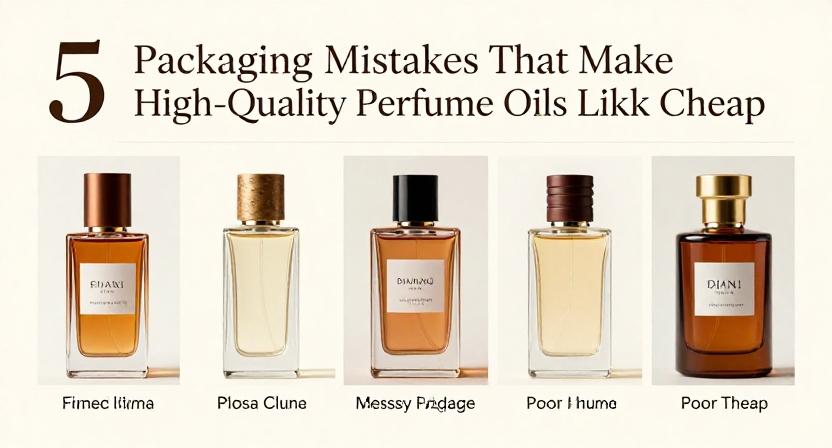

In the perfume oil business, customers judge the quality of your scent long before a single drop touches their skin. While alcohol free oils rely on deep, complex raw materials and impressive longevity, retail buyers and online shoppers experience the packaging first. When a luxurious fragrance arrives in a leaky bottle with a peeling label, the perceived value drops immediately no matter how exquisite the oil inside actually smells.
For independent fragrance brands, private label founders, and boutique retailers, avoiding common packaging pitfalls is one of the fastest ways to justify premium pricing and earn repeat orders. Here are five packaging mistakes that undermine high grade perfume oils, along with practical ways to fix them.
Using Low Grade Roll On Balls and Loose Fitments
Perfume oils have higher viscosity than alcohol based Eau de Parfum sprays, which puts extra mechanical stress on rollerball applicators. Cheap plastic roller balls housed in poorly molded fitments either jam completely forcing customers to shake the bottle aggressively or leak oil into the cap thread every time the bottle tips over in a purse or shipping box.
Once oil seeps onto the exterior glass, it attracts dust, ruins label adhesive, and stains the customer’s hands. Upgrading to precision machined stainless steel or smooth glass roller balls paired with tight tolerance polyethylene plugs eliminates leaks and gives the applicator a cool, weighted glide across pulse points.
Choosing Clear Flint Glass Without UV Protection
Many new fragrance brands default to clear glass bottles because they want shoppers to see the golden hue of the perfume oil. However, direct sunlight and harsh retail display lighting break down delicate aromatic compounds especially natural citrus oils, florals, and vanilla absolutes. Within weeks, clear bottles can experience oxidation, color darkening, and noticeable scent distortion.
Amber, cobalt blue, matte black, or UV coated frosted glass shields concentrated oils from ultraviolet degradation while projecting an apothecary or luxury aesthetic. If clear glass is essential to your brand identity, pair it with a sturdy outer folding carton so the bottle remains protected during shipping and shelf storage.
Applying Paper Labels That Absorb Oil
Standard uncoated paper labels look tactile and artisanal when dry, but they fail quickly around concentrated fragrance oils. Even a microscopic smudge of oil from a customer’s fingertips will soak into untreated paper fibers, leaving dark grease stains, blurred ink, and curling corners within days of regular use.
High end oil brands solve this by specifying BOPP (biaxially oriented polypropylene), vinyl, or textured waterproof synthetic stocks finished with a matte or soft touch laminate. These materials resist oil, moisture, and friction while maintaining crisp typography and metallic foil details throughout the entire lifespan of the bottle.
Ignoring Typography Hierarchy and Regulatory Details
Overcrowded labels make even expensive niche oils look like generic flea market refills. Cramming ten scent notes, decorative borders, social media handles, and oversized logos onto a tiny 10ml bottle leaves zero breathing room and confuses the shopper’s eye.
At the same time, omitting basic compliance details such as net volume in milliliters and fluid ounces, ingredient or allergen disclosures, batch numbers, and manufacturer information signals amateurism to serious boutique buyers. Clean typography with a clear hierarchy (brand name, fragrance title, concentration, and volume) paired with a neat back label builds instant retail credibility.
Shipping Delicate Glass Bottles Without Structural Inserts
Nothing ruins an unboxing experience faster than opening a mailer box to find a shattered roll on bottle soaked in crushed bubble wrap. Loose packing peanuts or thin plastic sleeves allow heavy glass vials to knock against one another in transit, leading to chipped necks, cracked caps, and costly replacement shipments.
Custom cut EVA foam inserts, molded pulp trays, or snug corrugated dividers hold each bottle firmly in place while elevating presentation. Even for single bottle orders, a rigid two piece box or custom kraft tuck box with an internal collar transforms a basic delivery into a gift ready experience.
Matching Presentation to Formulation Quality
When your packaging feels deliberate, leak proof, and well proportioned, customers instinctively trust the craftsmanship of the fragrance inside whether you are bottling original house blends or crowd pleasing floral fruity profiles inspired by Good Girl Gone Bad Wholesale selections.
| Packaging Element | Common Cheap Mistake | Premium Upgrade |
| Applicator | Thin plastic rollerball that jams or leaks | Stainless steel or glass ball with tight fit plug |
| Bottle Glass | Uncoated clear glass exposed to UV light | Amber, frosted, or UV protected glass |
| Label Stock | Uncoated paper that stains from oil contact | Oil resistant BOPP or laminated textured vinyl |
| Layout | Cluttered fonts with missing batch/volume info | Clean typographic hierarchy + compliant back label |
| Outer Box | Loose bubble wrap or oversized mailers | Fitted carton with internal foam or cardboard divider |
Treating packaging as an extension of your formulation protects both the physical integrity of your perfume oils and the reputation of your brand. When every detail from the cap weight to the label finish reflects care, first time buyers recognize the value immediately and come back for their next bottle.


