


Code to Text Ratio Checker Tool: A Complete Guide to Analyzing Website Content Balance
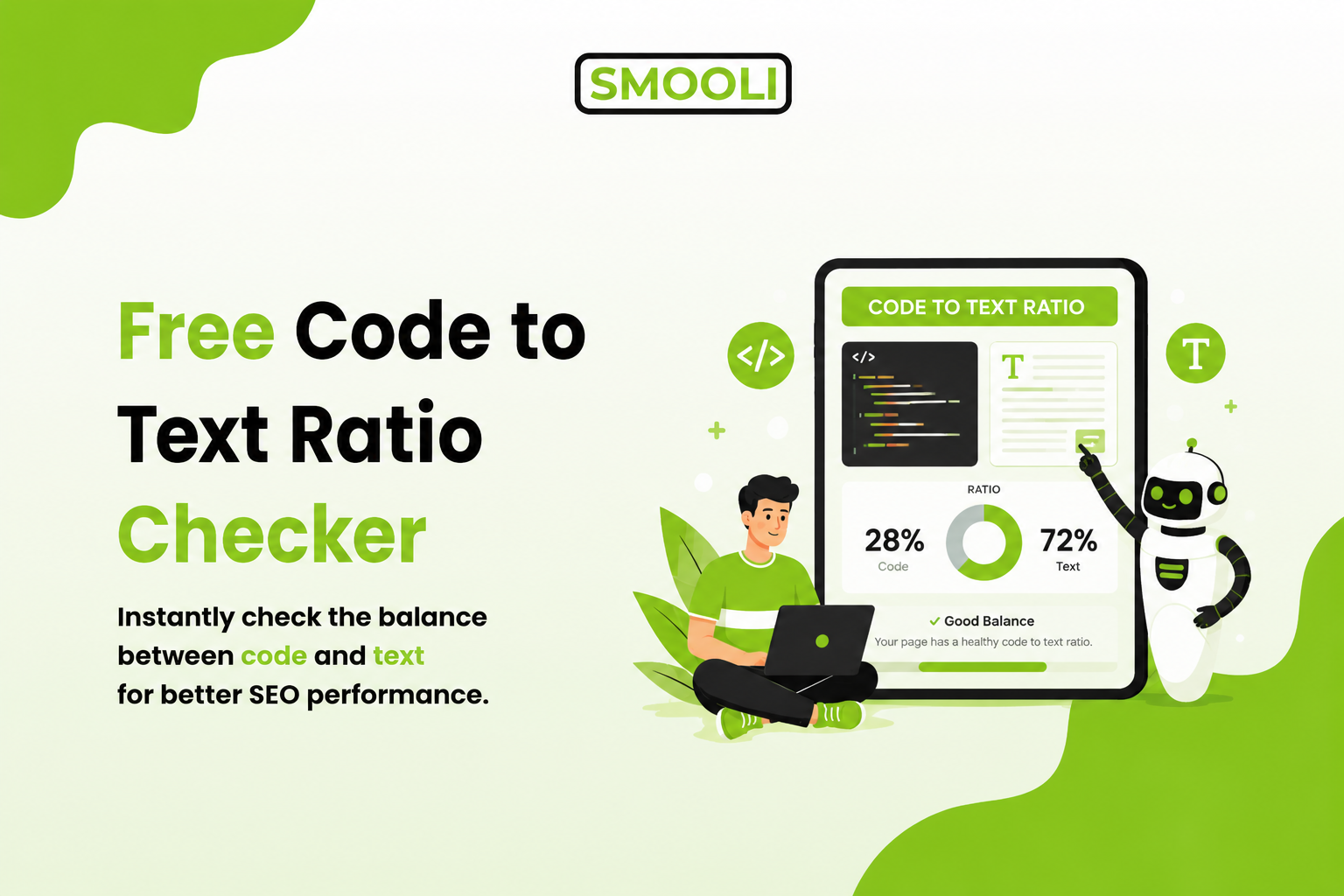
A website’s success depends on many factors, including content quality, technical performance, and search engine accessibility. One important technical metric that can help website owners understand their page structure is the Smooli Code to Text Ratio Checker Tool.
This tool analyzes the relationship between HTML code and visible website content. By reviewing this balance, SEO professionals and developers can identify unnecessary code, improve page efficiency, and create a better experience for visitors.
Although code-to-text ratio is not a direct Google ranking factor, it can reveal technical issues that may influence website performance.
What Is a Code to Text Ratio Checker Tool?
A Code to Text Ratio Checker Tool is an online SEO utility that calculates the percentage of visible text compared to the total HTML code of a webpage.
Every webpage contains two major elements:
-
HTML code: The behind-the-scenes structure that creates the webpage.
-
Visible text: The content users can read, including headings, paragraphs, and lists.
The tool compares these elements and provides an analysis report showing how balanced the webpage is.
For example, a page with thousands of lines of code but only a small amount of content may need optimization.
Why Website Owners Should Analyze Code-to-Text Ratio
Modern websites often contain many technical elements, including:
-
CSS files
-
JavaScript libraries
-
Tracking codes
-
Plugins
-
Widgets
-
Page builder elements
While these features can improve functionality, excessive code may make websites heavier and harder to maintain.
A code-to-text analysis helps you:
-
Find pages with unnecessary code
-
Detect thin content issues
-
Review website structure
-
Improve technical SEO audits
-
Maintain cleaner webpages
How Does a Code to Text Ratio Checker Work?
The process is simple:
Step 1: Enter Your Website URL
The tool scans the selected webpage and collects information about its HTML structure.
Step 2: Analyze HTML Content
The system evaluates the amount of source code used to create the page.
Step 3: Measure Visible Text
The tool identifies readable content displayed to visitors.
Step 4: Generate a Report
The final report provides details such as:
-
Total page code
-
Text amount
-
Code percentage
-
Text percentage
-
Ratio comparison
These details help users understand where improvements may be needed.
What Is a Healthy Code to Text Ratio?
There is no official percentage recommended by Google.
A website should not be optimized only for a specific number. Instead, the goal should be:
-
Clean website structure
-
Valuable content
-
Efficient HTML
-
Fast loading experience
A content-rich article may naturally have a different ratio compared to a login page, product page, or web application.
Context matters when analyzing results.
Factors That Reduce Code-to-Text Ratio
Several website issues can increase unnecessary code.
Complex Website Design
Highly customized designs often require additional HTML elements.
Poorly Optimized Themes
Some themes include unused features that increase page size.
Excessive Plugins
Too many plugins can add scripts and extra markup.
Limited Content
Pages with very little information may have more code than readable content.
How to Improve Website Code Efficiency
Improving your ratio usually involves improving overall website quality.
Create Detailed Content
Long-form guides, tutorials, FAQs, and informative articles increase valuable text.
Remove Unnecessary Elements
Delete unused widgets, outdated scripts, and unnecessary HTML sections.
Optimize Website Assets
Compress files and reduce unnecessary resources.
Use Lightweight Themes
A simple website structure often performs better than an overloaded design.
Improve Mobile Performance
Mobile-friendly pages usually require cleaner and more efficient structures.
Code-to-Text Ratio and Technical SEO
Technical SEO focuses on making websites easier to crawl, understand, and use.
A code-to-text analysis can support technical SEO by helping identify:
-
Large HTML files
-
Poorly structured pages
-
Content gaps
-
Optimization opportunities
However, it should be combined with other SEO practices, including:
-
Page speed optimization
-
Internal linking
-
Keyword optimization
-
Mobile usability
-
Content improvement
Why Use an Online Code to Text Ratio Checker?
Manual HTML inspection can be difficult, especially for large websites.
An automated tool saves time by providing quick insights without requiring advanced coding knowledge.
Benefits include:
-
Fast analysis
-
Easy reports
-
Simple interpretation
-
Useful SEO information
-
Better website monitoring
You can quickly review your website using the Website Code-to-Text Analysis Tool:
Frequently Asked Questions
Is code-to-text ratio important for SEO?
It is not a confirmed ranking factor, but it can highlight technical issues that affect website quality.
Can beginners use a code-to-text checker?
Yes. Most tools provide simple reports that do not require programming knowledge.
Should every webpage have the same ratio?
No. Different page types naturally have different structures.
How often should I check my website?
Regular checks after redesigns, updates, or technical changes are recommended.
Conclusion
A Code to Text Ratio Checker Tool provides valuable information about how efficiently a webpage is structured. While it does not directly determine search rankings, it helps identify areas where websites can improve their code quality, content balance, and overall performance.
A successful SEO strategy combines optimized code with valuable content. By regularly analyzing your pages and improving technical issues, you can create a faster, cleaner, and more user-friendly website.
Analyze your website structure with the Code-to-Text Ratio Analysis Tool:

 English
 Arabic
 Spanish
 Portuguese
 Deutsch
 Turkish
 Dutch
Dutch
 Italiano
 Russian
 Romaian
 Portuguese (Brazil)
 Greek
Greek