


Future Trends in AI X-Ray Baggage Scanners
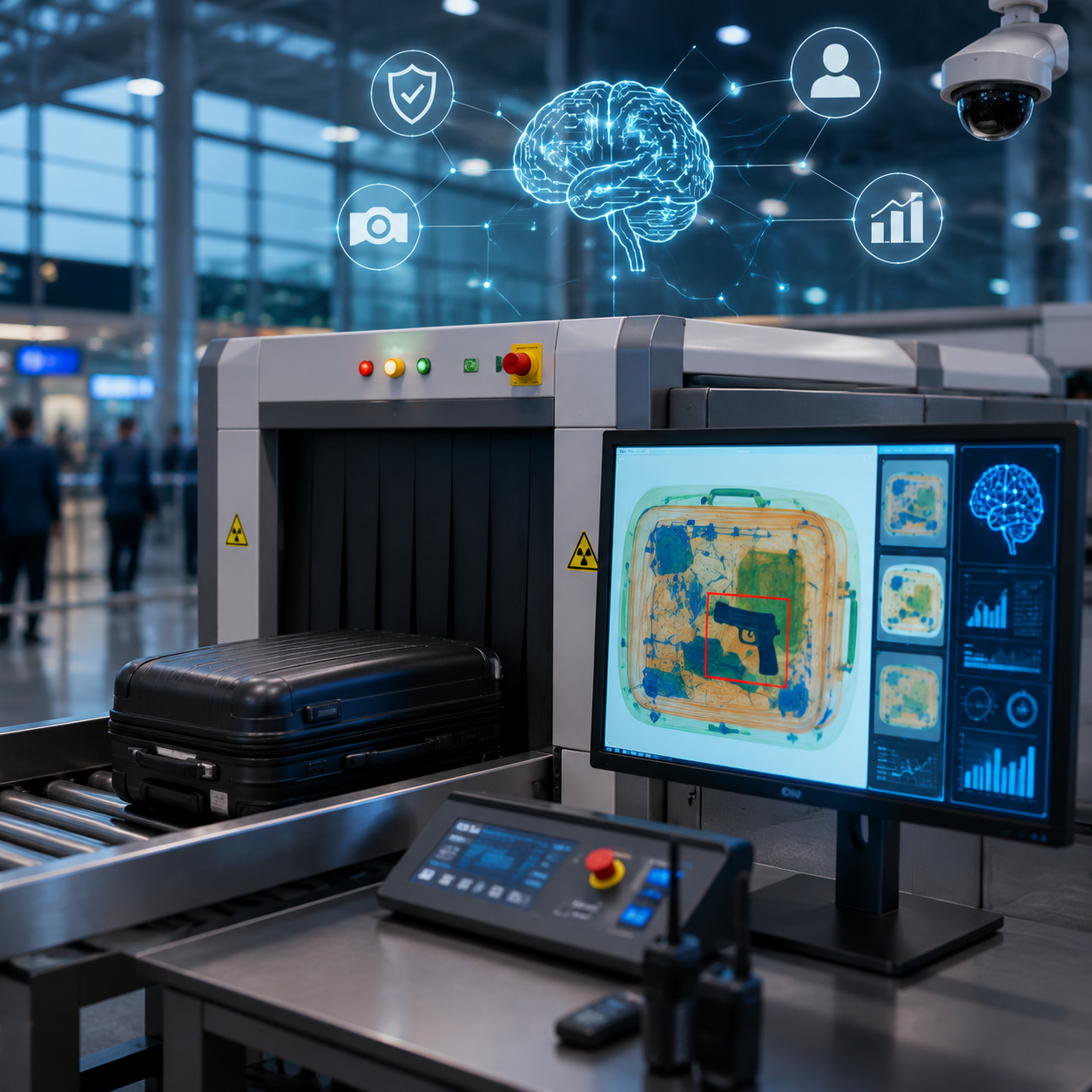
Security threats continue to evolve, and screening systems must evolve with them. This makes intelligent, technology-driven solutions more important than ever for airports, government facilities, railways, and corporate campuses alike. The X-Ray Baggage Scanner has long been a cornerstone of physical security infrastructure, but its role is changing fast. Artificial intelligence is now driving the next generation of baggage screening technology, helping organizations detect threats faster, reduce errors, and manage growing visitor volumes without compromising safety. This article explores where the technology is headed and how decision-makers can prepare for what's next.
Why the Future of Baggage Screening Is AI-Driven
Several pressures are pushing baggage screening technologies toward increased intelligence and automation.
- Increasing passenger and visitor volumes: Airports, metro stations, and public buildings are experiencing higher foot traffic than ever before, putting a strain on traditional screening capabilities.
- Evolving security threats: Concealment tactics are always changing, necessitating the use of adaptable systems rather than rigid standards.
- Long lines upset passengers and tourists, so facilities must prioritize speed without losing accuracy.
- Automation in security operations: Organizations want to eliminate manual workload and human mistake wherever possible.
- Smarter decision-making: Security teams require technologies that allow them to prioritize serious risks rather than sorting through an excessive number of false alerts.
These pressures are driving the industry to adopt AI-powered systems that can think, learn, and adapt.
How AI Is Transforming X-Ray Baggage Screening Today
Modern screening systems already incorporate various AI-powered capabilities that were absent only a few years ago.
- Intelligent image analysis: AI models examine scanned photos far faster than manual review, identifying items that require further investigation.
- Machine learning: Systems learn from enormous amounts of screening data, eventually improving their ability to discern between risks and innocent objects.
- Deep learning: Layered neural networks enable scanners to distinguish complicated shapes and patterns that standard software may overlook.
- Automatic threat recognition: AI can more accurately recognize guns, explosives, and illegal things.
- Computer vision: This technology enables scanners to "see" and interpret items in the same way that a trained human eye would, although faster and more consistently.
- Real-time decision support: Instead of raw image data, operators receive instant, actionable alerts, which speeds up response time
These capabilities serve as the foundation for more advanced trends that will shape the industry's future.
Future Trends in AI X-Ray Baggage Scanners
1. Advanced Threat Detection
Future systems will dramatically increase the detection of concealed dangers, even when items are layered, overlapping, or purposely buried. As detection algorithms evolve, false positives are projected to diminish, allowing security personnel to concentrate their efforts where they are most needed. This translates immediately into improved screening accuracy in high-traffic areas.
2. Deep Learning Algorithms
One of the most important features of AI-powered screening is its capacity to improve over time. Deep learning algorithms continuously examine screening data, learning from each scan and refining their threat detection models. Over months and years of operation, scanners become increasingly accurate without the need for a complete hardware overhaul.
3. Computer Vision Enhancements
Computer vision technology is rapidly evolving, and future luggage scanners will gain from:
- Improved object detection for a larger range of item kinds.
- Improved form detection, including for irregular or uncommon objects.
- Material classification that differentiates between metals, organics, liquids, and other compounds.
- Pattern analysis identifies unusual groupings within bags.
These improvements will allow scanners to deliver more detailed, dependable information to security officers.
4. Predictive Maintenance
AI is not only enhancing detection, but also making equipment management more intelligent. Predictive maintenance applies sensor data and usage trends to:
- Predict possible equipment breakdowns before they happen.
- Reduce the unnecessary downtime at important checkpoints.
- Increase overall equipment lifespan.
- Reduce long-term maintenance expenditures with proactive servicing.
This move from reactive to predictive maintenance enables facilities to prevent costly disruptions.
5. Cloud-Based Monitoring
Cloud connectivity is becoming a common feature in next-generation screening infrastructure. It enables:
- Remote diagnostics enables technical professionals to troubleshoot issues without an on-site visit.
- Centralized monitoring of numerous scanners or locations.
- Fleet management for firms that operate many facilities.
- Performance analytics for data-driven procurement and personnel decisions
6. Automated Decision Support
AI is intended to support, not replace, human judgment. Automated decision-support tools assist operators with:
- Threat prioritization ensures that the most urgent warnings are addressed first.
- Intelligent alerts reduce noise from low-risk detections.
- Optimizing workflow across screening lanes.
- Quicker, more confident decision-making under pressure
7. Integration with Smart Security Ecosystems
Future baggage scanners will not work in isolation. They will progressively connect to broader security ecosystems, including:
- CCTV surveillance systems that cross-reference visual data
- Access control systems coordinate entry points.
- Platforms that use facial recognition to verify identities
- Visitor management systems for efficient check-ins
- Security command centers provide unified situational awareness.
This type of connectivity enables security personnel to see the big picture rather than just individual data points.
8. Faster Passenger and Visitor Screening
As detection speed and accuracy increase, facilities should expect:
- Reduced wait times at checkpoints.
- Increased total throughput at peak hours.
- Improved operational efficiency and fewer bottlenecks
- Improved user experience for passengers, staff, and visitors.
9. Sustainability and Energy Efficiency
Environmental factors are becoming important in technology acquisition decisions. Future scanners are likely to include:
- Reduced power usage throughout both active and standby modes.
- Eco-friendly designs that minimize material waste.
- Intelligent energy management that adjusts power use based on demand.
- Longer equipment lifecycle leads to less electronic waste over time.
10. AI and Cybersecurity
As scanners grow more interconnected, protecting the data they produce becomes critical. Future systems will focus an increased emphasis on:
- Data security for scanned photos and operational records.
- Secure software updates are distributed through approved means.
- encrypted connection between devices and monitoring systems.
- Comply with accepted cybersecurity requirements.
Industries That Will Benefit Most
AI-powered baggage screening will create measurable value across a wide range of sectors.
| Industry | Primary Benefit |
|---|---|
| Airports | Faster passenger throughput with stronger threat detection |
| Railways and metro stations | Efficient screening for high daily passenger volumes |
| Hospitals | Improved safety without disrupting patient and visitor flow |
| Government buildings | Enhanced protection for sensitive facilities |
| Corporate offices | Streamlined visitor and employee screening |
| Manufacturing facilities | Protection of assets and personnel |
| Logistics hubs | Faster, more accurate parcel and cargo screening |
| Educational institutions | Safer campuses with minimal disruption to daily operations |
Challenges Organizations Should Prepare For
As scanners grow more interconnected, protecting the data they produce becomes critical.
- Advanced technologies often have a higher initial cost than standard scanners.
- Staff training: To work effectively using AI-assisted tools, security professionals must receive suitable training.
- Data privacy: Organizations must manage scanned data responsibly and in accordance with current rules.
- System integration: Integrating new scanners into an existing security system might be difficult to arrange.
- Regulatory compliance: Screening technology must meet all applicable national and international requirements.
- Technology upgrades: Facilities should plan for regular software and hardware updates.
- Ongoing maintenance: Even predictive systems require regular servicing and technical support.
Planning for these variables allows firms to smoothly move to next-generation screening equipment.
Why Innovation Matters When Choosing a Technology Partner
Not all screening technology providers invest similarly in R&D. When assessing a technological partner, decision-makers should consider:
- Continuous R&D: Is the company actively developing new capabilities or reliant on out-of-date technology?
- Product roadmap: Does the provider have a clear strategy for future upgrades and improvements?
- AI capabilities: How advanced and thoroughly verified are the provider's detecting algorithms?
- Software updates: Are they distributed on a regular basis and securely?
- Scalability: Can the system grow to meet the needs of the organization?
- Technical support: Is there reliable help available when problems arise?
- Industry experience: Does the provider have an established track record in related industries?
Choosing a partner with a strong innovation emphasis ensures long-term benefit, rather than a quick cure.
Why Organizations Choose Krystalvision
Organizations seeking security screening technologies frequently want a provider who combines proven reliability with forward-thinking innovation. Krystalvision has earned its name on a few fundamental principles:
- A strong emphasis on innovation and constant product improvement.
- Advanced engineering is behind its screening technique.
- Consistently consistent performance in difficult situations.
- Future-ready technology built to adapt to evolving risks and requirements.
- Exceptional customer assistance throughout the technology lifecycle.
- Deep industry expertise in airports, transportation, healthcare, and corporate security.
- Prioritizing long-term security solutions over short-term remedies.\
For enterprises considering their next screening technology investment, an AI X-ray baggage scanner designed with these criteria in mind can provide significant long-term benefit.
Future Outlook: The Next 5–10 Years
Looking ahead, numerous breakthroughs are expected to shape the next decade of baggage screening technology.
- AI models will improve greatly in accuracy, with false positive rates continuing to fall.
- Screening systems will become more integrated with the overall smart city and smart building infrastructure.
- Organizations with various screening locations will increasingly rely on cloud-based fleet management.
- Sustainability will play a larger role in procurement decisions, with an emphasis on energy-efficient designs.
- Cybersecurity measures will become a primary evaluation criterion, not an afterthought.
- Predictive maintenance will change industry expectations away from reactive fixes and toward proactive equipment management.
Conclusion
Artificial intelligence is changing baggage screening by making systems smarter, faster, and more accurate than ever before. These advancements, which range from sophisticated threat detection to predictive maintenance and cloud-based monitoring, enable enterprises enhance both security outcomes and operational efficiency. As dangers grow, investing in future-ready screening technology is no longer a choice for enterprises committed to long-term safety and value.
If your firm intends to enhance its security infrastructure, consider how a modern X-ray luggage Scanner Machine will help you achieve your objectives. Krystalvision's staff can assist you in evaluating your present setup and determining the best next steps for your facility. Contact us to discuss your needs and receive expert help on next-generation screening options.
Frequently Asked Questions
Q: What is the future of AI in X-Ray Baggage Scanners?
Answer: The future includes smarter threat detection, continuous learning via deep learning algorithms, predictive maintenance, and greater interaction with larger security ecosystems, all with the goal of boosting accuracy and operational efficiency.
Q: How will AI improve baggage screening in the coming years?
Answer: AI will eliminate false positives, shorten screening times, and offer operators with more precise, prioritized alarms. Continuous learning from screening data will also allow systems to react to new and developing dangers over time.
Q: What technologies will shape next-generation baggage scanners?
Answer: Deep learning, computer vision, predictive maintenance, cloud-based monitoring, and interaction with smart security ecosystems like as CCTV and access control systems are all essential technologies.
Q: Can AI reduce false alarms in baggage screening?
Answer: Yes. As AI models are trained on larger and more diversified datasets, they improve their ability to discern serious dangers from harmless items, resulting in fewer false alarms over time.
Q: How does predictive maintenance improve scanner performance?
Answer: Predictive maintenance analyzes data to detect potential equipment issues before they cause failures, allowing facilities to prevent unplanned downtime and increase the operating life of their screening equipment.

 English
 Arabic
 Spanish
 Portuguese
 Deutsch
 Turkish
 Dutch
Dutch
 Italiano
 Russian
 Romaian
 Portuguese (Brazil)
 Greek
Greek