Accurate concrete testing is essential for ensuring the strength, durability, and safety of every construction project. Whether the work involves residential buildings, commercial developments, highways, or industrial infrastructure, reliable testing provides confidence that the concrete meets the required quality standards. However, testing accuracy depends not only on laboratory procedures but also on the correct preparation of concrete specimens. Therefore, using a Cube Mould properly is extremely important for obtaining dependable compression test results. Avoiding common mistakes helps engineers, contractors, and quality inspectors achieve consistent outcomes while maintaining high construction standards across India.
Failing to Clean the Equipment Properly
One of the most common mistakes during concrete testing is neglecting to clean the equipment thoroughly after every use. According to constructionetail.com, leftover concrete residue can affect the dimensions and surface finish of future specimens, leading to inaccurate test results. Therefore, every Cube Mould should be cleaned immediately after demoulding to prevent hardened concrete from sticking to the internal surfaces. Furthermore, regular cleaning simplifies maintenance, improves specimen quality, and extends the working life of the equipment. Consistent cleaning practices also support reliable testing throughout repeated construction projects.
Ignoring Proper Assembly Before Casting
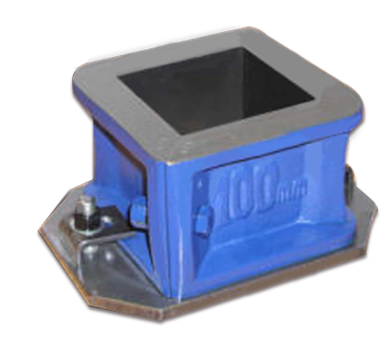
Incorrect assembly is another mistake that can significantly influence specimen quality during concrete testing. Before filling concrete, every Cube Mould should be inspected carefully to ensure all sides are properly aligned and securely fastened. Even slight movement or gaps between components may change specimen dimensions and reduce testing accuracy. Additionally, loose fittings can cause leakage of cement paste, affecting the consistency of the prepared sample. Consequently, checking the assembly before every use helps maintain uniform specimen preparation while improving the reliability of compression testing results.
Using Poor Concrete Placement Techniques
Improper concrete placement during specimen preparation often leads to air pockets, honeycombing, and uneven surfaces that reduce testing accuracy. Therefore, the Cube Mould should always be filled carefully using proper compaction methods recommended for concrete testing. Additionally, each layer should be compacted uniformly to eliminate trapped air and achieve consistent density throughout the specimen. Careless handling during filling may produce misleading compression test results that do not accurately represent the actual strength of the concrete used in construction. Careful placement therefore supports dependable quality control.
Removing the Specimen Too Early
Another common mistake involves removing concrete specimens before they have achieved sufficient initial strength. A Cube Mould should remain undisturbed during the recommended curing period before demoulding begins. Premature removal may damage edges, corners, or surfaces, resulting in specimens that fail to represent actual concrete quality accurately. Furthermore, damaged specimens can produce unreliable compression test results, leading to incorrect engineering decisions. Following proper curing procedures ensures stronger specimens while improving confidence in laboratory evaluations and construction quality assurance.
Neglecting Regular Inspection and Maintenance
Even well-manufactured testing equipment requires periodic inspection to maintain long-term accuracy and performance. Therefore, every Cube Mould should be checked regularly for signs of corrosion, deformation, loose fittings, or surface damage before use. Additionally, proper storage in a clean and dry environment protects the equipment from unnecessary wear and extends its service life. Routine maintenance not only preserves dimensional accuracy but also reduces the possibility of testing errors. Consequently, construction laboratories and site engineers can continue producing reliable specimens throughout demanding testing schedules.
Conclusion
Avoiding common testing mistakes is essential for obtaining accurate concrete strength results and maintaining high construction standards. A properly maintained Cube Mould helps produce uniform specimens that support dependable compression testing, better quality control, and improved structural safety. Furthermore, careful cleaning, correct assembly, proper concrete placement, recommended curing practices, and routine maintenance all contribute to consistent testing performance. As India's construction industry continues to grow, following these best practices will help engineers, contractors, and laboratories deliver stronger, safer, and longer-lasting structures with greater confidence.
Read More about — Common Mistakes to Avoid While Using a Cube Mould




 English
 Arabic
 French
 Spanish
 Portuguese
 Deutsch
 Dutch
Dutch
 Italiano
 Russian
 Romaian
 Portuguese (Brazil)
 Greek
Greek