

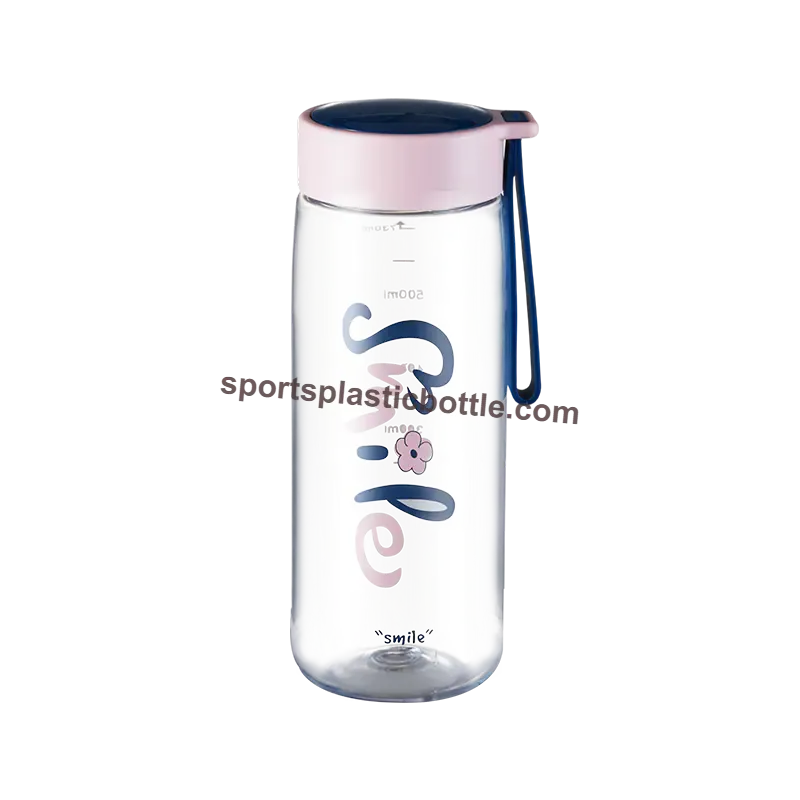

My bottle fell out of the side pocket of my bag three mornings in a row, always at the same kerb, and I eventually worked out that the base was a little narrower than the pocket while the body bulged just above it. That sent me looking at how a Plastic Water Bottle OEM ODM project begins, because the outline of a bottle, its neck, its shoulder and its footprint, turns out to matter as much to daily use as any print on the side.
Start with the base. A wide, flat footprint stands steady on a desk but jams in a car cup holder, while a narrow one slides into a holder and tips over when someone brushes the table. I stand a sample on a tray, tilt the tray a little, and watch whether the bottle rocks back or topples, then I try the same sample in a side pocket and a holder to see where it sits snugly and where it rattles.
The body curve is the next thing a hand notices. A straight tube is easy to slide into a pocket, whereas a waist or a set of ribs gives fingers something to grip when palms are damp, and a deep curve can make the bottle awkward to pack beside a lunch box. I hold a sample in one hand and walk around the room, and the shapes that feel fine for a minute are not always the ones that feel fine after a long stroll.
The sample on my desk while I wrote this came from Zuohao, a Taizhou factory with more than ten years of experience in BPA-free plastic water bottles, working from a large facility and offering custom designs for sports and daily use. Since custom shapes were part of its offer, I asked how a neck width or a body outline gets adjusted, and I noted the answer in the maker's own words.
Neck and lid shape affect both looks and handling. A wide mouth lets you see inside and drop in ice, but a narrow one is easier to drink from while walking, and the lid height decides whether the bottle fits under a shelf or a car armrest. I screw the lid on and off a few times and watch how the grip ridges feel against a thumb, then I tilt the bottle toward my mouth as if I were jogging.
Colour and print placement come next. A solid tint looks calm in a classroom, while a cartoon print draws attention and wears at the points where a hand holds it, so I run a thumbnail across the printed area and rub it with a damp cloth to see whether the pattern shifts. Placement matters as well, because a graphic cut across a moulded seam looks off-centre when the bottle is turned.
Seams are a craftsmanship detail you can feel without any tools. Run a fingertip down each side of the body where the mould closes and notice whether the ridge is smooth or catches, and look at the base for a gate mark that sits flat. A frosted or clear body shows the liquid level, and a tinted one hides stains, which is a taste choice rather than a rule.
Size has to suit the person carrying it. A small hand wraps around a slim body with ease, while a large barrel is hard to hold and heavy once filled, so I fill a sample at the tap and carry it up the stairs to feel the balance. A handle or loop changes the picture again, since a swinging bottle bangs against a thigh on a long walk.
My notes on the Plastic Water Bottle OEM ODM samples sit in a folder next to the tape measure, with base diameters and lid heights written beside each name. The names came from https://www.sportsplasticbottle.com and are pencilled next to a sketch of my bag pocket, though a sketch and a sample in the hand rarely agree, and a bottle that fits my pocket may still feel wrong in someone else's grip.


