


The Rise of K-Pop in 2026: How Korean Pop Music Became a Global Entertainment Powerhouse
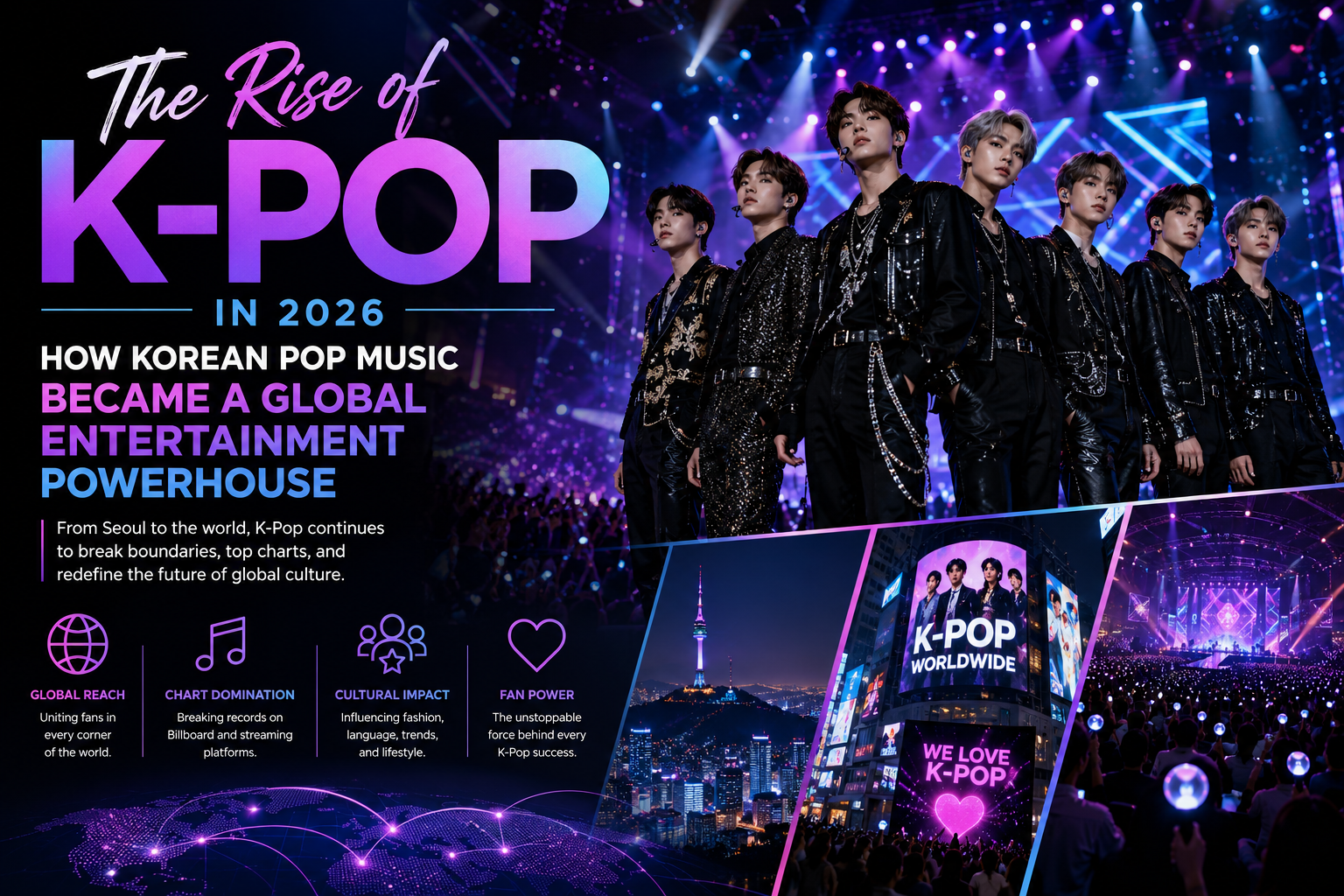
Over the past two decades, K-Pop has transformed from a regional music genre into one of the world's most influential entertainment industries. Today, Korean artists attract millions of fans across every continent, dominate music streaming platforms, collaborate with international brands, and influence trends in fashion, beauty, technology, and social media.
The rise of K-Pop is not the result of a single hit song or one successful group. It is the outcome of years of investment in artist development, creative production, digital marketing, and global audience engagement. South Korea has created an entertainment model that combines music, performance, storytelling, and technology to build long-lasting relationships with fans around the world.
In 2026, K-Pop represents more than entertainment. It has become a global cultural industry that continues to shape how music is produced, promoted, and experienced.
K-Pop Started With a Vision for Modern Entertainment
The early Korean music industry was influenced by international pop music, but producers quickly realized that creating long-term success required a different strategy.
Entertainment agencies began developing artists through structured training programs that focused on singing, dancing, stage performance, language skills, media communication, and teamwork.
Instead of preparing musicians only for album releases, agencies developed complete entertainers capable of connecting with audiences worldwide.
This approach became one of the foundations of K-Pop's international success.
High Production Standards Changed Audience Expectations
Every K-Pop release is carefully planned.
Music videos feature cinematic visuals, advanced choreography, detailed styling, and coordinated storytelling. Album concepts often include unique themes that continue across promotional campaigns, live performances, and digital content.
This attention to detail has raised audience expectations throughout the global music industry.
Fans appreciate the consistency and creativity that accompany each comeback, making every release feel like a major entertainment event rather than a simple music launch.
Digital Platforms Accelerated Global Expansion
The growth of K-Pop closely matched the expansion of digital media.
Video streaming services, music platforms, and social media made Korean entertainment accessible to audiences who had never previously encountered it.
Fans can now watch performances, join live broadcasts, participate in online communities, and support artists regardless of their location.
This global accessibility allowed K-Pop to expand without relying solely on traditional television or radio broadcasting.
The internet became one of the industry's most valuable promotional tools.
Fan Communities Became a Driving Force
One of the defining characteristics of K-Pop is the strength of its global fan communities.
Supporters actively promote artists by organizing streaming events, translating content into multiple languages, sharing news, and participating in charitable projects.
This level of community involvement creates a strong relationship between artists and audiences.
Instead of acting only as listeners, fans become active participants in an artist's growth and international success.
The sense of belonging within these communities continues attracting new audiences every year.
Fashion Became Part of the K-Pop Identity
Fashion plays an essential role in the K-Pop industry.
Artists regularly introduce new styles through music videos, concerts, award shows, and public appearances.
Luxury fashion houses, sportswear companies, and beauty brands increasingly collaborate with Korean celebrities because of their influence on global consumers.
As trends spread through digital platforms, K-Pop continues influencing everyday fashion choices among younger audiences.
This connection between entertainment and fashion has become one of the industry's strongest commercial advantages.
Korean Culture Reached International Audiences
K-Pop has introduced millions of people to South Korean culture.
After becoming interested in Korean music, many international fans also begin learning about Korean television dramas, films, language, food, tourism, skincare, and history.
This broader cultural interest has strengthened South Korea's global reputation while supporting industries beyond entertainment.
The Korean Wave continues expanding as audiences develop greater appreciation for Korean creativity and innovation.
Brands Recognize the Influence of K-Pop
Global companies increasingly partner with K-Pop artists to strengthen brand awareness.
Fashion labels, automotive manufacturers, technology companies, financial institutions, cosmetics brands, and luxury businesses regularly select Korean celebrities as ambassadors.
These partnerships demonstrate the commercial value of K-Pop's international popularity.
Artists often influence purchasing decisions by introducing products to highly engaged global audiences.
As consumer trust continues growing, collaborations between brands and entertainers are expected to increase.
Technology Continues to Transform K-Pop
The entertainment industry constantly adopts new technologies.
Artificial intelligence assists with content recommendations, streaming platforms improve audience accessibility, and virtual experiences allow fans to participate in concerts from anywhere in the world.
Interactive applications, digital memberships, and exclusive online content have created additional ways for artists to communicate directly with supporters.
Technology continues expanding the possibilities for global entertainment.
The Next Stage of K-Pop
The future of K-Pop will likely include greater international collaboration, multilingual music production, virtual performances, and advanced digital experiences.
Entertainment companies are investing in innovation while maintaining the creative quality that audiences expect.
As new artists enter the industry, competition encourages continuous improvement in music production, performance, and audience engagement.
K-Pop is expected to remain one of the world's fastest-growing entertainment sectors for years to come.
Conclusion
The rise of K-Pop demonstrates how creativity, strategic planning, technology, and strong audience relationships can transform a national music industry into a global cultural phenomenon.
Its influence now extends beyond music into fashion, beauty, business, tourism, and digital media. By combining artistic excellence with continuous innovation, K-Pop has established itself as one of the most successful entertainment industries of the modern era.
As global audiences continue embracing Korean culture, K-Pop will remain an important force shaping the future of international entertainment.
Frequently Asked Questions (FAQ)
What is K-Pop?
K-Pop, or Korean Pop Music, is a music genre developed in South Korea that combines modern pop, dance, hip-hop, R&B, and visual performance.
Why has K-Pop become so popular?
Its success comes from high-quality production, engaging performances, global digital accessibility, creative storytelling, and strong connections between artists and fans.
How does K-Pop influence fashion?
Many K-Pop artists collaborate with international fashion brands and introduce trends that influence clothing, hairstyles, and accessories around the world.
Why do global brands work with K-Pop artists?
K-Pop celebrities have large international audiences, making them effective ambassadors for fashion, technology, beauty, and lifestyle brands.
What is the future of K-Pop?
The industry is expected to expand through international collaborations, AI-supported digital experiences, virtual concerts, and continued innovation in music and entertainment.

 English
 Arabic
 Spanish
 Portuguese
 Deutsch
 Turkish
 Dutch
Dutch
 Italiano
 Russian
 Romaian
 Portuguese (Brazil)
 Greek
Greek