


How to Maximize ROI with ERP Software in Saudi Arabia
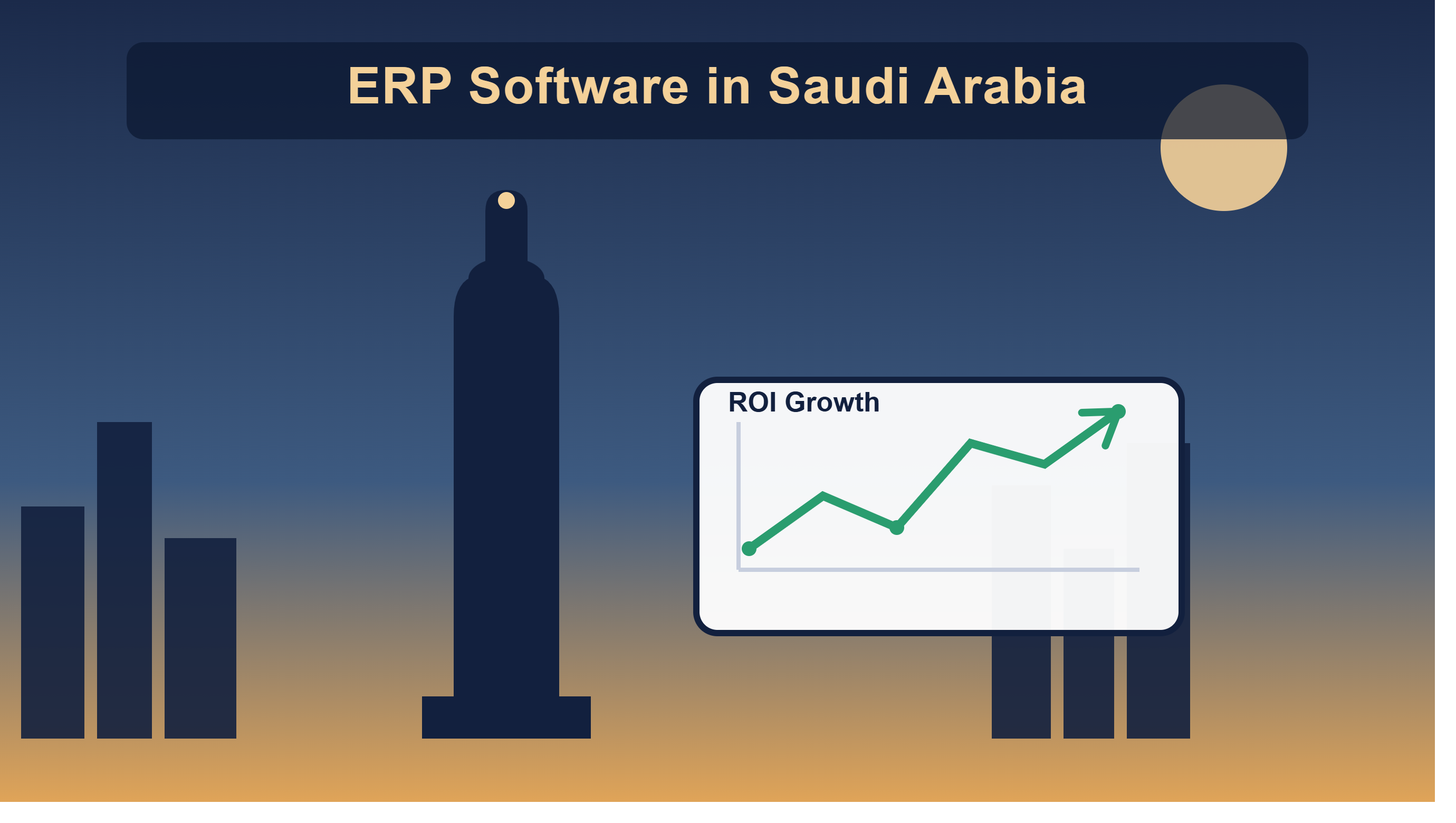
Saudi Arabia's business landscape is transforming fast. Vision 2030 has pushed industries — from manufacturing and retail to logistics and healthcare — toward digital-first operations. At the centre of that shift sits one critical decision: choosing and implementing the right ERP software in Saudi Arabia.
But buying an ERP system isn't the finish line — it's the starting point. Many organisations invest heavily in enterprise resource planning tools only to see disappointing returns because of poor implementation, weak user adoption, or a mismatch between the software and their actual business processes. This guide breaks down exactly how to maximize ROI from your ERP investment, step by step.
Why ERP Adoption Is Accelerating in Saudi Arabia
The Kingdom's push toward economic diversification has created urgent demand for better visibility, automation, and compliance across business functions. Government-backed digital transformation initiatives, mandatory e-invoicing (Fatoora) regulations from ZATCA, and rising competition have made a modern ERP system in Saudi Arabia less of a luxury and more of a necessity.
Businesses are no longer asking "do we need ERP?" — they're asking "how do we get the most value out of it?" That question is exactly what separates companies that thrive after implementation from those that struggle to justify the cost.
What Does ROI Actually Look Like for ERP?
Before diving into strategies, it's worth defining what a strong return on investment actually means in this context. ROI from ERP software isn't just about cost savings — it includes:
- Reduced manual data entry and fewer errors
- Faster financial closing and reporting cycles
- Improved inventory accuracy and reduced holding costs
- Better decision-making through real-time dashboards
- Increased employee productivity across departments
- Regulatory compliance without manual workarounds
When these improvements are tracked properly, they translate directly into measurable financial gains — which is the real goal of any ERP software in Saudi Arabia investment.
Proven Strategies to Maximize ERP ROI
1. Choose an ERP Solution Built for Local Compliance
Generic, one-size-fits-all software often fails in the Saudi market because it doesn't natively support VAT regulations, ZATCA e-invoicing requirements, or Arabic-language interfaces. When evaluating vendors, prioritise an ERP system in Saudi Arabia that's pre-configured for local tax laws and reporting standards. This alone can save months of custom development and prevent costly compliance penalties down the line.
2. Map Your Processes Before You Configure the Software
One of the biggest ROI killers is implementing ERP software around outdated or inefficient workflows. Before configuration begins, document your current processes across finance, procurement, inventory, HR, and sales. Identify bottlenecks and redundancies first — then configure the system to support the improved process, not the old one.
3. Prioritise User Adoption From Day One
The most powerful ERP software delivers zero ROI if employees avoid using it or revert to spreadsheets. Successful rollouts include:
- Role-based training tailored to each department
- Clear internal champions who support colleagues during transition
- A phased rollout instead of a single "big bang" launch
- Ongoing refresher sessions after go-live
Companies that invest in change management alongside the technical rollout consistently see faster adoption and quicker returns.
4. Start With High-Impact Modules
Rather than deploying every module simultaneously, many successful Saudi businesses start with the areas offering the fastest payback — typically finance, inventory, and procurement — before expanding into HR, CRM, or manufacturing modules. This phased approach reduces risk and lets teams show measurable wins early, which builds internal buy-in for further investment.
5. Integrate ERP With Existing Business Tools
An ERP system that operates in isolation creates data silos instead of eliminating them. Maximizing ROI means integrating your ERP with existing tools — e-commerce platforms, POS systems, CRM software, and banking portals — so data flows automatically instead of requiring manual re-entry. Every manual data transfer eliminated is time and cost saved.
6. Use Real-Time Analytics for Faster Decisions
Modern ERP platforms come with built-in dashboards and reporting tools. Businesses that actively use these analytics — rather than exporting data into spreadsheets out of habit — make faster, more informed decisions on pricing, staffing, and inventory. This is often where the largest hidden ROI is unlocked, since faster decisions directly affect revenue and cost control.
7. Partner With an Experienced Implementation Provider
Technology alone doesn't guarantee results. The implementation partner matters just as much as the software itself. Look for a provider with proven experience deploying ERP software in Saudi Arabia specifically, since local market knowledge, language support, and understanding of regional business practices significantly reduce implementation risk.
8. Monitor and Optimise Post-Launch
ROI doesn't stop accumulating at go-live — it compounds over time if the system is actively maintained and optimised. Schedule quarterly reviews to:
- Assess whether the system is meeting original KPIs
- Identify underused features that could add further value
- Update workflows as the business scales
- Retrain staff on new features or updates
Businesses that treat ERP as an evolving asset — not a one-time project — consistently extract more long-term value from their investment.
Common ROI Mistakes to Avoid
Even well-funded ERP projects can underperform when businesses fall into these traps:
- Choosing based on price alone, without evaluating long-term scalability
- Skipping proper process mapping, leading to a system that mirrors old inefficiencies
- Underestimating training needs, resulting in poor adoption
- Ignoring integration requirements with existing software
- Failing to define KPIs upfront, making ROI impossible to measure accurately
Avoiding these pitfalls is often the difference between an ERP rollout that pays for itself within a year and one that drags on with unclear results.
How to Measure ERP ROI Effectively
To track your ERP investment properly, define measurable KPIs before implementation begins. Common metrics include:
- Reduction in manual processing time (hours saved per week)
- Decrease in reporting/closing cycle duration
- Inventory turnover improvement
- Reduction in compliance-related penalties or errors
- Employee productivity metrics before and after rollout
Reviewing these metrics quarterly gives leadership a clear, data-backed picture of whether the ERP investment is delivering the expected value — and where adjustments are needed.
Final Thoughts
Maximizing ROI from ERP software in Saudi Arabia isn't about buying the most expensive platform — it's about choosing the right system, implementing it strategically, and committing to continuous optimisation after launch. Businesses that treat their ERP system in Saudi Arabia as a long-term growth tool, rather than a one-time IT purchase, consistently see stronger, faster, and more sustainable returns.
If you're planning an ERP rollout and want a partner who understands both the technology and the local market, working with an experienced provider like GO-Globe can help you avoid costly missteps and get to measurable ROI faster.

 English
 Arabic
 French
 Spanish
 Portuguese
 Deutsch
 Dutch
Dutch
 Italiano
 Russian
 Romaian
 Portuguese (Brazil)
 Greek
Greek